

What Is the PRIMA Mission?
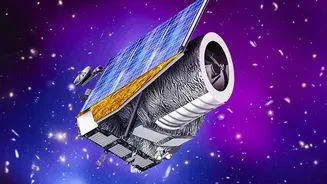
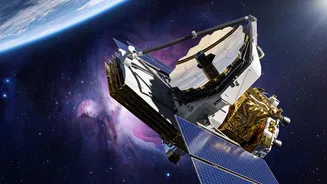
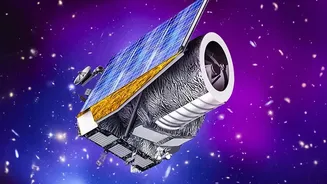
PRIMA, which stands for the Probe far-Infrared Mission for Astrophysics, is NASA's next major window into the universe. Announced in September 2026, it is the first in a new "Probe-class" of missions designed to fill the gap between smaller projects and massive
flagship observatories like the James Webb Space Telescope (JWST). PRIMA will feature a cryogenically cooled 1.8-meter telescope designed to observe the cosmos in far-infrared light—a part of the spectrum that is invisible to the human eye and even to Webb. This will allow scientists to peer through cosmic dust clouds to study the formation of stars and planets, trace the evolution of galaxies, and understand how supermassive black holes grow. Essentially, PRIMA is being built to see parts of the universe that have long been hidden, with a planned launch in 2033 for a five-year mission.
Decoding the Billion-Dollar Price Tag
A $1.2 billion budget may seem enormous, but it’s a reflection of the extraordinary complexity involved in building a next-generation space telescope. This figure, which excludes the cost of the launch, covers over a decade of design, development, and construction by teams of highly specialized engineers and scientists. The cost includes manufacturing one-of-a-kind instruments, like its advanced spectrometer and imaging polarimeter, which must survive the violent vibrations of launch and operate flawlessly in the freezing vacuum of space. Every component undergoes years of rigorous testing in specialized facilities to ensure it can perform its mission without any chance of repair. Unlike a consumer product made by the millions, PRIMA is a bespoke creation, where the costs of research, development, and salaries for the expert workforce make up a significant portion of the budget.
The Significance of a Firm Cost Cap
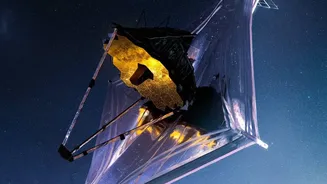
The $1.2 billion figure for PRIMA isn't just a budget; it's a hard limit. This represents a strategic shift for NASA, which has faced scrutiny over significant cost overruns on past flagship missions. The James Webb Space Telescope, for instance, was initially estimated to cost around $1 billion but ultimately launched with a price tag approaching $10 billion after years of delays. These overruns can have a domino effect, consuming funds and causing delays for other important science missions. By establishing a firm cap from the outset for this new class of Probe missions, NASA is enforcing a culture of fiscal responsibility. It forces the project team to make smart, efficient design choices and manage risks meticulously, because there is no safety net of a ballooning budget. This approach was recommended by the scientific community to ensure a steady cadence of ambitious-yet-achievable missions.
Balancing Ambition with Reality
Operating under a cost cap introduces a high-stakes balancing act. The PRIMA team at NASA's Jet Propulsion Laboratory and its partners must push the boundaries of technology while staying within a fixed financial box. If the project encounters unforeseen technical hurdles or manufacturing delays—common occurrences in space exploration—it could be forced to make difficult decisions. Engineers might have to "descope" the mission, which means reducing its scientific capabilities to save money. In a worst-case scenario, as seen with other projects that have dramatically exceeded their budgets, a mission can face cancellation. The PRIMA cost cap is therefore both a tool for discipline and a source of constant pressure. The challenge is to deliver revolutionary science without letting the ambitious goals lead to a financial crisis, a lesson NASA has learned the hard way from past endeavors.