





What Exactly Was Approved?
The Cabinet Committee on Economic Affairs (CCEA), chaired by Prime Minister Narendra Modi, has approved three major multi-tracking projects for Indian Railways. These projects focus on adding third and fourth lines to some of the country's most congested
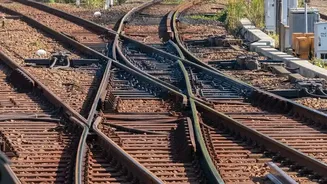
and economically vital railway corridors. The five states that will directly benefit from this expansion are West Bengal, Jharkhand, Odisha, Madhya Pradesh, and Chhattisgarh. The three specific projects are the Kharagpur-Jharsuguda fourth line, the Katni-Pendra Road fourth line, and the Bilaspur-Pendra Road third line. This move is designed to significantly increase the capacity of the rail network, allowing for more trains, both passenger and freight, to operate simultaneously and more efficiently.
Connecting the Heartland
This isn't just about adding tracks; it's about connecting people and creating opportunities. The projects are set to bring improved rail connectivity to 14 districts across the five states. This will directly impact approximately 4,790 villages, home to a combined population of around 56 lakh people. For residents in these areas, the expansion promises easier travel to major towns and cities, providing better access to markets, educational institutions, healthcare facilities, and employment centres. Furthermore, the construction phase itself is expected to generate significant employment, providing a direct economic stimulus to these regions. By improving mobility, the government aims to spur economic activity in smaller towns and rural areas.
Fueling the Economy
A major driver behind this expansion is the need to bolster India's supply chains. These railway corridors are crucial for transporting bulk commodities like coal, cement, iron, and steel, which are the building blocks of the nation's economy. The government estimates that the capacity augmentation will facilitate an additional 27 million tonnes of freight traffic annually. By making freight movement faster and more reliable, the initiative aims to reduce logistics costs for businesses, a key factor in making Indian industries more competitive globally. This increased efficiency is expected to ease congestion on highways, leading to environmental benefits by reducing reliance on road transport for long-distance haulage.
Part of a Bigger Vision
This railway expansion is a key component of the PM Gati Shakti National Master Plan, a grand vision for integrated infrastructure planning in India. The Gati Shakti framework emphasizes seamless connectivity between different modes of transport, including rail, road, and waterways, to improve logistics efficiency across the country. By strategically expanding rail capacity, the government is not just preparing for today's needs but is also building a network robust enough to handle India's growing economic requirements for years to come. The projects, which are targeted for completion by 2029-30, are also expected to improve access to several important religious and tourist destinations, including the Taratarini Temple, Bandhavgarh Tiger Reserve, and Amarkantak Temple.