




The Hidden Danger to Your Eyes
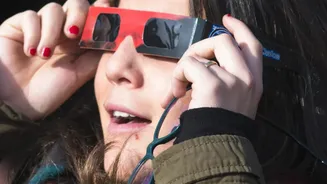
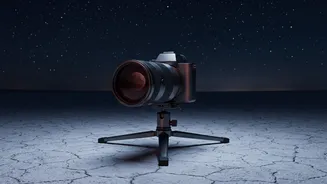
It is never safe to look directly at a partial solar eclipse. Your camera's lens, whether it's on a DSLR or a smartphone, acts like a powerful magnifying glass. When pointed at the sun, it concentrates the sun's intense visible and invisible radiation
(infrared and UV) into a tiny, potent beam. If you look through your camera's optical viewfinder without a proper filter, this beam will hit your retina and can cause severe, irreversible eye injury, sometimes in an instant. This condition, known as solar retinopathy, can lead to blind spots, distorted vision, or even permanent blindness. Because your retinas have no pain receptors, you won't feel the damage as it happens. Even wearing certified eclipse glasses is not enough if you are also looking through an unfiltered camera lens; the focused rays will burn right through them.
Protecting Your Camera's Sensitive Core
Your eyes aren't the only thing at risk. That same concentrated solar energy can destroy your camera's internal components. The most vulnerable part is the digital sensor, the electronic chip that captures the image. Prolonged exposure to the focused sun can overheat and permanently damage the sensor's pixels, leading to dead spots or a complete failure. This is especially true for mirrorless cameras where the sensor is always exposed when the camera is on. The intense heat can also damage the delicate shutter mechanism or melt plastic components inside the camera body and lens. Smartphone camera sensors are also susceptible to damage from being pointed directly at the sun. While a quick snapshot might not cause immediate failure, photographing an eclipse involves longer periods of aiming at the sun, dramatically increasing the risk of frying your equipment.
Choosing the Right Kind of Filter
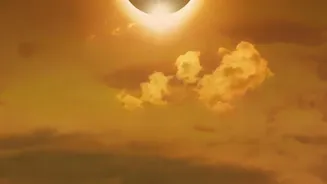
Standard camera filters, like Neutral Density (ND) or polarizing filters, are not safe for solar photography. While they reduce visible light, they may not block the harmful infrared (IR) and ultraviolet (UV) radiation that can damage your eyes and camera sensor. For direct solar viewing and photography, you must use a special-purpose solar filter. These filters are specifically designed to block more than 99.999% of the sun's intense light and all harmful radiation. Look for filters that are certified to meet the ISO 12312-2 international safety standard. Reputable brands will clearly state this certification. These filters come in two main types: thin film filters, which often show a neutral white or bluish sun, and glass filters, which may show an orange or yellow sun.
The Correct Attachment Method Is Critical
The single most important rule is that the solar filter must always be placed on the front of your lens or telescope, before the light enters the optics. It should cover the entire aperture. Never use a filter that screws into the eyepiece, as the concentrated sunlight will crack or melt it, instantly exposing your eye to danger. The filter must be secured firmly to the end of the lens so there is no risk of it falling off accidentally while you are shooting. Many solar filters for camera lenses are designed to screw in like a normal filter, while others fit snugly over the outside of the lens barrel and may be secured with adjustable screws or straps. Before the eclipse, practice attaching and removing the filter so it becomes second nature.
A Note for Smartphone Photographers
The same rules apply to smartphones: you need a certified solar filter. You cannot simply hold up a pair of eclipse glasses to the lens and expect a good, safe result. The glasses are not designed to be optically perfect for a camera lens, and you risk accidentally looking at the sun yourself while trying to align the shot. You can buy small, dedicated solar filters designed to clip onto a smartphone. Alternatively, you can tape a filter from a spare pair of certified paper eclipse glasses over your phone's camera lens. Ensure it is securely taped down and completely covers all lenses before you start taking photos of the partial phases.