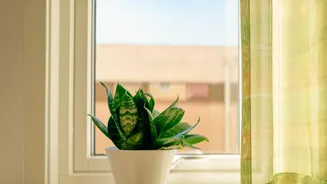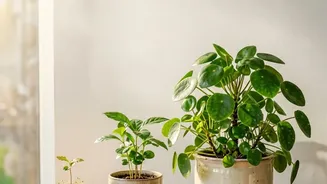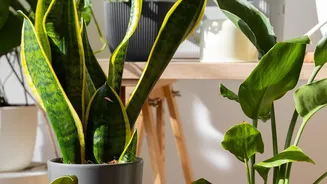





The idea that a few snake plants can purify your home's air is a comforting one. But while houseplants are great for aesthetics and mood, a closer look at the science reveals they are no substitute for the most powerful tool for clean air: ventilation.
The Myth's Origin: A NASA Study
The belief that houseplants are nature's air purifiers can be traced back to a landmark 1989 NASA Clean Air Study. Researchers were looking for ways to clean the air in sealed environments like space stations. They placed common houseplants, such as the Snake Plant and Peace Lily, in small, airtight chambers and injected pollutants like formaldehyde and benzene. The study found that the plants could indeed remove a significant portion of these volatile organic compounds (VOCs) from the sealed chamber. This finding was scientifically valid but sparked a popular myth that has persisted for decades, showing up in countless home and wellness guides.
From Sealed Chamber to Living Room
The problem is that your home is not a sealed space station. Subsequent research has shown that the results from the NASA study don't translate effectively to a typical house or office. The main issue is scale. The original experiments used small chambers, but our homes contain vast volumes of air that are constantly being replaced through drafts, open windows, and HVAC systems—a process called air exchange. A 2019 review of decades of research concluded that the natural ventilation in a building removes VOCs far more effectively than plants. To achieve the air-cleaning effects seen in the lab, you would need an impossibly large number of plants—somewhere between 10 and 1,000 plants per square meter of floor space. That’s not a living room; it's a jungle.
The Famous 'Top Ten' Reconsidered
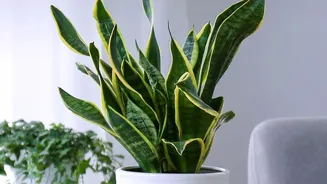
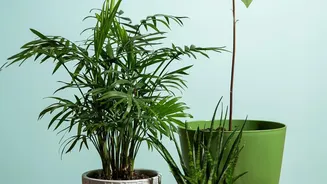
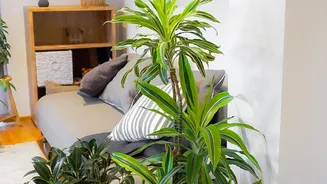
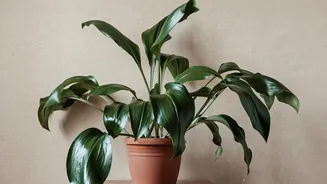
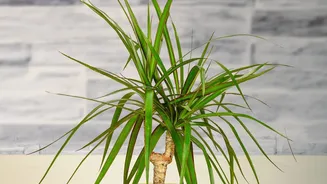
Lists of 'air-purifying' plants are everywhere, often featuring the same ten or so stars from NASA's study. Plants like the Snake Plant, Spider Plant, Peace Lily, English Ivy, and Dracaena are commonly cited. While these plants do absorb tiny amounts of pollutants through their leaves and root-zone microbes, the effect in a real-world setting is negligible. For example, the Snake Plant is often praised for removing toxins and releasing oxygen at night, making it a popular choice for bedrooms. However, to make a meaningful difference to the air quality in that room, you would need to fill it with hundreds of them. A few potted plants simply can't compete with the constant influx of new air from outside. The verdict is clear: buy these plants because you love their look, not for their supposed air-scrubbing power.
The Real, Proven Benefits of Plants
Just because they aren't powerful air purifiers doesn't mean houseplants are useless. Their proven benefits are psychological, not atmospheric. Numerous studies have shown that being around indoor plants can reduce stress and anxiety, improve your mood, and even boost productivity. This connection to nature, sometimes called 'biophilia', is particularly important for those living in urban areas with limited access to green space. The act of caring for a plant—watering it, watching it grow—can provide a sense of purpose and accomplishment. So, while your ficus isn't scrubbing toxins from the air, it is likely making you feel happier and calmer, which is a significant benefit in its own right.
What Actually Cleans Your Air
If plants won't do the job, what will? The answer is simple and free: ventilation. Increasing the amount of outdoor air that cycles through your home is the most effective way to lower the concentration of indoor pollutants. The U.S. Environmental Protection Agency recommends several strategies. The easiest method is natural ventilation: opening windows and doors for at least a few minutes each day to create a cross-breeze. Mechanical ventilation is also crucial. Use the exhaust fans in your kitchen when cooking and in your bathroom when showering to pull moisture and contaminants out of your home. Finally, ensure your home's HVAC system is maintained with clean filters. For those with specific concerns about allergens or pollutants, a mechanical air purifier with a HEPA filter is a far more effective solution than any number of houseplants.