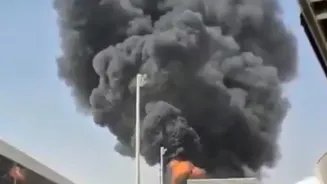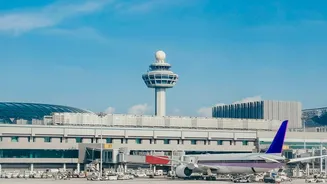

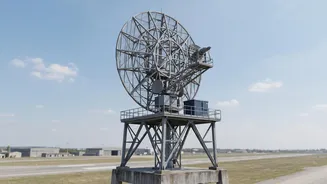


A single, newly installed piece of network hardware is now the focus of a major investigation after it triggered the longest nationwide flight stoppage in 25 years. Here’s a look at what went wrong and why the system is so fragile.
Anatomy of a Meltdown
On Friday, November
13, the Federal Aviation Administration (FAA) took the rare and drastic step of issuing a nationwide ground stop, halting departures across the country for more than four hours. The sudden decision caused chaos at airports, leading to the cancellation or delay of over 18,000 flights through the weekend. At the heart of the failure was not a cyberattack, as officials quickly clarified, but an issue with the FAA's own telecommunications network — the digital backbone that connects radar and radio systems for air traffic control. This network allows controllers to see and speak with the thousands of aircraft that are in the sky at any given moment. When it became unstable, the agency grounded planes out of an abundance of caution to ensure the safety of those already in the air.
The Router to Ruin
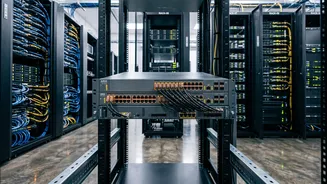
Investigators have traced the initial problem to a newly installed router at a communications facility in El Dorado, Arkansas. The router was being installed by a contractor, L3Harris, as part of a long-overdue modernization effort to replace old copper wiring with fiber-optic cables. According to the FAA, this new router began flooding the network with an overwhelming amount of data — about 1,000 connection attempts every four to five seconds. This data storm overloaded older parts of the system, causing instability in radar and communication feeds at 17 of the nation's 22 air traffic control centers. Transportation Secretary Sean Duffy explained that this was the 69th such router installation; the previous 68 had gone smoothly. The faulty router has since been sent to a lab in Florida for analysis by the FAA, the contractor, and the FBI to determine if the failure was due to defective equipment, an installation error, or another cause.
A System Under Strain
This event has cast a harsh spotlight on the fragility of America's critical aviation infrastructure. For years, government watchdogs and officials have warned that the system is a patchwork of new and severely outdated technologies. Secretary Duffy himself called the air traffic control system 'incredibly old'. In fact, a Government Accountability Office (GAO) report from just two months prior warned that mishandling the transition between old and new equipment during upgrades could lead to exactly this kind of flight suspension. The incident has renewed urgent calls for funding to complete a top-to-bottom modernization of the entire network, with the administration requesting $50 billion from Congress to finish the job. Officials argue that without a full overhaul, the risk of similar disruptions remains high as new components continue to be layered onto a creaking, decades-old foundation.
Ripple Effects and Lingering Questions
While the ground stop lasted only hours, the disruption cascaded for days. Airlines struggled to get crews and planes back into position, and thousands of travelers were left stranded or scrambling for alternatives, with demand for train tickets and rental cars surging. The incident echoed a similar, though less severe, nationwide ground stop in January 2023, which was also caused by a computer system failure. This pattern of failures raises serious questions about the resilience of the systems that underpin modern air travel. As a precautionary measure, the FAA has suspended further installations of the new routers and disabled the problematic broadcasting function on more than 60 similar devices already in the network while the investigation continues.