






The US midterm elections are over, but for the crucial India-US economic partnership, the outcome clarifies little. A newly divided government in Washington introduces fresh complexities, leaving the path forward on trade and investment uncertain.
A New Political Map in Washington
The
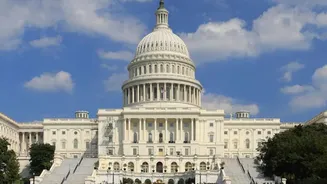
results of the US midterm elections have reconfigured the political landscape, leading to a divided government where different parties control the White House and Congress. This scenario typically leads to legislative gridlock, making it significantly harder for the administration to pass major new laws. For India, this means that while the fundamental strategic alignment with the US remains strong, the day-to-day business of economic diplomacy is about to get more complicated. Analysts suggest that with his legislative agenda likely stalled, the US president may rely more heavily on executive actions, particularly in foreign and trade policy, which could lead to less predictable outcomes.
The Question Mark Over Trade Policy
Trade remains a central, and often contentious, pillar of the India-US relationship. While a divided Congress could potentially put a check on the president's ability to impose new unilateral tariffs, it doesn't eliminate the threat. The President retains significant authority to act on trade matters without congressional approval. Some analysts believe that, facing domestic political pressure, the White House might push harder for a quick trade deal with India to score a foreign policy win. This could accelerate negotiations but also might come with tougher demands for market access for American goods, putting Indian negotiators in a challenging position. Furthermore, both Democratic and Republican parties have shown protectionist tendencies, suggesting that the overall 'America First' sentiment in trade may persist regardless of who controls Congress.
Navigating the Indo-Pacific Economic Framework
The Indo-Pacific Economic Framework for Prosperity (IPEF), a key Biden administration initiative involving India and 13 other countries, now faces a more complicated future. Launched in 2022, IPEF is designed to deepen economic engagement in areas like supply chains, clean energy, and fair trade. However, the framework's trade pillar has already faced domestic political opposition in the US. A divided government could make it even harder to secure the political consensus needed to advance ambitious trade agendas. The durability of IPEF and other multilateral initiatives depends on the US demonstrating a consistent, long-term economic commitment to the region—a task made more difficult by internal political divisions.
Technology, Talent, and Investment Flows
The technology sector is a cornerstone of the bilateral relationship, extending from corporate investment to the vital flow of skilled professionals. A divided Congress could lead to increased regulatory scrutiny of the tech industry, including issues related to data and AI infrastructure. For India, any shifts in US immigration policy are critical. While a new Congress might slow down further restrictive measures on skilled labour visas like the H-1B, significant reforms are unlikely amidst political gridlock. The overall climate of policy uncertainty can also impact investor confidence. While a divided government can sometimes be viewed by markets as a source of stability, the risk of political standoffs over budgets and debt limits could introduce volatility, potentially affecting foreign direct investment flows between the two nations.