




The Galaxy’s Cosmic Engine
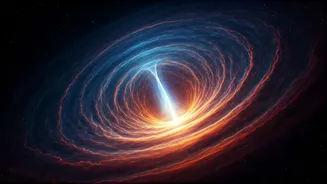
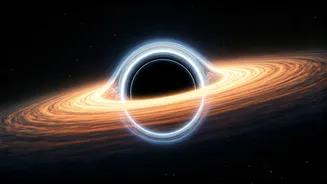
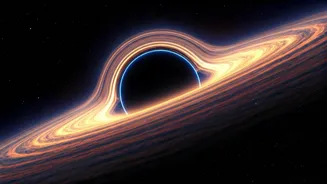
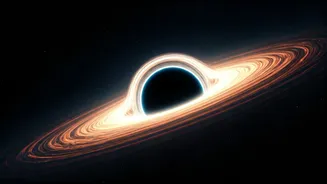
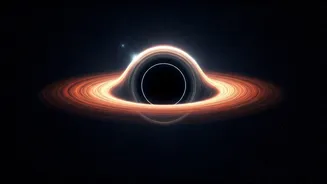
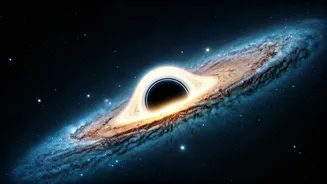
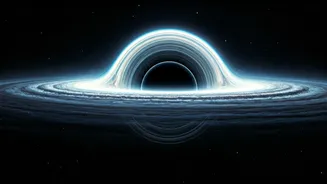
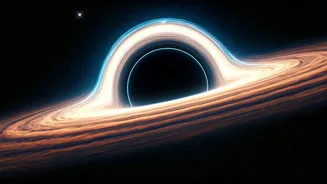
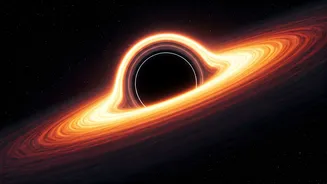
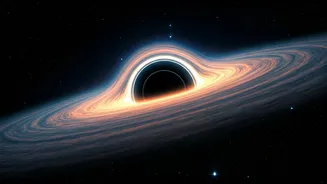
Supermassive black holes are the gravitational anchors of most large galaxies, including our own Milky Way. While their gravity is famous for pulling matter in, they are not just one-way cosmic drains. As gas and dust spiral into a black hole, they form
a searingly hot, rapidly spinning structure called an accretion disk. The intense energy and pressure generated by this process can launch powerful outflows of material back into space. These outflows, often called “black hole winds” or “jets,” are a fundamental part of how a black hole interacts with and shapes its host galaxy. In distant, active galaxies, these winds can be incredibly violent, blasting through their galactic homes. But our own black hole, Sagittarius A (Sgr A), is comparatively quiet, making its wind far more elusive.
A 50-Year Cosmic Mystery
The theory has been simple and persistent: if a black hole is feeding, it must be producing a wind. Yet for 50 years, since Sgr A was first identified in the 1970s, direct evidence of this wind has remained missing. This created a nagging inconsistency, making our galaxy’s central black hole seem like an oddity. The search was hampered by two major challenges. First, our view towards the galactic center is obscured by thick clouds of gas and dust, making it difficult to get a clear line of sight. Second, Sgr A is a very gentle eater, consuming the equivalent of just one grain of rice every million years. This meager diet means its wind is not a raging gale but more of a “gentle breeze,” making its signature incredibly faint and difficult to distinguish from the surrounding cosmic noise.
Finding the Shadow in the Gas
The breakthrough came from a team of astrophysicists at Northwestern University, who devised a clever way to see the wind's subtle effect. Using the Atacama Large Millimeter/submillimeter Array (ALMA) in Chile, they spent five years meticulously mapping the cold molecular gas surrounding the black hole. After carefully processing the data to remove the overwhelmingly bright radio glow of the black hole itself, a distinct feature emerged: a large, cone-shaped hole in the cold gas, pointing directly away from Sgr A*. This void was the wind’s imprint. It’s a region where the hot outflow from the black hole has pushed the colder gas out of the way, carving a cavity. This conclusion was bolstered by data from NASA's Chandra X-ray Observatory, which showed that this exact cavity was filled with the hot gas expected from such a wind.
Why This Gentle Wind Matters
Confirming the existence of this wind, which scientists estimate has been blowing for at least 20,000 years, is a major step forward. It resolves the long-standing mystery and shows that our galaxy’s black hole is not a bizarre exception but follows the same physical rules as its more active counterparts elsewhere in the universe. This process, known as “galactic feedback,” is believed to be a crucial mechanism for regulating the birth of stars. The wind can either clear out gas to prevent new stars from forming or compress it to trigger a burst of star formation. By finally observing this process up close, even in its gentlest form, astronomers can refine their models of how galaxies evolve over billions of years. It proves that even the quietest supermassive black holes are constantly shaping their cosmic environments.