







What is Operation Economic Outcast?
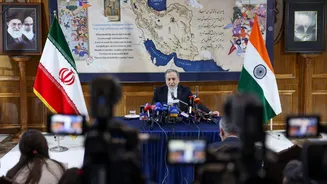
On August 24, 2026, the U.S. Treasury Department announced a major escalation of its economic pressure on Iran. Termed 'Operation Economic Outcast,' the initiative was described by Treasury Secretary Scott Bessent as an 'economic D-Day' aimed at achieving
the 'economic asphyxiation' of the Iranian regime. The stated goal is to completely cut off Iran's financial connections to the rest of the world, forcing a choice between total isolation or rejoining the global community on US terms. This campaign is not just aimed at Tehran; it includes a stark warning to other countries and international companies that continuing to do business with Iran could result in them being cut off from the US dollar system. The move represents a significant shift from previous strategies, focusing on a 'zero-leakage' economic blockade to close any loopholes Iran has used to evade past sanctions.
The Five Targeted Sectors
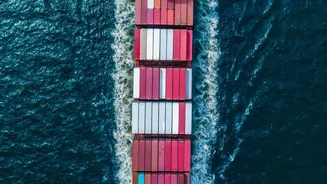
The operation specifically targets five economic sectors deemed critical to Iran's ability to fund its government and military activities while circumventing existing restrictions. These are: 1. Digital Assets: Targeting the use of cryptocurrency by groups like the Islamic Revolutionary Guard Corps (IRGC) to move funds and evade the traditional banking system. 2. Technology: Aiming to halt the procurement of technologies related to weapons development and cyber operations. 3. Gold: Restricting Iran's use of the gold market to stabilize its plummeting currency, the rial, which recently hit a record low. 4. Aviation: Imposing further restrictions on Iran's airlines, which have long been a target of sanctions. 5. Shipping: Cracking down on Iran's so-called 'shadow fleet' of vessels used to illicitly transport oil and weapons components.
Why This Matters for India
While India has significantly reduced its reliance on Iranian oil due to long-standing US sanctions, the new measures present fresh challenges. Bilateral trade, which peaked at $17 billion in FY2019, has already plummeted. However, India remains one of Iran's top five trading partners, with exports now mainly consisting of humanitarian goods like rice, tea, and pharmaceuticals. The latest sanctions threaten to disrupt even this limited trade, much of which is routed through hubs like Dubai. The recent decision by the UAE to suspend all trade with Iran further complicates matters for Indian exporters. More broadly, India faces a delicate diplomatic balancing act. The US has explicitly stated it expects action from all countries, putting pressure on New Delhi to further distance itself from a key regional partner. Any instability in the Strait of Hormuz or a spike in global oil prices resulting from these sanctions would directly impact India's economy.
The Global Ripple Effect
The Trump administration's campaign extends far beyond Iran. By threatening secondary sanctions, the US is putting major economies like China and Turkey on notice. China, as the largest buyer of Iranian oil, is a particular focus. While US officials have so far been cautious about sanctioning major Chinese banks, they have warned that 'no one is above the reach of US sanctions'. This hard-line stance risks escalating trade friction globally. The sanctions also come amid a nearly six-month-long conflict that has seen Iran disrupt shipping through the Strait of Hormuz, a vital channel for about 20% of the world's oil supply. This disruption has already contributed to higher energy prices, and the new sanctions could exacerbate that volatility, affecting economies worldwide. Iranian officials have dismissed the new measures as 'big talk', but the economic pressure is undeniable, with the country's currency in a freefall.