





The Heart of the Restructuring
BMW has confirmed a significant restructuring plan that will see its workforce shrink by about 8,000 positions by the end of 2027. The programme, which was agreed upon with employee representatives after weeks of negotiation, will be implemented through
voluntary redundancy packages offered starting in October 2026. The move is part of a broader cost-saving initiative intended to generate annual savings of around €1 billion from 2028 onwards. While the cuts are global, a substantial portion is expected to affect operations in Germany, where roughly 40,000 of the company's 85,000 permanent employees in desk-based roles will be eligible for the voluntary offers.
Sparing the Factory, Targeting the Office
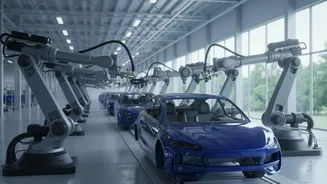
Crucially, the job-cut plan explicitly excludes production operations. The focus is on what the company calls 'indirect functions'. These are white-collar, desk-based jobs that support the business but are not directly involved in assembling vehicles. The targeted areas include administration, planning, and research and development divisions. By sparing its assembly workers, BMW is signaling its intent to protect its core manufacturing capabilities. This strategy ensures that the skilled labour responsible for vehicle quality and output remains intact, which is particularly vital as the company navigates the complex production ramp-up for its next generation of electric vehicles, dubbed the 'Neue Klasse'.
Mounting Pressure in a Shifting Market
The decision to restructure stems from a confluence of challenges facing the German automaker. A primary factor is a significant slowdown in China, which has long been a critical market for BMW. Vehicle deliveries in the country fell 30.2% year-on-year in the second quarter of 2026. This downturn, combined with rising competition from domestic Chinese manufacturers like BYD, has severely impacted profitability. In June, BMW cut its forecast for its automotive operating margin to a range of 1-3%, down from a previous estimate of 4-6%. Chief Executive Milan Nedeljković noted that the automotive industry is facing a “substantial change to the rules of our industry,” pointing to geopolitical uncertainty, US tariffs, and intense global competition as reasons for the realignment.
A Wider Trend in the Auto Industry
BMW is not alone in its efforts to become leaner and more agile. The move is part of a broader wave of workforce reductions across Germany's automotive sector. Porsche recently confirmed plans to cut an additional 5,000 jobs by 2035, while the Volkswagen Group announced plans to eliminate up to 100,000 jobs across its various brands. Like BMW, these companies are grappling with the high costs of the electric vehicle transition, intense price competition, and shifting global market dynamics. By focusing cuts on administrative areas, these legacy automakers are attempting to free up capital for crucial investments in software, battery technology, and new EV platforms, while safeguarding the production expertise that defines their brands.