



A Galaxy Full of Ghosts
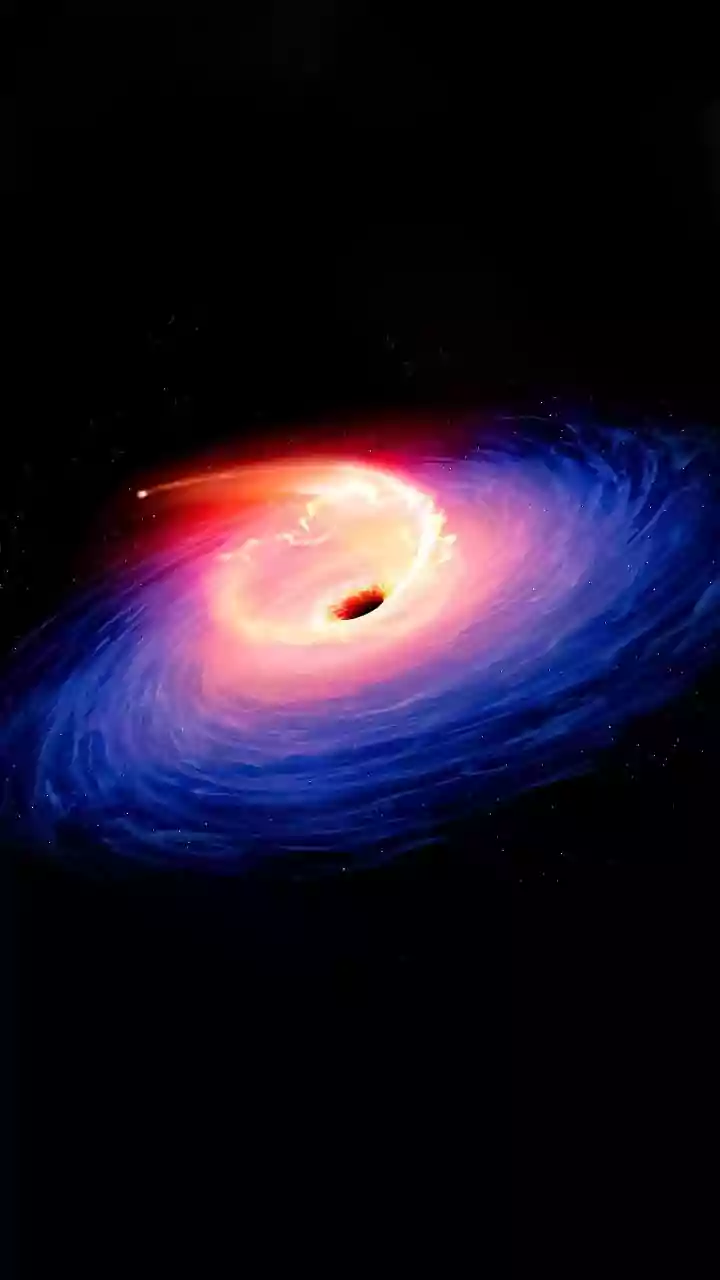
Astronomers believe our galaxy is haunted by up to 100 million stellar-mass black holes, the collapsed remnants of giant stars. But these objects are notoriously difficult to spot. By definition, they swallow light, making them invisible to traditional
telescopes. So far, scientists have only managed to confirm the locations of about 70. These are typically 'feeding' black holes, which give themselves away by siphoning material from a neighbouring star, a process that generates detectable X-rays. The vast majority, however, are thought to be 'quiet' black holes, drifting through space alone or peacefully orbiting a companion star without pulling matter from it. These silent giants are practically invisible, and finding them requires a cleverer approach.
Using Gravity as a Magnifying Glass
The Black Hole Hunters project, a citizen science initiative hosted on the Zooniverse platform, uses a fascinating phenomenon predicted by Einstein: gravitational lensing. A massive object like a black hole warps the fabric of spacetime, bending any light that passes nearby. If a hidden black hole in a binary system passes in front of its companion star from our point of view, its gravity acts like a magnifying glass, briefly making the star appear brighter. This creates a distinct, sharp peak in the star’s light curve — a graph of its brightness over time. This repeating signal, known as 'self-lensing', is the tell-tale sign that volunteers are searching for. The project uses a treasure trove of data from NASA's Transiting Exoplanet Survey Satellite (TESS), which was designed to find planets but is perfect for this kind of brightness-monitoring work.
Why Human Eyes Beat AI
With data from millions of stars, you might think this is a job for artificial intelligence. And while AI is used to perform an initial sift, reducing millions of potential candidates to a more manageable number, it can’t finish the job alone. The data is full of 'glitches' and other variations in stellar brightness that can fool an algorithm. Human brains, however, are exceptionally good at pattern recognition and spotting subtle inconsistencies that computers miss. Volunteers are trained to distinguish the unique, symmetrical spike of a potential lensing event from other stellar activity. This human touch is crucial for creating a reliable shortlist of candidates for astronomers to investigate further with powerful telescopes, saving precious time and resources.
How to Join the Hunt
Becoming a black hole hunter is surprisingly simple and requires no special training or background in astronomy. Anyone with a computer and an internet connection can participate. The project is hosted on Zooniverse, a popular platform for people-powered research. After a short tutorial that shows you examples of the light curve patterns you're looking for, you can start classifying real astronomical data right away. The task is straightforward: you'll be shown graphs of a star's brightness and asked to identify if any look like the characteristic peak of a self-lensing event. Your classifications are then combined with those of other volunteers to build a consensus.
The Thrill of Discovery
Since its launch, the Black Hole Hunters project has attracted nearly 23,000 volunteers who have made almost 12 million classifications. This massive collaborative effort is essential for tackling the sheer scale of the data. While no black holes have been confirmed through this specific self-lensing method yet, the search is on, and every classification helps. Participants have a genuine chance to be part of a landmark discovery. As project co-lead Adam McMaster from the University of Southampton notes, the black holes they're looking for should exist, but finding the first one will be a major breakthrough. By contributing, you're not just clicking on graphs; you are actively helping to map the hidden structure of our galaxy and solve a major astronomical mystery.