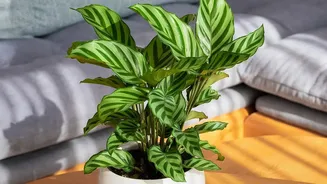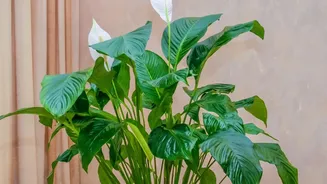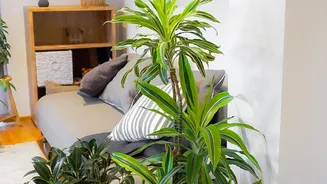







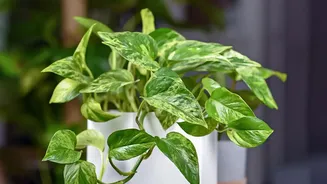
We buy them for their beauty and the promise of cleaner air. But while indoor plants are great companions, their reputation as powerful air purifiers may be more fiction than fact. So, what does the science actually say about your leafy friends?
The Myth's Green Roots
The popular
belief that houseplants are tiny, natural air purifiers stems from a well-known NASA study from 1989. The research was designed to see if plants could clean the air in sealed environments, like a space station. In these controlled lab settings—small, sealed chambers—scientists found that certain common houseplants could indeed remove volatile organic compounds (VOCs) like formaldehyde and benzene from the air. The results were promising and quickly grew into a widely accepted piece of advice: fill your home with plants like peace lilies and spider plants for healthier, cleaner air. This simple, natural solution was an appealing idea that took firm root in popular culture.
Why The Science Doesn't Translate to Your Home
The problem is that your living room is not a sealed NASA chamber. The original study's conditions are very different from a typical home or office, which has a constant flow of air. Building scientists refer to this as the 'air exchange rate', which is the rate at which outdoor air replaces indoor air through windows, doors, and ventilation systems. This natural ventilation does a much faster and more effective job of diluting indoor pollutants than a few houseplants can. To replicate the effects seen in the lab, you would need an enormous number of plants. Some estimates suggest you'd need anywhere from 10 to 1,000 plants per square meter of floor space to achieve the same air-cleaning effect that your building's normal ventilation already provides. For the average 1,500-square-foot home, that could mean nearly 700 plants, an amount most people would find impractical.
So, What Do Plants Actually Do For Air Quality?
Plants do remove some pollutants from the air, but the effect in a normal, ventilated room is minimal to negligible. While a plant's leaves and roots, along with the microbes in its soil, can absorb some VOCs, the volume of air they can process is tiny compared to the total volume of air in a room. Recent reviews of decades of research have confirmed this, concluding that it is unlikely a reasonable number of houseplants will have any significant impact on indoor air quality. For truly effective air purification, you are better off with mechanical air purifiers with HEPA filters and, most importantly, simply opening a window to allow for good ventilation.
The Real, Proven Benefits of Indoor Plants
Even if they aren't air-purifying powerhouses, indoor plants are incredibly beneficial for our wellbeing. Numerous studies show that the presence of plants can reduce stress, anxiety, and even feelings of depression and anger. One study found that simply interacting with indoor plants, such as by watering or repotting them, can induce physiological and psychological relaxation. Having greenery indoors connects us with nature, which has been linked to improved mood, concentration, and productivity. Caring for a plant can also provide a gentle routine and a sense of accomplishment. These psychological benefits are real, measurable, and a fantastic reason to fill your space with green companions.