







The New BRICS Mantra
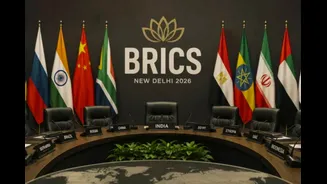
For its fourth time as chair, India has anchored its 2026 agenda under the theme: 'Building for Resilience, Innovation, Cooperation and Sustainability'. This theme is more than just a diplomatic slogan; it represents a strategic pivot. The goal is to
steer the now-expanded 11-member bloc away from being a forum for political statements and towards becoming a platform for practical cooperation. The priorities reflect a 'Humanity First' vision, aiming to deliver concrete benefits in areas like trade, health, digital technology, and climate action. After more than 350 preparatory meetings held across 25 Indian cities, the stage is set for a summit focused on results that impact people directly.
From Consensus to Concrete Action
Historically, India’s BRICS priorities centred on broad goals like reforming multilateral systems, counter-terrorism, and enhancing people-to-people exchanges, as seen during its 2021 chairship. While these objectives remain relevant, the 2026 agenda is granular and action-oriented. The previous focus was on continuity and consensus. Now, the emphasis is on creating robust systems to withstand global shocks. This includes building resilience in supply chains, health, energy, and disaster risk reduction, a direct lesson from recent global crises. The shift is from discussing what the world should look like to building the tools needed to navigate it.
Innovation and Digital Dominance
A major change in India's 2026 agenda is the prominent focus on innovation, particularly Digital Public Infrastructure (DPI). Drawing on its domestic success with platforms like Aadhaar and the Unified Payments Interface (UPI), India is championing DPI as a tool for global development. The agenda proposes a BRICS Digital Public Infrastructure Repository to share knowledge and scale up these solutions across member nations. This push for digital cooperation extends to artificial intelligence, fintech, and scientific research. Other new proposals include a BRICS Startup Innovation Fund and an Incubator Network to foster a vibrant ecosystem for new businesses, moving beyond theoretical cooperation to tangible investment in future growth.
A Sharper Economic Focus
While economic partnership has always been a BRICS pillar, India's 2026 approach is more targeted. The agenda places small and medium-sized enterprises (MSMEs) at the heart of inclusive growth. New Delhi has proposed practical mechanisms like a BRICS MSME Cooperation Portal and an invoice discounting system to help small businesses access finance and global markets. This is a significant change from the past, where discussions were often dominated by macro-economic coordination. The adoption of the BRICS Global Value Chains Action Plan 2026-2030 further underscores a commitment to building more resilient and diversified trade corridors among members. The push to settle more bilateral trade in national currencies also continues, framed as a way to reduce transaction costs rather than a direct challenge to the dollar.
Navigating a New Geopolitical Reality
The context for the 2026 summit has fundamentally changed. The bloc has expanded to include countries like Iran, Saudi Arabia, and the UAE, making consensus on sensitive geopolitical issues more complex. Forging a joint declaration will test India's diplomatic skill, especially on conflicts in West Asia. India’s strategy appears to be ring-fencing practical economic and developmental goals from contentious political debates. The priority is to reinforce BRICS as a platform that champions the interests of the Global South through development-focused initiatives, rather than allowing it to be defined purely by anti-Western stances. This cements India’s long-held policy of strategic autonomy, balancing its roles in forums like BRICS and the Quad.