






A Disease No Longer Defined by Smoking
The image of a smoker's lungs has long been the poster child for cancer risk. Yet, in hospitals across Delhi and other major Indian cities, doctors are witnessing a disturbing trend: a significant and growing number of lung cancer patients have never
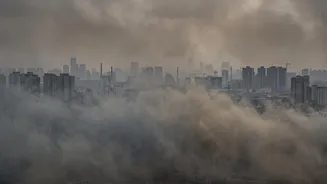
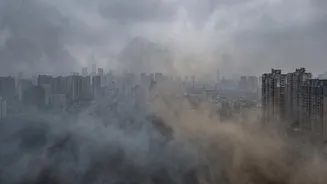
touched a cigarette. Studies show that in India, non-smokers can account for 40-50% of lung cancer cases, a figure that is even higher among women. This shift points directly towards an unavoidable culprit that every city dweller is exposed to — the air they breathe. The World Health Organization (WHO) has officially classified outdoor air pollution, and specifically its component particulate matter, as a Group 1 carcinogen, placing it in the same category as tobacco smoke and asbestos. This isn't a distant threat; it's a daily reality for millions, fundamentally changing our understanding of who is at risk.
How Tiny Particles Trigger a Catastrophe
The primary villain in this story is PM2.5 — fine particulate matter so small it can bypass the body's natural defences and lodge deep within the lungs. But these particles don't just sit there. Groundbreaking research has uncovered the precise mechanism by which they can initiate cancer. Scientists have found that many of us have normal lung cells with pre-existing, dormant mutations, such as in a gene called EGFR. These mutations are often a consequence of ageing and are typically harmless. However, when these cells are exposed to PM2.5, the particles cause chronic inflammation. This inflammation acts like a switch. It triggers the release of a chemical called interleukin-1-beta (IL-1β), which 'wakes up' the mutated cells, causing them to proliferate uncontrollably and form a tumour. In essence, air pollution doesn't necessarily cause the initial mutation, but it promotes the growth of cells that already have one, explaining how healthy non-smokers can develop the disease.
The Debate and The Data
The 'debate' surrounding air pollution and cancer is not about if a link exists — that is settled science. Instead, it centres on the magnitude of the risk and the specific biological pathways involved, which are areas of intense study. To generate India-specific evidence, AIIMS Delhi has launched a major study called AIRCARE. This research is tracking over 3,000 residents in the Delhi-NCR region to establish a direct correlation between long-term PM2.5 exposure and lung cancer incidence. Early observations from oncologists already suggest a strong connection, as the type of lung cancer most commonly found in non-smokers, adenocarcinoma, is now the dominant subtype in cities like Mumbai. The data increasingly shows that the more polluted the air someone breathes, the more genetic damage appears in their lung tumours.
An Invisible and Undemocratic Threat
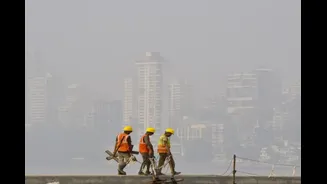
While smoking is a choice, breathing is not. This makes air pollution a uniquely undemocratic public health crisis. Non-smokers, who may have diligently avoided tobacco their entire lives, find themselves exposed to a pervasive environmental carcinogen from which there is no easy escape. The risk is insidious, built up over years of daily exposure from traffic exhaust, industrial emissions, and crop burning. The damage is not just limited to the lungs. Once PM2.5 particles enter the deep lung tissue, they can pass into the bloodstream, contributing to systemic inflammation and increasing the risk of other health issues, including heart disease and adverse birth outcomes. This systemic assault underscores why clean air is not just an environmental issue but a fundamental pillar of public health.