








An Exascale Computer in a Single Rack
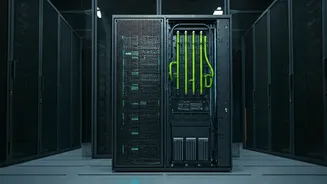
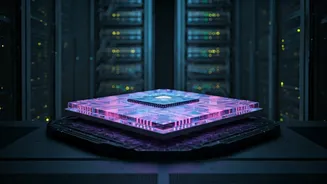
The NVIDIA GB200 NVL72 is not just another computer. It's a behemoth, an entire AI data center compressed into a single, 1.5-ton cabinet. NVIDIA describes it as an 'exascale computer in a single rack,' designed to power the next generation of massive
AI models. Inside, it connects 72 state-of-the-art Blackwell GPUs and 36 Grace CPUs, all functioning as a single, colossal processor. The system is a marvel of integration, packing 600,000 individual parts and over five thousand copper cables into its frame to create what CEO Jensen Huang calls 'one giant GPU'. This unprecedented density is what gives it the power to train and run trillion-parameter AI models, promising a 30-fold performance leap over its already dominant predecessors.
The Cooling Conundrum
This incredible power generates an equally incredible problem: heat. A single GB200 'Superchip' package can draw a massive 2,700 watts, while the full rack consumes up to 125 kilowatts—far beyond what traditional air cooling can handle. To solve this, NVIDIA had to engineer a sophisticated direct-to-chip liquid cooling system. This is a fundamental shift for data centers, which have overwhelmingly relied on air. However, implementing liquid cooling at this scale is a monumental engineering challenge. Reports from supply chain partners have detailed issues including overheating, leaks from connectors, and difficulties in manufacturing the intricate cold plates needed to draw heat away from the chips efficiently. The heat is so concentrated in spots that it can reach 150W per square centimeter, an intensity that would rapidly destroy the chip if not managed perfectly.
A Puzzle of Production and Packaging
The complexity doesn't stop at cooling. Assembling the NVL72 rack has proven to be a significant bottleneck. The system relies on a brand-new, more complex semiconductor packaging technology from TSMC called CoWoS-L, which has faced its own production ramp-up challenges. Beyond the chips themselves, the sheer system-level complexity has caused headaches. Engineers have reported internal connectivity problems, software bugs, and issues with power delivery. One analyst noted that NVIDIA may not have given its supply chain enough time to prepare for such an intricate design. This has reportedly led to production delays, pushing initial high-volume shipments from late 2024 into early 2025 as partners worked to solve the host of technical hurdles.
A Problem of Success
While any delay is notable, the challenges with the GB200 NVL72 are ultimately a symptom of NVIDIA's own success and aggressive innovation. The company is so far ahead in the AI hardware race that it is competing with the laws of physics and the practical limits of manufacturing. These production hurdles are not seen as a long-term threat to NVIDIA's dominance but rather as the price of admission for creating a new category of computing. The difficulties highlight the immense leap in engineering required to build the 'AI factories' of the future. More recent reports indicate that NVIDIA and its partners have made breakthroughs, resolving many of the initial production issues and beginning to ramp up shipments. Still, the experience serves as a powerful reminder that even as AI capabilities seem to grow without limit, they are still bound by the physical world of silicon, copper, and coolant.