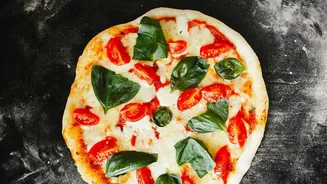






What is Sourdough Pizza?
At its heart, sourdough pizza is simply pizza made with a naturally fermented dough. Instead of using commercial yeast to make the dough rise quickly, bakers use a 'sourdough starter'. This starter is a living culture of wild yeasts and beneficial bacteria
(specifically lactic acid bacteria) captured from the environment, usually just a simple mix of flour and water. This 'mother dough' is fed and nurtured, sometimes for years, developing a unique character. When used in a pizza base, it initiates a slow fermentation process, often lasting 24 to 72 hours, which fundamentally changes the dough's chemistry, flavour, and structure.
The Magic of Slow Fermentation
Regular pizza dough, made with commercial yeast, rises in just a few hours. Sourdough’s extended fermentation is where the real transformation happens. Over one to three days, the wild yeasts and bacteria in the starter feast on the starches and sugars in the flour. This process does more than just produce carbon dioxide to create airy bubbles. It breaks down complex carbohydrates and proteins, including some gluten, making the dough's components simpler and more accessible. This slow, deliberate process is what gives the final crust its signature qualities, from a blistered, crispy exterior to a soft, chewy interior.
A Deeper, More Complex Flavour
The most immediate difference anyone will notice is the taste. The long fermentation process develops a remarkable depth of flavour that you won't find in a standard pizza base. The lactic acid bacteria produce acids that give the crust a subtle, pleasant tang, which balances the richness of cheese and other toppings beautifully. This isn’t an overpowering sourness, but rather a complex, savoury, and slightly sweet character that makes the crust an integral part of the pizza experience, not just a vehicle for the toppings.
Is It Easier to Digest?
Many people who feel bloated or heavy after eating conventional pizza find sourdough to be a gentler option. The long fermentation essentially pre-digests the flour. The bacteria break down complex starches and some of the gluten proteins that can be difficult for some people to process. Furthermore, the process reduces levels of phytic acid, a natural compound in grains that can hinder the body's ability to absorb minerals. This makes the nutrients in the flour more bioavailable. While it's not gluten-free and therefore unsafe for those with celiac disease, many with mild gluten sensitivity report being able to enjoy sourdough pizza without discomfort.
The Rise of Artisanal Pizza in India
The sourdough trend is no longer confined to artisan bakeries in Europe and America; it's making a significant mark on India's food scene. Pizzerias like Si Nonna's in Mumbai and Bengaluru are championing authentic Neapolitan-style sourdough pizzas, sometimes using starter cultures with histories stretching back decades or even centuries, imported from Italy. Even major brands like Domino's India have recognized the trend, launching their own version of sourdough pizza to bring the artisanal experience to a wider audience. This shows a growing appreciation among Indian diners for craft, quality ingredients, and the unique benefits of slow food preparation. The use of familiar flours like atta is even being explored for homemade sourdough pizzas, bridging global techniques with local staples.