




A Junkyard in the Sky
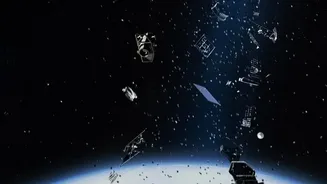
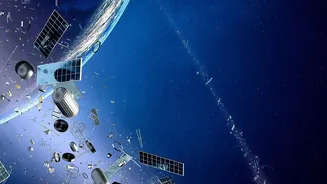
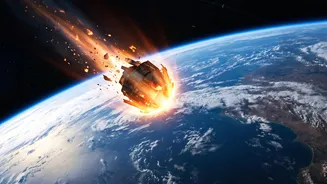
Since the dawn of the space age, humanity has left its trash behind. More than 17,000 tonnes of material now orbit Earth, from defunct satellites and spent rocket stages to millions of smaller fragments created by collisions and explosions. According
to NASA, there are over 100 million particles larger than a millimeter, each travelling at speeds exceeding 28,000 kilometres per hour. At that velocity, even a fleck of paint can inflict catastrophic damage on a functional satellite, jeopardising the vital infrastructure that powers everything from GPS navigation and financial transactions to weather forecasting. The European Space Agency's 2026 environmental report highlighted the growing risk, noting that some orbital highways are so congested they could become unusable, a scenario known as the Kessler Syndrome, where collisions create a cascade of more debris and more collisions.
The Cleanup Crew
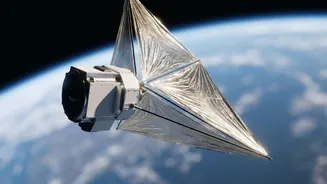
A new generation of companies is stepping up to tackle the problem. Japan's Astroscale and Switzerland's ClearSpace are two of the leading players developing what amounts to an orbital tow-truck service. Astroscale has already conducted successful demonstration missions, including inspecting a derelict Japanese rocket body in 2024 and proving its magnetic capture technology. Its upcoming ELSA-M mission, supported by the UK Space Agency and the European Space Agency (ESA), aims to be one of the first to capture and deorbit a commercial satellite. ClearSpace holds a landmark contract with ESA, valued at around 86 million euros, to remove a single piece of debris in 2028. Other startups are joining the fray, developing technologies from robotic arms and harpoons to nets, all designed to capture non-cooperative targets tumbling through space.
The Problem of Who Pays
Despite the clear and present danger, the business model for debris removal remains uncertain. The core issue is that for now, avoiding debris is far cheaper than removing it. A single removal mission can cost tens of millions of dollars. Without a clear mandate or financial incentive, most satellite operators would rather spend a little extra fuel maneuvering around a potential collision than pay a fortune to have a piece of junk removed. The current market, valued at around USD 1.2 billion in 2025, is dominated by revenue from tracking and collision avoidance services, not active removal. Most active removal projects to date have been government-funded technology demonstrators, not sustainable commercial services. This creates a classic 'tragedy of the commons' scenario, where it's in everyone's long-term interest to keep orbit clean, but in no single operator's short-term financial interest to pay for it.
The Push for Regulation
This is where regulation becomes the market's most critical driver. Seeing the writing on the wall, government agencies are starting to tighten the rules. The most significant move came from the U.S. Federal Communications Commission (FCC), which implemented a 'five-year rule' in late 2024. This rule mandates that operators of satellites in low-Earth orbit must ensure their spacecraft deorbits within five years of its mission ending, a sharp reduction from the previous 25-year international guideline. Similarly, ESA is promoting a 'Zero Debris' charter, aiming to stop its own missions from generating new debris by 2030. These regulations are designed to prevent the problem from getting worse, but they also create a compliance-driven demand for end-of-life services, giving companies like Astroscale a concrete market to sell into. However, a major legal hurdle remains: under international law, space objects belong to their launching state in perpetuity, meaning a third party cannot legally remove another country's defunct satellite without permission.
The Future of the Market
The market for debris removal is at a tipping point. Analysts project it could grow to over USD 9.5 billion by 2035, but this growth depends entirely on solving the economic puzzle. The solution will likely be a combination of stricter, globally enforced regulations and new business models that reduce costs. Companies are already developing 'multi-object' missions that can remove several pieces of debris at once, drastically lowering the per-item cost. Another potential revenue stream is bundling debris removal with in-orbit servicing, such as refueling or repairing satellites. Ultimately, commercial demand will follow regulatory requirements. As rules like the FCC's five-year mandate become the global standard, satellite operators will have no choice but to budget for responsible disposal, transforming debris removal from a public good into a paid service.