


The Sweet Deconstruction
The statement is largely true: most of the brown sugar found in grocery stores is made by taking fully refined white sugar and adding molasses back into it. This industrial method offers manufacturers precise control over the final product. The process
of sugar refining, whether from sugarcane or sugar beets, is designed to produce pure sucrose, which is white granulated sugar. A thick, dark syrup called molasses is the natural byproduct of this refining process. For peak efficiency, manufacturers first strip everything away to get pure white sugar, and then add a specific amount of the separated molasses back to create consistent light or dark brown sugar.
A Tale of Two Sugars
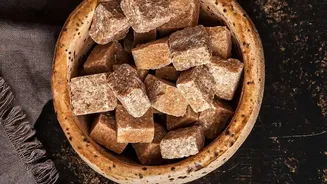
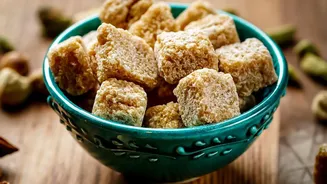
Not all brown sugars are created this way. So-called "unrefined" or "raw" sugars, like muscovado, turbinado, and demerara, are processed differently. These sugars are only partially refined, meaning they retain some of their original, naturally occurring molasses content from the sugarcane juice. Muscovado, for instance, is very dark, moist, and sticky because it has a high molasses content that was never fully removed. In contrast, the common soft brown sugar we buy is specifically manufactured for a uniform texture and flavour by reintroducing molasses to white sugar crystals.
Light vs. Dark: A Matter of Molasses
The difference between the light and dark brown sugar on the shelf is simply the quantity of molasses each contains. Light brown sugar typically has about 3.5% molasses, giving it a milder, more delicate caramel flavour. Dark brown sugar contains nearly double that, around 6.5%, which results in a deeper colour, a stronger, more complex toffee-like flavour, and a higher moisture content. This is also why you can make your own brown sugar in a pinch by mixing white sugar and molasses at home.
Is Brown Sugar Healthier?
Many people assume that because it’s darker, brown sugar is a healthier, more natural alternative to white sugar. Nutritionally, this is a misconception. While the molasses in brown sugar does add trace amounts of minerals like calcium, potassium, and iron, the quantities are so minuscule that they have no significant impact on your health. Both white and brown sugar are calorically almost identical and are composed almost entirely of sucrose. Health experts advise limiting your intake of all added sugars, regardless of the colour or type.
When to Use Which in the Kitchen
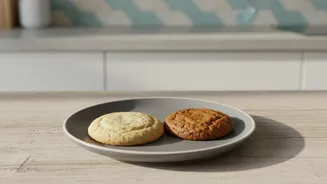
The real difference between brown and white sugar emerges in cooking and baking. The molasses in brown sugar is hygroscopic, meaning it attracts and retains moisture. This is why brown sugar makes cookies chewier, cakes moister, and brownies fudgier. White sugar, lacking molasses, creates a crisper, drier texture, which is ideal for things like shortbread or meringues where a light, airy structure is desired. The deeper flavour of dark brown sugar is excellent for robust recipes like gingerbread or barbecue sauce, while light brown sugar's gentler flavour is more versatile for everyday baking.