








The Farmer’s Costly Gamble
Every farmer knows the frustration. You spend a significant amount of time and money applying expensive fungicides or pesticides to protect your valuable crops, only for a sudden downpour to wash it all away. Not only is the investment lost, but the chemicals
can run off into nearby water sources, creating an environmental hazard. The crop remains unprotected, and the entire process must be repeated. This cycle of spray, rain, and repeat is a timeless agricultural dilemma, impacting everything from small family farms to large commercial operations. It’s a costly gamble against the elements, where a wrong bet means wasted resources and diminished returns.
How Artificial Intelligence Changes the Game
Enter Artificial Intelligence. Modern AI systems are transforming weather forecasting from a regional guess into a hyper-local science. Instead of relying on broad forecasts that cover a wide area, these platforms integrate vast amounts of data to provide predictions for a specific farm, sometimes down to a single field. They analyse real-time information from on-site sensors, satellite imagery, and historical weather patterns. By running this data through complex machine learning algorithms, the AI can predict rainfall, wind speed, and humidity with a remarkable degree of accuracy. This allows a farmer to know, with much greater confidence, if there is a window of dry weather long enough for a chemical application to be effective.
More Than Just Saving Money
The benefits of this precision agriculture extend far beyond the initial cost savings from reduced chemical use. By applying treatments at the optimal time, crop health is significantly improved. Plants get the protection they need, leading to better quality produce and potentially higher yields. Environmentally, the impact is profound. Minimising chemical runoff helps protect local ecosystems, from the soil to the streams. This targeted approach, often called 'precision spraying' or 'smart spraying', can reduce overall chemical usage by a significant margin—some systems claim reductions of up to 90% by only targeting specific problem areas. It represents a major shift towards more sustainable and efficient farming practices.
The Potential in the Indian Landscape
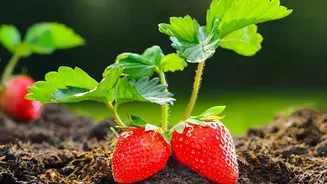
While the headline focuses on strawberries, this technology is crop-agnostic and holds immense promise for Indian agriculture. India is already seeing a rise in agritech startups leveraging AI to solve local challenges. Companies like CropIn and Fasal are developing AI-powered platforms that offer farm management solutions, including weather-based advisories. The Indian government has also launched initiatives like the IndiaAI Mission and supports AI-based tools to help farmers. These systems can provide crucial, timely advice on everything from sowing to irrigation and pest management. For a nation where agriculture is a cornerstone of the economy and millions of livelihoods depend on the monsoon, such technology could be transformative.
Challenges and the Road Ahead
Despite the enormous potential, bringing this technology to the majority of India's farmers presents challenges. The initial cost of sensors and access to digital platforms can be a barrier for small-scale farmers. Ensuring the AI models are trained on high-quality, hyperlocal data is crucial for their accuracy and usefulness. However, collaborations between government bodies, private companies, and academic institutions are paving the way forward. For instance, partnerships like the one between IIT Ropar and Syngenta aim to develop digital tools tailored specifically for Indian crops and weather patterns. As technology becomes more affordable and accessible, AI-driven insights could become a standard tool for farmers across the country, helping to build a more resilient and productive agricultural sector.