






Sikkim's Century-Old Avocado
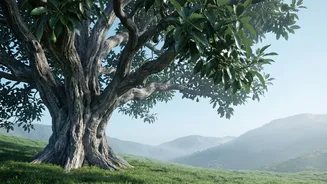
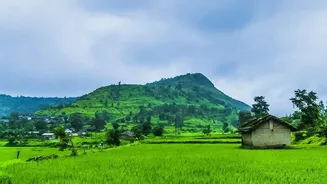
In the quiet hills of South Sikkim, a remarkable avocado tree has become a local celebrity. Believed to have been planted around 1927 by Captain Thaman Singh Gurung, a World War II veteran, this tree is now approaching its 100th birthday. While avocados
were introduced to India by American missionaries in the early 20th century, they are primarily grown in the southern states. Sikkim is one of the few places in northern India where the fruit thrives, making this particular tree a significant local landmark. Its longevity is a testament to the region's unique agricultural heritage and the history of how this now-popular fruit found a home in the Himalayas. The tree's story highlights how even relatively young trees, in the grand scheme of things, can hold immense cultural value.
India's True Ancients: The Banyan Kings
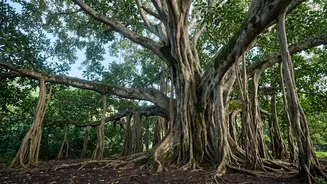
While a 100-year-old fruit tree is impressive, India is home to trees that have witnessed centuries of history. The most notable among them are colossal banyan trees (Ficus benghalensis). One of the most famous is The Great Banyan in the Acharya Jagadish Chandra Bose Indian Botanic Garden near Kolkata. Estimated to be over 250 years old, this tree is less a single entity and more a sprawling forest. After its main trunk was removed in 1925 due to disease following cyclone damage, its thousands of aerial roots have continued to grow downwards, forming new trunks. Today, it covers an astonishing 4.67 acres, making it the widest tree in the world.
The Colossus of Andhra Pradesh
Even older and larger in canopy size is Thimmamma Marrimanu in Andhra Pradesh. This banyan tree is estimated to be around 550 years old and holds the Guinness World Record for the largest tree canopy, covering nearly five acres. Local legend says the tree grew from the spot where a woman named Thimmamma committed sati in the 15th century, making it a sacred site. Thousands of pilgrims visit the temple beneath its branches, especially during the Shivaratri festival. Unlike a single-trunk tree, Thimmamma Marrimanu is a massive clonal colony, a single organism that has spread over an enormous area, showcasing the banyan's unique ability to achieve a form of immortality by constantly regenerating itself.
A Global Perspective on Age
When we look globally, the scale of tree longevity is truly mind-boggling. The contenders for the world's oldest trees are not clonal colonies like the banyans, but individual, single-stemmed organisms. The undisputed champions are the Great Basin bristlecone pines (Pinus longaeva) found in the White Mountains of California. One of these trees, nicknamed "Methuselah," is over 4,800 years old. It was already a mature tree when the pyramids of Giza were being built. An even older, unnamed bristlecone pine in the same area is believed to have surpassed 5,000 years. Other ancient trees include "Old Tjikko," a 9,550-year-old Norway spruce in Sweden whose age is in its root system, and Pando, a clonal colony of quaking aspen in Utah estimated to be 80,000 years old.
What Makes a Tree 'Old'?
The question of the "oldest tree" depends on the definition. Is it an individual, non-clonal tree with a single trunk and root system, like the bristlecone pines? Or is it a clonal colony like The Great Banyan or Thimmamma Marrimanu, which are genetically a single organism but function like a forest with multiple trunks? The banyans achieve their vast size and age by spreading outwards, creating new trunks from aerial roots. This allows the organism to survive even if the original trunk dies. Bristlecone pines, on the other hand, achieve their immense age through extreme resilience, growing very slowly in harsh, high-altitude environments which protects them from pests and disease. Both forms of longevity are remarkable feats of nature.