





The Decisive Role of Wind
The single most important factor determining Delhi's air quality on any given day is the wind. Think of it as nature's exhaust fan. When wind speeds are strong, typically above 10-15 km/h, they are effective at dispersing the cocktail of pollutants that
builds up over the city. This includes local emissions from traffic and industry as well as pollutants transported from elsewhere. A brisk wind can turn a 'severe' air day into a 'moderate' one in a matter of hours. Conversely, when winds are calm and stagnant, pollutants have nowhere to go. They become trapped, causing concentrations of harmful particles to rise dramatically. This is why you can have two consecutive days with similar emission levels but drastically different Air Quality Index (AQI) readings.
The Temperature Inversion Trap
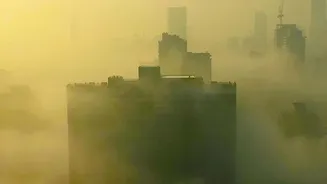
Another critical weather phenomenon is the temperature inversion, a characteristic feature of North Indian winters. Normally, air is warmer near the ground and gets cooler with altitude, allowing pollutants to rise and disperse. During an inversion, this pattern flips. A layer of cooler, denser air gets trapped at the ground level by a layer of warmer air above it. This acts like an atmospheric lid, preventing the vertical mixing of air. Emissions from vehicles, industry, and heating get stuck in this shallow layer of cold air close to where we breathe, leading to a rapid spike in pollution levels, especially during early mornings and late nights when the ground is coolest.
The Stubble Burning Lottery
The impact of post-harvest stubble burning in neighbouring states like Punjab and Haryana is significant, but it's not constant. Whether Delhi chokes on farm fire smoke is entirely dependent on wind direction. For the smoke to reach the capital, the prevailing winds must be north-westerly. On days when the wind blows from other directions, such as the east, the impact of farm fires on Delhi's AQI is minimal, even if the number of fires is high. This creates a lottery-like situation; the daily contribution of stubble burning to Delhi's PM2.5 can vary from as low as 3% to over 40%, depending entirely on which way the wind blows.
The Unchanging Local Baseline
While meteorological conditions and farm fires are variable, Delhi's own pollution sources provide a consistent, high baseline. Emissions from the millions of registered vehicles, dust from construction sites, and industrial operations are present year-round. These local sources are responsible for a significant portion of the city's pollution. During the post-monsoon season, even without any contribution from farm fires, calm winds and temperature inversions can trap these local emissions, pushing the AQI into the 'poor' or 'very poor' category on their own. It highlights the city's heavy reliance on favourable weather for breathable air.
The Occasional Relief from Rain
Just as the monsoon cleanses the air, a post-monsoon shower can provide temporary but immediate relief. Rain acts as a natural scrubber, washing particulate matter and other pollutants out of the atmosphere. Following a spell of rain, it is common to see a dramatic drop in the AQI and clear, blue skies. However, this relief is often short-lived. Once the rain stops and calm, cool conditions return, the accumulation of pollutants begins anew, restarting the cycle.