

An Old Idea Gains New Attention
The concept of ocean iron fertilization (OIF) isn't new. For decades, scientists have known that in many parts of the open ocean, the growth of tiny marine algae called phytoplankton is limited by a lack of iron. When iron is introduced naturally—through
dust from deserts or volcanic ash—it can trigger massive phytoplankton blooms visible from space. These blooms act like forests in the sea, absorbing atmospheric carbon dioxide through photosynthesis. The idea behind OIF is to mimic this natural process by strategically adding small amounts of iron to stimulate these blooms, hoping the carbon they absorb will sink to the deep ocean and remain stored for centuries.
What the Latest Science Reveals
Recent studies, including a new modeling analysis published in early August 2026, are providing a more nuanced understanding of OIF. The research confirms that the effectiveness and risks of this technique depend heavily on the location. Simulations show that fertilizing the Southern Ocean around Antarctica could provide significant carbon removal benefits with minimal ecological damage. Conversely, attempting the same process in equatorial waters could be disastrous, potentially starving marine life in an area 40 times larger than the one fertilized, while offering little net carbon removal. This happens because the increased phytoplankton growth in one area uses up other essential nutrients, depriving downstream ecosystems.
The Promise: A Powerful Carbon Sink
The potential upside of OIF is enormous. Natural events provide a tantalizing glimpse of its power. The ash from a single volcanic eruption in 2008 is estimated to have caused a bloom that removed 10 million tons of carbon. If this could be scaled up, proponents argue it could become a gigaton-scale carbon dioxide removal tool, buying humanity critical time to transition away from fossil fuels. Scientists believe this process played a role in past ice ages, where high levels of iron-rich dust in the oceans correlated with drops in global temperature and atmospheric carbon. The key is ensuring the captured carbon actually sinks to the deep ocean and stays there for at least a century, a process that is still difficult to measure and verify.
The Peril: Disrupting the Marine Food Web
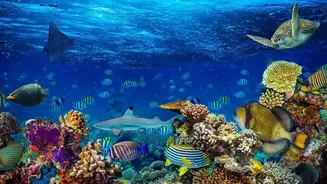
Despite the potential benefits, the side effects are a major concern for the scientific community. Large-scale fertilization could fundamentally alter marine ecosystems. Triggering massive blooms of one type of phytoplankton can outcompete other species, disrupting the base of the food web. As these enormous blooms die and decompose, the process consumes vast amounts of oxygen, which could create large, low-oxygen 'dead zones' where other marine life cannot survive. There is also a risk of producing other powerful greenhouse gases, like nitrous oxide, which could offset some of the climate benefits. These high-stakes risks are why many scientists are calling for extreme caution and more research.
A Global Debate: To Test or Not to Test?
The scientific community remains divided. Some argue that given the scale of the climate crisis, all options must be on the table, and that carefully controlled, large-scale field trials are the only way to truly understand the efficacy and risks. Others are strongly opposed, highlighting the unpredictable and potentially irreversible damage to ocean ecosystems. Project Drawdown, a prominent climate solutions non-profit, currently does not recommend ocean fertilization due to its low effectiveness and high environmental risks. The latest research highlighting the importance of location adds a new dimension to this debate, suggesting that if OIF is ever pursued, it would have to be in very specific, well-monitored regions like the Southern Ocean.