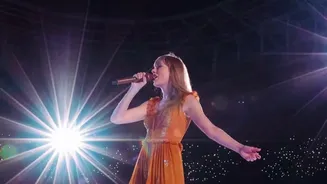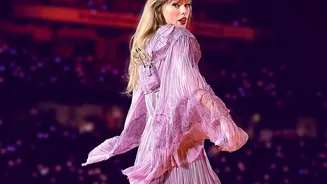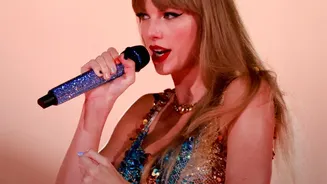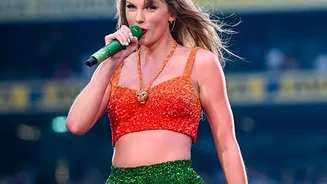










In August 2024, the cancellation of three Taylor Swift concerts in Vienna sent shockwaves globally. Now, new revelations from a former intelligence chief are shedding more light on the international effort that thwarted a deadly terror plot.
A Plot Against the Eras Tour
In the summer
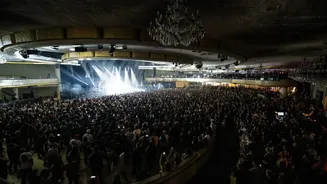
of 2024, as Taylor Swift’s record-breaking Eras Tour was set to arrive in Vienna, Austrian authorities uncovered a chilling plot. Three sold-out shows at the Ernst Happel Stadium, with over 170,000 fans expected to attend, were abruptly cancelled just a day before the first performance. The reason: a credible and advanced terrorist threat. Austrian officials confirmed the arrest of several young men, radicalised online and allegedly inspired by the Islamic State (IS), who were planning a mass-casualty attack on concertgoers. The plotters intended to target the crowds both inside and outside the stadium using a deadly combination of explosives, knives, and a vehicle. The news horrified fans and highlighted the ongoing security challenges facing major global events.
The Suspects and Their Plan
The main suspect was identified as a 19-year-old Austrian citizen who had pledged allegiance to the leader of the Islamic State online. A search of his home uncovered bomb-making materials, including chemicals, as well as knives and machetes. Authorities stated that the suspect confessed to the plot, aiming to kill himself and as many people as possible. He and his accomplices, also in their late teens and early twenties, were radicalised largely through social media and online forums. One of the key suspects, Beran A., was later sentenced to 15 years in prison in May 2026 after pleading guilty to terrorism offenses connected to the plot. Another accomplice was sentenced to 12 years. The investigation revealed the disturbing ease and speed with which these young individuals were drawn into extremist ideology and prepared for violence.
New Revelations from a Former Mossad Chief
The headline-making news now is the recent commentary from David Barnea, the former director of Israel's Mossad intelligence agency. Speaking at a conference in Jerusalem in November 2026, Barnea revealed for the first time the significant role Israeli intelligence played in stopping the attack. He stated that while the initial warning came from Austrian authorities' partners, the Mossad was brought in to help. According to Barnea, the agency used its 'unique capabilities' to process intelligence, identify the terrorist network, and ultimately help 'bring about the arrest of the global jihad cell'. He described the joint effort as having prevented the 'mass murder of up to hundreds of young men and women'. These remarks add a new layer to the publicly known story, which had previously credited U.S. intelligence with providing the crucial tip-off.
A Global Intelligence Effort
Barnea’s statement underscores the complex, multinational cooperation required to combat modern terrorism. It's now clear that a combination of Austrian, American, and Israeli intelligence was involved in disrupting the Vienna plot. Austrian Interior Minister Gerhard Karner had previously acknowledged that foreign intelligence agencies were instrumental, partly because Austrian law limited the authorities' ability to monitor encrypted messenger apps where much of the planning occurred. The plot against the Swift concert serves as a stark example of how international intelligence sharing is no longer an option but a necessity. The ability of different agencies to pool resources and expertise was critical in connecting the dots from online chatter to a real-world threat, culminating in the arrests just before the concerts were scheduled to begin.
Concerts as 'Soft Targets'
The Vienna plot is a sobering reminder of why large concerts are considered 'soft targets' by security experts. Unlike heavily fortified government buildings, concerts gather tens of thousands of civilians in predictable locations, often with large crowds forming outside security perimeters. This makes them attractive to terrorists seeking to inflict maximum casualties and generate widespread fear, a tactic tragically seen in the 2017 Manchester Arena bombing at an Ariana Grande concert. In her first statement after the cancellations, Taylor Swift expressed being filled with a 'new sense of fear' but also 'grateful to the authorities'. The incident forced a renewed focus on the extensive, often unseen, security measures that are essential for protecting fans and artists at mass gatherings in an era of heightened global threat levels.