



The Beloved Queen's First Fast
The most well-known story or 'katha' recited during Karwa Chauth is that of Veeravati, a beautiful queen and the only sister to seven loving brothers. During her first Karwa Chauth after marriage, she was at her parents' home and began the strict, day-long
fast for her husband's well-being. Having been pampered all her life, the queen found the rigours of the 'nirjala' fast (without food or water) difficult to bear. As evening approached, she grew weak with hunger and thirst, desperately waiting for the moon to rise so she could break her fast.
A Deception Born of Sibling Love
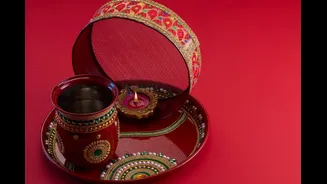
Seeing their sister's distress, the seven brothers couldn't bear her suffering. Unwilling to let her faint from exhaustion, they devised a plan to trick her into eating. In one version of the story, they created a bonfire on a distant hill and told her it was the moon. In the more popular telling, they held a mirror or a sieve with a lamp behind it through the leaves of a Pipal tree, creating an illusion of the moon in the sky. Overjoyed and deceived, Veeravati mistook the glow for the real moon, broke her fast, and took a meal.
The Heartbreaking Consequence
The moment the queen took her first bite of food, ill omens appeared. Soon after, she received the devastating news that her husband, the king, was either grievously ill or had passed away. Heartbroken, she rushed towards her husband's kingdom. On the way, she met Goddess Parvati and Lord Shiva, who revealed her brothers' deception. Parvati explained that her husband's fate was a direct result of breaking the fast prematurely. Overcome with guilt and sorrow, Veeravati begged for forgiveness and a way to save her husband.
Penance, Devotion, and a Second Chance
Moved by her sincere repentance and devotion, the goddess offered her a path to redemption. She instructed Veeravati to observe the fast again, this time with unwavering dedication and adherence to all the rituals. In some tellings, Veeravati had to observe fasts for a whole year to accumulate the spiritual merit needed to revive her husband. Another version details how she found her husband alive but in a coma, with needles pierced into his body, and she painstakingly removed one each day until the next Karwa Chauth. Ultimately, her steadfast faith paid off. By completing the fast correctly, the god of death, Yama, was forced to restore her husband's life, and they were reunited.
From Legend to Living Ritual
The story of Veeravati is not just a tale; it's the foundation for many of the rituals observed today. Her journey reinforces the importance of completing the fast with sincerity and patience. The tradition of viewing the moon through a sieve ('chalni') is seen by some as a symbolic reminder of Veeravati's experience, representing the act of separating a false moon from the true one. The katha is recited in groups as a way to reinforce the moral of the story: that love and devotion are powerful, but they must be guided by discipline and faith.