







The Stark Prediction
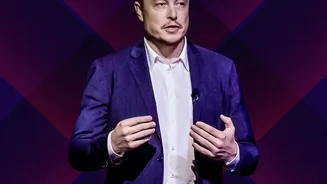
Elon Musk’s recent statements paint a future where work as we know it becomes optional, not out of choice, but due to the sheer capability of artificial intelligence and robotics. In various forums over the past year, he has suggested that AI and robots
will eventually be able to perform nearly every human job, from manual labour to complex cognitive tasks. This could lead to a state of “universal high income,” where the cost of goods and services plummets, potentially making money itself less relevant. His timeline for this profound shift is startlingly short, suggesting it could happen within decades, not centuries. This vision is not presented as a distant sci-fi fantasy, but as an impending economic reality that society is not yet prepared to face.
What 'Work Transformation' Really Means
The transformation Musk speaks of is not just about job losses; it's a fundamental change in the division of labour between humans and machines. Initially, this looks like automation of repetitive tasks. Sectors like manufacturing, customer service, and even parts of the IT and business process outsourcing (BPO) industries are already seeing AI-powered tools like chatbots and robotic process automation handle routine functions. However, the rise of generative AI is now impacting white-collar jobs previously thought to be immune, such as those in HR, content creation, and analysis. The World Economic Forum has noted that while millions of jobs may be displaced, millions of new roles will also emerge—roles that require collaboration with AI and focus on skills that machines cannot replicate, like critical thinking, emotional intelligence, and complex problem-solving. The disruption is less about a complete replacement of humans and more about a massive, rapid, and often jarring reshuffling of required skills and job functions.
The Challenge of Social Adaptation
The core of Musk's warning lies in the 'adaptation gap.' Technological progress is exponential, but social and political change is typically slow and incremental. Our education systems, social safety nets, and regulatory frameworks were built for a different era. A major concern is that job displacement will happen faster than people can be retrained or reskilled for the new roles that emerge. This creates a risk of significant unemployment and widens the gap between the highly skilled who can command AI and the low-skilled who are displaced by it. Discussions around solutions like Universal Basic Income (UBI), which Musk supports, highlight the scale of the potential disruption. The challenge is to manage a transition that could otherwise lead to economic instability and social unrest before the promised AI-driven abundance arrives.
The View from India
For India, the stakes are immense. The country's massive and young workforce is both a potential asset and a vulnerability. While a NASSCOM report indicates a recent 16% surge in AI-related hiring, it contrasts with a decline in overall IT recruitment, suggesting a pivot toward specialized skills. India's National Strategy for Artificial Intelligence, guided by NITI Aayog, aims to leverage AI for inclusive growth in key sectors like agriculture, healthcare, and education. The goal is to become a global leader in 'AI for All.' However, reports also highlight a significant 'skill mismatch crisis,' with a large portion of the workforce and new graduates lacking the necessary AI-related skills. With a large informal economy and millions employed in sectors like BPO that are ripe for automation, the need for proactive and large-scale reskilling initiatives is not just a strategic goal, but an urgent national priority.
Navigating the Path Forward
Addressing the AI transformation requires a concerted effort from governments, businesses, and individuals. For companies, the focus is shifting from simple automation to a more integrated model where AI augments human capabilities. For individuals, the concept of lifelong learning is moving from a buzzword to a basic necessity. Proactive investment in education and reskilling programs is critical to ensure the workforce can adapt. Policymakers are faced with the monumental task of creating a new social contract. This includes strengthening social safety nets, fostering an agile education system, and developing regulations that encourage responsible AI development while mitigating its negative impacts. The transition will be complex, but ignoring the speed and scale of the change is not a viable option.