




A Discovery Years in the Making
In what started as a routine data check in late 2025, a researcher scanning a map of the lunar surface noticed something unusual: a large, bright spot surrounded by a dark halo. This was not just another pockmark on the Moon's ancient face. By comparing
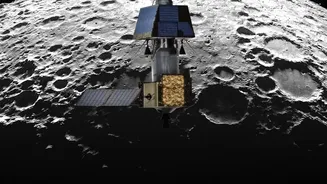
images taken by NASA's Lunar Reconnaissance Orbiter (LRO) before and after the spring of 2024, scientists confirmed the spot was a brand-new crater. Named McGetchin crater, after the pioneering lunar scientist Tom McGetchin, the feature was formed when an object the size of a six-story building slammed into the Moon between April and May of 2024. The impact itself went undetected at the time, a silent collision in the vacuum of space, but its aftermath is now providing a wealth of information.
What Makes This Impact So Rare?
The Moon is constantly bombarded by small meteoroids, but an impact of this magnitude is exceptionally rare. The McGetchin crater measures an impressive 728 feet (222 meters) across and 141 feet (43 meters) deep—wide enough to swallow two football fields and deeper than a stack of three school buses. Scientists estimate that an event powerful enough to carve such a crater occurs on the Moon only about once every 100 to 130 years. This makes it the largest newly formed crater discovered not just on the Moon, but anywhere in our solar system, during the era of modern observation. Having before-and-after images from the LRO mission, which has been orbiting the Moon for over 17 years, gives scientists a unique 'once-in-a-lifetime' opportunity to study the immediate effects of a large-scale impact.
More Than Just a Hole
The discovery revealed more than just a new crater. The impact's effects rippled across the lunar surface in surprising ways. Instruments aboard the LRO detected a four-mile-wide 'cold spot' surrounding the crater. During the lunar night, this area is about 9 degrees Celsius cooler than the terrain around it. Scientists believe the shockwave from the impact 'fluffed up' the top layer of lunar soil, known as regolith, making it less dense and less effective at holding onto heat. It’s a process that has been compared to gardening, where the impact tils and churns the lunar soil. This finding is significant because it shows that a single impact can physically alter the lunar surface far beyond the visible crater.
A Window into a Dynamic Moon
For a long time, the Moon was seen as a mostly dead, unchanging world. Discoveries like McGetchin crater are rewriting that story. Studying fresh impacts helps scientists understand the rate at which the lunar surface is reworked. Based on observations from LRO, the top layer of lunar soil is being overturned by debris from impacts far more quickly than previously thought—roughly every 80,000 years. This has a fascinating implication: the iconic footprints left by the Apollo astronauts will not last forever as once believed. In that timeframe, they will be erased by the constant, slow rain of micrometeorites and the ejecta from distant impacts. The Moon is a dynamic and evolving body, and this crater is a fresh page in its ongoing history.
Why It Matters for Future Missions
Understanding the lunar environment is more critical than ever as humanity prepares to return to the Moon through programs like NASA's Artemis. Studying the properties of a fresh crater and the surrounding 'fluffed up' regolith provides vital data for engineers designing future lunar bases and rovers. It helps them understand the stability of the ground and the risks posed by ejecta—the rock and dust thrown out during an impact. This knowledge will be crucial for building safe, long-term habitats for astronauts. In essence, by studying how the Moon changes today, we are learning how to live there tomorrow, turning a rare cosmic event into a practical lesson for future explorers.