



A Nation in Motion
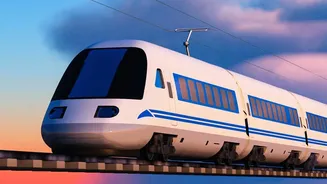
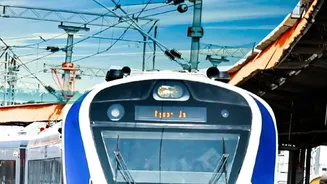
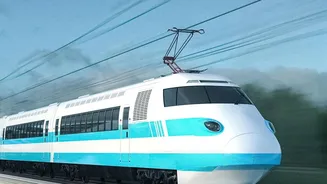
The 508-kilometre Mumbai-Ahmedabad bullet train is more than just a railway line; it's a statement of intent. For years, the project has been a symbol of India's future-forward aspirations, promising to slash the 7-8 hour journey between the two financial
powerhouses to just around two hours. With trains designed to operate at a speed of 320 km/h, the corridor will connect 12 stations across Maharashtra and Gujarat. Recent announcements from railway officials confirm that the first service is expected to commence in August 2027, likely on the Surat to Bilimora or Surat to Vapi sections in Gujarat, where construction is most advanced. This phased rollout is a strategic approach to get the service running while work on more complex sections continues, with the full corridor expected to be functional by 2029.
Concrete Progress on the Ground
Talk of a 2027 trial run is backed by significant on-ground progress. According to the latest updates from the National High Speed Rail Corporation Limited (NHSRCL), the agency executing the project, a massive amount of civil work is already complete. As of late 2026, pier work has been completed over more than 450 km of the route, and the viaduct, the elevated structure on which the train will run, is up across more than 350 km. The project is no longer just a civil construction story; track and electrical work are proceeding simultaneously. Over 200 km of the corridor already has Overhead Equipment (OHE) masts installed to supply power. In Maharashtra, where land acquisition delays had previously slowed progress, work is now moving rapidly on the 135 km stretch, including major river bridges and tunnels.
Japanese Technology, Indian Execution
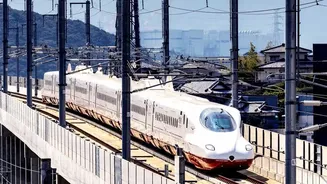
At the heart of the project is Japan's renowned Shinkansen technology, known for its impeccable safety record and punctuality. The collaboration involves not just financial assistance through a low-interest loan but also deep technical expertise. This includes the use of advanced techniques like the J-Slab ballastless track system for high-speed stability and specialised tunnel hoods to reduce noise and pressure changes when trains enter tunnels at speed. A standout engineering feat is the 21-km tunnel between Mumbai's Bandra-Kurla Complex (BKC) and Shilphata, which includes a 7-km undersea section—India's first. While Japan is providing the core technology, the project is a major driver for the 'Make in India' initiative. Indian companies are manufacturing critical components, and over a thousand Indian engineers have been trained by Japanese experts, building domestic capacity for future high-speed rail projects.
The Transformative Impact
The bullet train is expected to be an economic game-changer for the entire region. By providing fast, reliable connectivity between key industrial hubs like Mumbai, Surat, Vadodara, and Ahmedabad, it will boost business, trade, and tourism. The easier commute could lead to professionals living in relatively affordable cities like Surat while working in Mumbai, reshaping urban development patterns. The construction itself has created thousands of jobs and injected massive demand into the cement and steel industries. Beyond the economy, the project also has environmental benefits. A high-speed train produces significantly less carbon dioxide per passenger than air or road travel, offering a greener alternative for one of India's busiest travel corridors. The stations themselves are being designed as modern, integrated multi-modal hubs to ensure seamless connectivity for passengers.