


The Daily Rhythm of Valley Winds
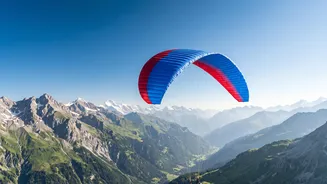
The Alps breathe on a daily cycle, creating predictable wind patterns that are fundamental to paragliding. As the sun warms the mountain slopes in the morning, the air in contact with them heats up, becomes lighter, and begins to rise. This process pulls
cooler, denser air up from the valley floor, creating an 'up-valley' wind or 'valley breeze'. This gentle, reliable lift is what pilots often use for taking off and gaining initial altitude along the slopes. Conversely, as the sun sets, the mountains cool down faster than the valley. The air along the slopes becomes cooler and denser, and begins to sink, creating a 'down-valley' wind. This cycle means that timing is everything; a morning flight might ride a gentle updraft, while a late evening flight could encounter sinking air, making conditions challenging.
Riding The Invisible Elevator: Thermals
While valley winds provide a baseline of lift, the real key to gaining significant altitude and flying long distances is the thermal. Thermals are rising columns of warm air, like invisible elevators in the sky. They form over surfaces that heat up faster than their surroundings, such as rocky outcrops, dry fields, or even towns. Experienced pilots can identify potential thermal sources from the air and look for tell-tale signs like cumulus clouds, which often form at the top of a thermal column. Flying into a thermal requires skill; the pilot circles within the rising air to climb higher, sometimes reaching altitudes that offer stunning panoramic views of the entire mountain range. However, thermals also create turbulence and sinking air around their edges, requiring active piloting to manage.
The Foehn: An Alpine Pilot’s Nightmare
Not all winds in the Alps are friendly. The most notorious is the Foehn (or Föhn), a warm, dry, and dangerously turbulent wind that descends on the lee side of the mountains. A classic Foehn event occurs when moist air from one side of the Alps (often the south) is forced to rise over the main ridge. As it does, it cools and releases its moisture as rain or snow. Once it crosses the ridge and descends on the other side (the north), the now-dry air warms up rapidly, creating powerful, gusty, and chaotic winds in the valleys below. These conditions are unflyable and extremely dangerous, capable of collapsing a paraglider's wing or pushing a pilot backwards at high speeds. Pilots meticulously check weather forecasts for pressure differences between the north and south sides of the Alps, a key indicator of potential Foehn conditions.
Microclimates and Reading The Terrain
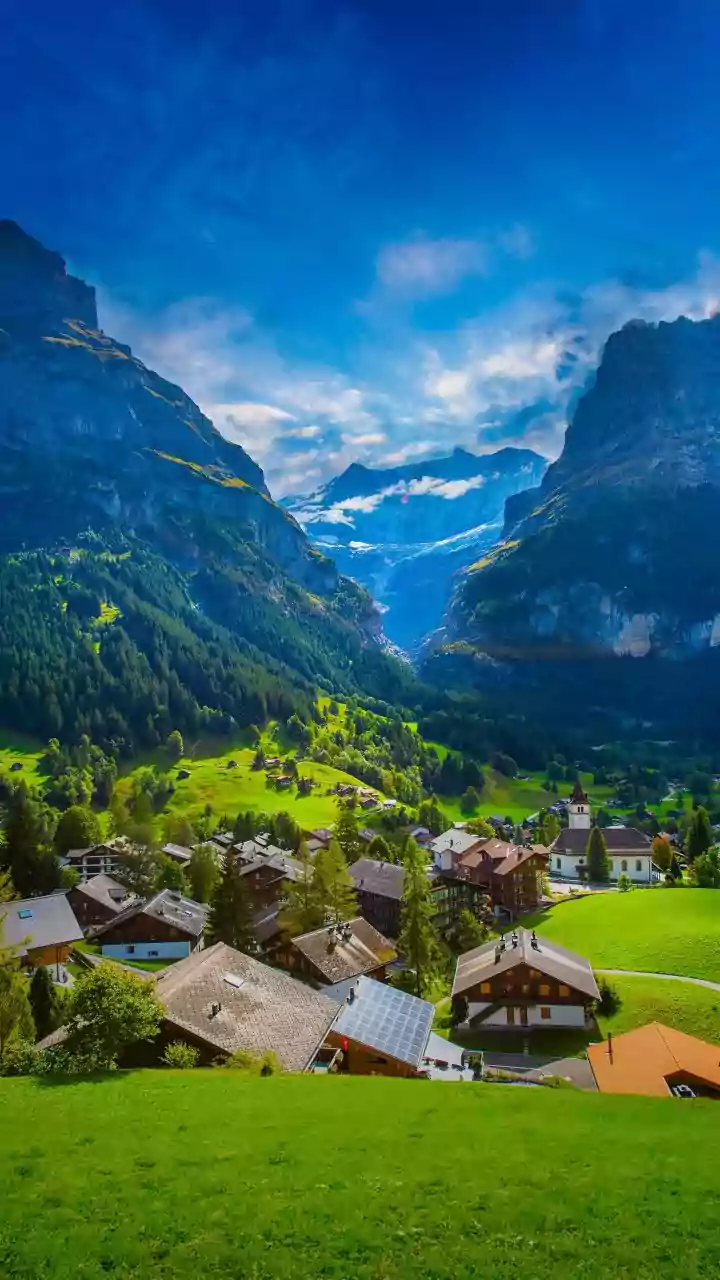
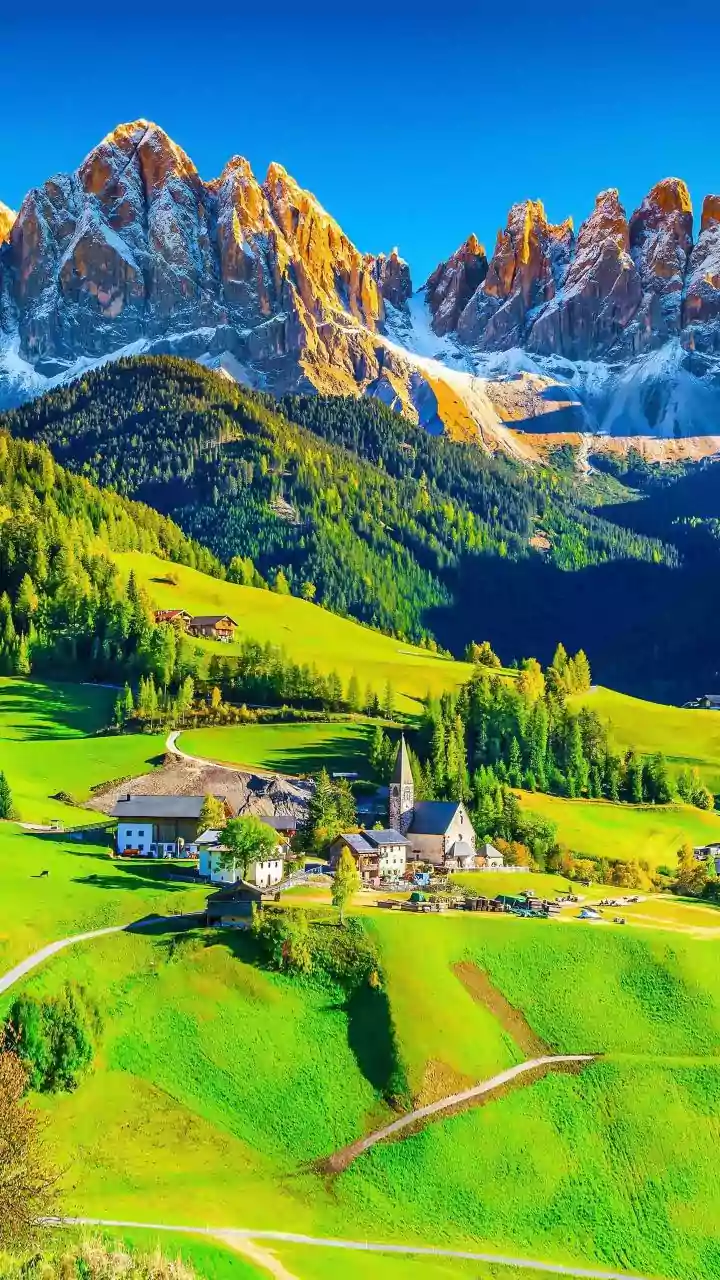
The complex topography of the Alps means that broad weather forecasts are only part of the story. Every valley, ridge, and peak creates its own microclimate. The direction and speed of the wind can change dramatically from one side of a ridge to another. A valley that is sheltered from the main wind flow might be perfectly calm, while a nearby pass could be a wind tunnel. This is why local knowledge is invaluable. Pilots learn to read the terrain and the subtle cues from nature—the way trees are bending, the shape and movement of clouds, and ripples on the surface of alpine lakes. These on-the-ground observations are crucial for confirming that the forecast matches the real-world conditions at the specific launch site.
Technology Meets On-Site Assessment
Modern paraglider pilots have a suite of technological tools at their disposal. Specialized apps and websites provide detailed forecasts for wind speed at different altitudes, thermal strength, and gust predictions. Many popular launch sites are even equipped with live webcams and wind stations. However, no technology can replace the final, critical assessment made by the pilot standing at the takeoff point. They must evaluate the strength and consistency of the wind, watch the cycles, and ensure conditions are stable enough for a safe launch and flight. Generally, a steady wind of 5-20 km/h is considered ideal, while excessively strong or gusty conditions are a clear signal to wait for another day.