




Beyond a Simple Lean
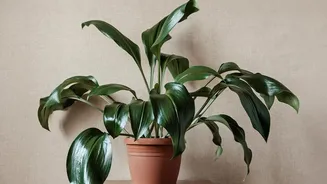
When we see a plant leaning, we correctly assume it’s reaching for its primary food source: light. This response, known as phototropism, is a basic survival instinct. However, a simple lean is just one piece of the puzzle. Uneven growth encompasses a wider
range of symptoms, including stems that are stretched and spindly with large gaps between the leaves, a phenomenon called etiolation. You might also notice that new leaves are consistently smaller or paler than older ones, or that the plant is shedding lower leaves. These aren't just cosmetic issues; they are clear signs that your plant is in distress and that its lean is part of a much larger problem.
The Real Problem: Low Light Intensity
A plant stretching toward a window isn't just trying to get a better angle; it's often making a desperate attempt because the overall amount of light it receives is insufficient for healthy growth. Photosynthesis is how a plant creates energy to build new leaves, strong stems, and vibrant flowers. When light is scarce, the plant enters survival mode. It redirects its limited energy into growing longer, weaker stems to physically move closer to a perceived light source. It conserves energy by producing smaller, less developed leaves and may even sacrifice older, lower leaves that aren't getting enough light to justify their existence. So, that uneven, 'leggy' look is a direct result of the plant being underfueled.
How to Spot the Signs
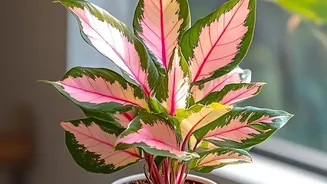
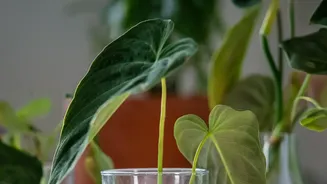
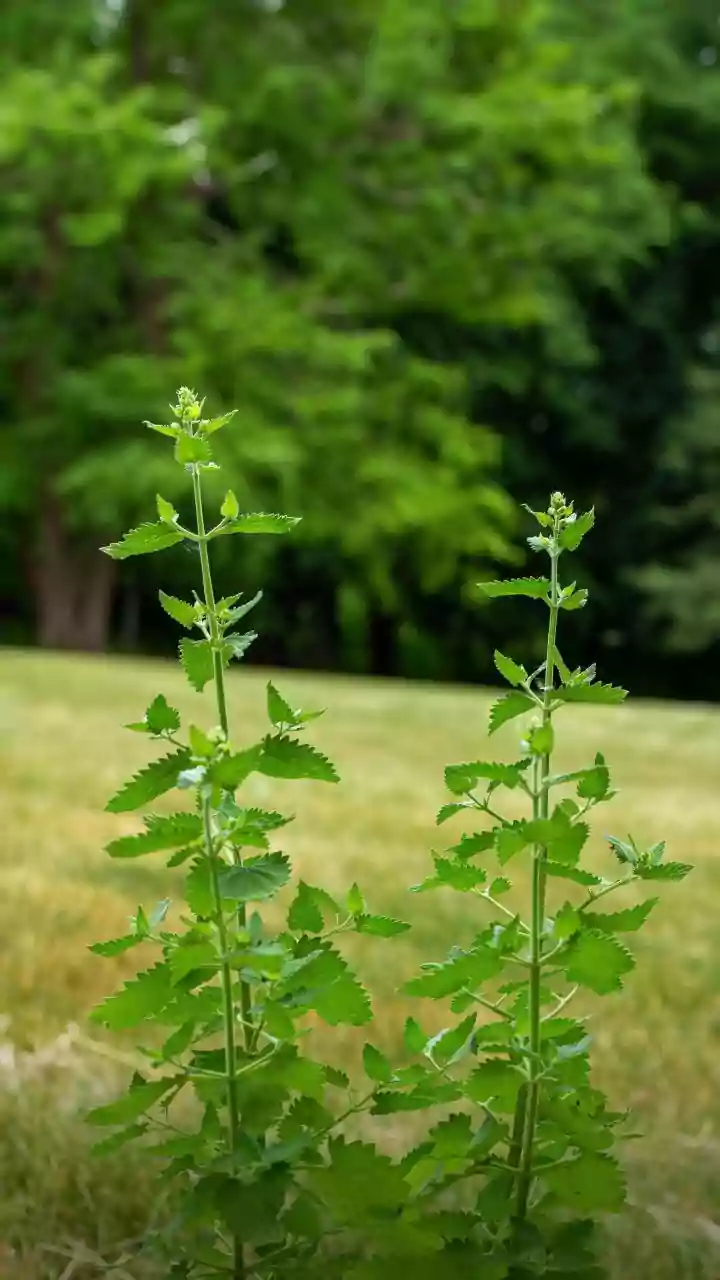
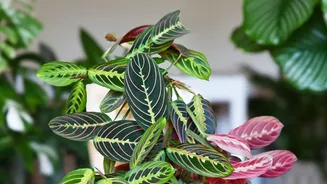
Learning to read your plant's signals is key to providing better care. Beyond an obvious tilt, here are the telltale signs that your plant is craving more light: - Leggy or Stretched Growth: The stems are long and thin with wide spaces between the leaves. A healthy, well-lit vining plant might have a new leaf every few inches, while a light-starved one could have a foot or more of bare stem. - Small, Pale New Leaves: If new foliage is noticeably smaller and a lighter shade of green than the older, established leaves, the plant lacks the energy to produce full-sized growth. - Loss of Variegation: For plants with multi-toned leaves, you may notice new growth coming in solid green. The plant is maximizing its chlorophyll production to capture as much light as possible. - Dropping Lower Leaves: A plant will often shed its lowest leaves to conserve energy for new growth that is closer to the light.
Solution 1: Rotate and Relocate
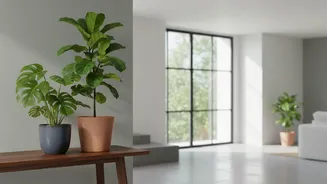
The simplest first step is to rotate your plant a quarter turn every week. This ensures all sides get some exposure to the light source, encouraging more balanced growth. However, if the plant continues to show signs of light deprivation, rotation alone isn't enough. It's time to assess its location. Most houseplants thrive in bright, indirect light, which is typically found within a few feet of an east- or west-facing window, or slightly further from a south-facing one. A spot across the room from a north-facing window, for example, is often considered low light and may be insufficient for many common species. Moving your plant to a brighter spot can make all the difference.
Solution 2: Supplement with a Grow Light
In many indoor spaces, especially during winter or in rooms with few windows, natural light simply isn't adequate. This is where grow lights become an essential tool. Unlike regular household bulbs, grow lights are designed to provide the specific spectrum of light—particularly red and blue wavelengths—that plants need for robust photosynthesis. You don't need an elaborate, professional setup. A single full-spectrum LED grow bulb can be screwed into a standard lamp fixture and positioned above your plant. For most foliage plants, providing 12 to 14 hours of supplemental light per day can stop etiolation and promote lush, healthy growth.