






The Unsettling Findings
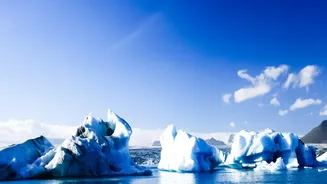
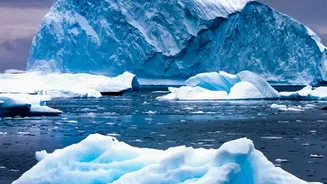
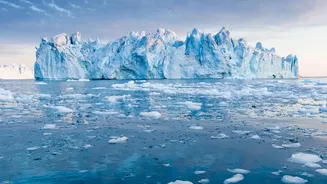
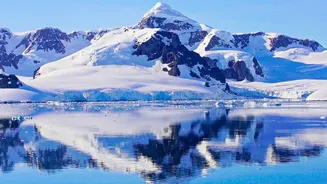
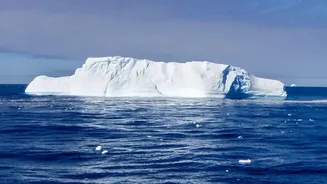
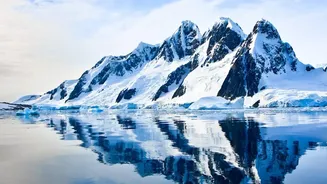
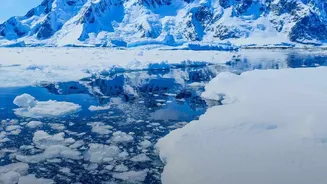
Recent scientific studies are providing a clearer, albeit sobering, view of Antarctica's future. Research published across leading journals confirms that the Antarctic Ice Sheet is losing mass at an accelerating rate. Data gathered from satellites and
on-the-ground measurements show that net ice loss is currently in the range of 100-200 billion tons per year, a rate that has multiplied significantly over the past three decades. While some areas in East Antarctica have seen temporary gains due to increased snowfall, these are exceptions that do not reverse the overall downward trend of massive loss, particularly in West Antarctica. Key glaciers like Thwaites and Pine Island, which act as plugs holding back vast amounts of ice, are retreating and thinning at an alarming pace, raising concerns about their long-term stability.
Crossing the Point of No Return?
One of the most critical questions scientists are tackling is whether parts of the ice sheet are approaching an irreversible 'tipping point'. The concern is that the melting of glaciers like Thwaites, often called the 'Doomsday Glacier', could become self-sustaining. This glacier alone holds enough ice to raise global sea levels by over half a metre, and it acts as a critical buttress for the wider West Antarctic Ice Sheet. Research suggests that the retreat of these key glaciers began as far back as the 1940s, likely triggered by natural climate variability but sustained and accelerated since. Recent studies indicate that while a complete, rapid collapse this century is not the most likely scenario, the process of accelerated melt is locked in and will continue to contribute to sea-level rise for decades and centuries to come.
From Pole to Port: A Global Impact
What happens in Antarctica does not stay in Antarctica. The continent holds about 90% of the world's ice and around 70% of its freshwater. If the entire Antarctic Ice Sheet were to melt, it would raise global sea levels by approximately 60 metres, or about 200 feet. While a complete melt is not on the immediate horizon, even a fraction of this potential has profound consequences. Every 360 billion tonnes of ice lost adds about one millimetre to global sea levels. The current rate of loss from both Greenland and Antarctica is already responsible for over a millimetre of sea-level rise per year. This might sound small, but the increase is cumulative and accelerating, posing a direct threat to coastal communities, infrastructure, and ecosystems worldwide.
Bringing It Home: India's Vulnerable Coastline
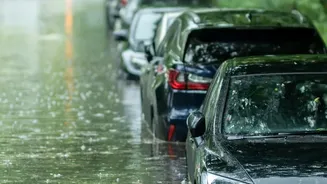
For India, with its 7,500-kilometre coastline, the fate of Antarctic ice is a matter of national importance. A disproportionate amount of sea-level rise occurs in tropical regions, meaning India could experience effects more severe than the global average. Major metropolitan hubs like Mumbai, Kolkata, Chennai, and Cochin are low-lying and densely populated, making them exceptionally vulnerable. Projections indicate that continued ice loss will lead to more frequent and severe coastal flooding, saltwater intrusion into freshwater supplies, and erosion of coastal land. This threatens not only the homes and livelihoods of millions but also critical economic infrastructure, including ports and financial districts. The melting of distant ice is a direct factor in the future security and prosperity of India's coastal states.
What Comes Next?
The latest studies provide a crucial window of predictability. Research suggests that while long-term forecasts beyond the mid-century have large uncertainties, the trajectory of ice loss for the next few decades is becoming clearer. This gives governments and communities a defined period to plan and implement adaptation strategies. It underscores the urgency of two parallel tracks: significantly reducing global greenhouse gas emissions to slow the rate of warming and investing in protective infrastructure and policies for coastal areas. Continued international scientific collaboration, like the efforts focused on Thwaites Glacier, is essential for refining these predictions and giving the world the best possible information to navigate the impacts of a changing climate.