



A 'Once-in-a-Century' Impact
Sometime between April and May of 2024, an object the size of a multi-story building slammed into the Moon. The resulting gash, named McGetchin crater, is enormous by the standard of new impacts. Measuring about 222 meters across and 43 meters deep, it
is large enough to comfortably swallow Rome's Colosseum. This wasn't a spacecraft crash, like the one that left a 10-meter crater from Russia's Luna-25 probe in 2023, but a natural event of a much greater scale. Scientists estimate an impact of this magnitude happens only about once every 132 years, making its discovery during the operational lifetime of NASA's Lunar Reconnaissance Orbiter (LRO) a stroke of scientific luck.
The Myth of an Unchanging Moon
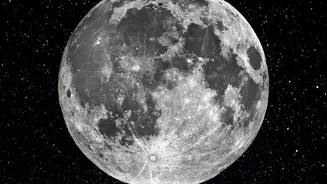
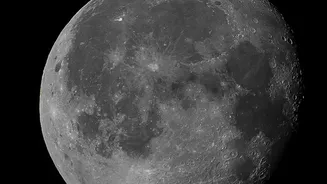
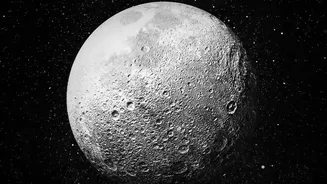
For centuries, we’ve looked up at the 'man in the moon' and seen a symbol of permanence. But this is a misconception. The lunar surface is constantly being altered. With no significant atmosphere to burn up incoming projectiles, the Moon is perpetually bombarded by space debris. Most of these are small, creating craters that go unnoticed. The LRO, in its time orbiting the Moon, has identified over a thousand new craters. Most are caused by impacts from objects the size of a large tyre, which occur over 100 times a year. The McGetchin crater, however, is a stark visual lesson that much larger, more destructive events are not just a feature of the ancient past but a present-day reality.
Why Constant Vigilance Matters
This discovery is more than just a cosmic curiosity; it's a critical data point for the future of space exploration. With nations including India and the US planning long-term human presences on the Moon through programs like Artemis, understanding the lunar environment is paramount. An impact like the one that created McGetchin crater would be catastrophic for a lunar habitat or any nearby infrastructure. Beyond direct hits, the impact churned up the lunar soil, or regolith, for miles. Knowing the frequency and scale of such events is essential for choosing safe landing and construction sites, designing resilient habitats, and protecting astronauts. Constant monitoring gives us the data needed to build accurate risk models.
A Global Effort to Watch the Skies
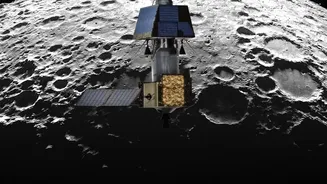
Detecting these changes is a monumental task. The discovery was made possible by the LRO, which has been mapping the Moon in high resolution for over a decade. Image specialists compare new photos with older ones to spot fresh changes. This international effort in lunar science, involving orbiters from multiple nations, builds a comprehensive picture of the Moon. India’s Chandrayaan missions, for example, have contributed significantly to our understanding of the lunar poles and its exosphere. This global network of satellites and scientists provides the 'before and after' images necessary to track a constantly, if slowly, evolving world and understand the forces shaping it.
From Hazard to Scientific Opportunity
While the prospect of a large impact poses a risk, each new crater is also a scientific gift. Impacts are nature’s excavators. They dig deep into the lunar surface, blasting out material from below and giving scientists a glimpse of the Moon's composition without needing to drill. These fresh craters can reveal the presence of valuable resources like water ice, which is thought to be abundant in the permanently shadowed regions near the poles. Studying the pristine material ejected from a new crater like McGetchin can tell us about the physical properties of the lunar soil and even the history of our solar system, preserved in the Moon's geology. This 'natural laboratory' helps scientists prepare for the challenges future explorers will face.