

The Magic of Three Simple Ingredients
The beauty of authentic Kaju Katli lies in its simplicity. You only need three basic ingredients: cashews, sugar, and water. That's it. Some recipes may call for a touch of ghee for smoothness or rose water for fragrance, but these are optional. The star
of the show is the cashew. For the best results, use high-quality, raw, whole or broken cashews that are at room temperature. If you store your nuts in the refrigerator, let them sit out for a few hours to ensure they are completely dry before you begin. This simple step is crucial for achieving the perfect texture.
Step 1: The Perfect Cashew Powder
The foundation of a smooth Kaju Katli is a fine cashew powder. This is perhaps the trickiest part of the process, as cashews can quickly turn from a powder into a paste. To avoid this, use a food processor or a powerful blender and grind the cashews in short bursts using the pulse function. Do not run the blender continuously, as this generates heat and causes the cashews to release their natural oils. The goal is a fine, flour-like powder. It's okay if it feels slightly coarse, like semolina. For an even finer texture, you can sift the powder to remove any larger pieces and grind them again.
Step 2: Mastering the Sugar Syrup
The next critical stage is the sugar syrup, which binds the cashew powder together. Many traditional recipes call for a 'one-string consistency'. To achieve this, combine the sugar and water in a heavy-bottomed pan over medium heat. Stir until the sugar dissolves completely, then let it come to a boil. To test for one-string consistency, carefully take a tiny drop of the cooled syrup between your thumb and forefinger. When you pull them apart, a single, thin thread should form. Getting this right is key; undercooked syrup will result in sticky katli, while overcooked syrup can make it hard and crumbly.
Step 3: Bringing It All Together
Once the sugar syrup is ready, reduce the heat to low and immediately add the cashew powder. Stir continuously and vigorously with a spatula to break up any lumps and ensure everything is well combined. The mixture will be loose and sticky at first. Continue cooking on low heat, stirring constantly, until the mixture thickens and starts to pull away from the sides of the pan, forming a soft, dough-like mass. This process should take about 7-10 minutes. Be careful not to overcook, as this is a common mistake that leads to dry, hard katli.
Step 4: Kneading and Rolling the Dough
Transfer the hot cashew dough onto a sheet of parchment paper or a greased surface. The dough will be very hot, so let it cool for just a few minutes until it is warm enough to handle. Do not let it cool completely, as it will become difficult to roll. While it's still warm, begin to knead the dough. You can use a spatula at first or fold the parchment paper over to knead it without burning your hands. Knead for a few minutes until the dough is smooth and pliable. Place another sheet of parchment paper on top and roll the dough to a uniform thickness of about ¼ inch.
Step 5: The Signature Diamond Cut
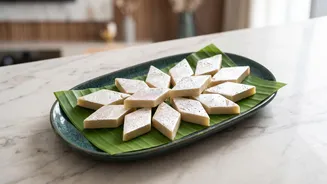
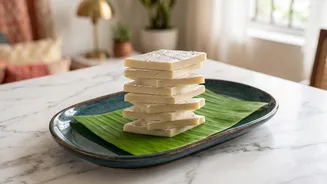
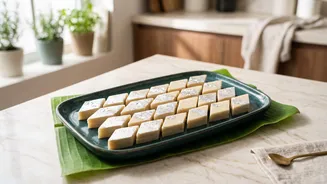
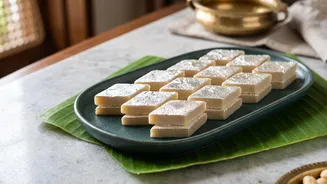
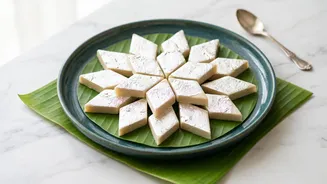
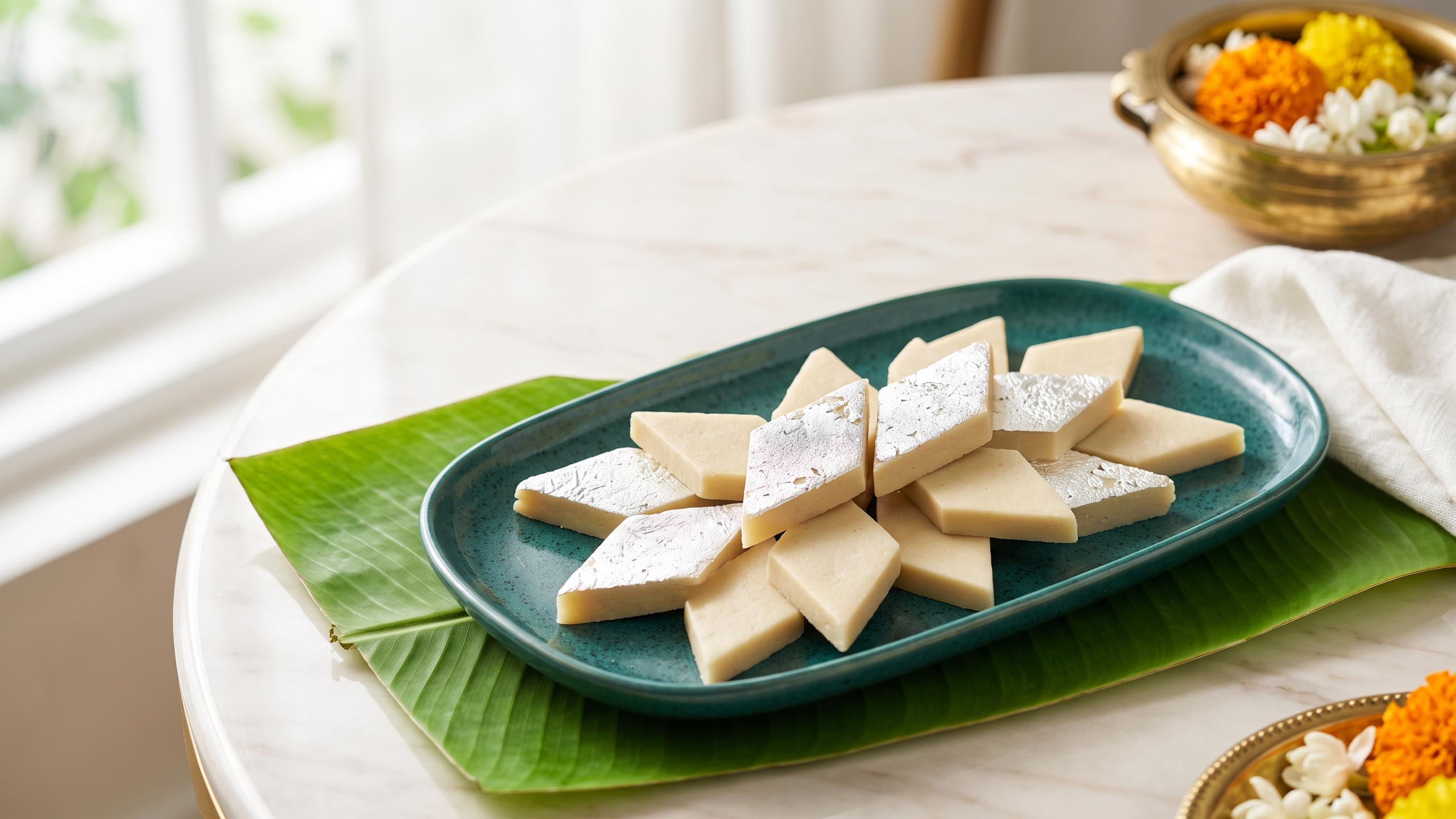
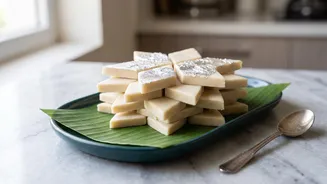
For that classic mithai-shop look, you can gently press a sheet of edible silver leaf (vark) onto the rolled-out dough while it's still slightly warm. This is purely for decoration and is optional. Now comes the most important part: patience. Let the rolled dough set and cool at room temperature for at least 15-20 minutes, or until it is firm enough to cut cleanly. Cutting it too early will result in misshapen pieces, while waiting too long might cause it to crack. Once set, use a sharp knife or a pizza cutter to slice the slab into the iconic diamond shapes. Your homemade Kaju Katli is now ready to be shared and enjoyed.