






NASA's ambitious plan to return humans to the Moon has a new flight plan. The Artemis III mission, once slated for a historic lunar landing, has been redesigned into an ambitious Earth-orbit dress rehearsal. Here's what has changed and why.
The Original Mission: A Direct Shot to the Moon
Originally,
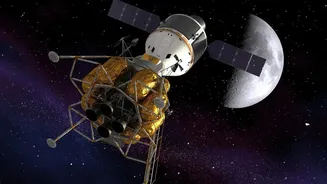
Artemis III was the moment we'd all been waiting for: the first crewed lunar landing since Apollo 17 in 1972. The plan involved sending four astronauts in the Orion spacecraft to lunar orbit, where they would meet a SpaceX Starship lander. Two astronauts would then descend to the Moon's south pole for a multi-day stay, while the other two remained in orbit. However, the immense technical challenges and potential delays, particularly with the lander systems, prompted NASA to rethink the best way to ensure astronaut safety and mission success.
The New Plan: A Complex Orbital Ballet
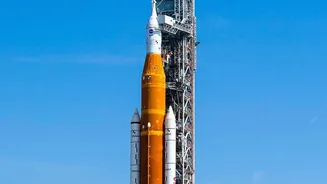
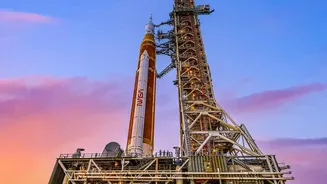
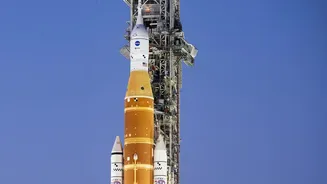
The updated Artemis III mission, now targeted for 2027, will keep its crew much closer to home. It has been transformed into a highly complex, 14-day demonstration in low Earth orbit. The mission now involves three separate launches using three of the world's most powerful rockets: NASA's Space Launch System (SLS), Blue Origin's New Glenn, and SpaceX's Super Heavy-Starship. This unprecedented sequence of launches within a short period is designed to test rendezvous, docking, and other critical procedures in a safer, more controlled environment.
Putting the Landers to the Test
The core purpose of the new Artemis III is to wring out the new commercial lunar landers. First, Blue Origin will launch a test version of its Blue Moon lander. Then, the Artemis III crew—Randy Bresnik, Frank Rubio, Andre Douglas, and ESA astronaut Luca Parmitano—will launch in the Orion capsule and dock with it. They will spend about two days inside the Blue Moon vehicle, testing its life support, controls, and other systems. After undocking, Orion will wait for the launch of a SpaceX Starship test article for a second, shorter docking demonstration to test its systems and controls, though the crew will not enter the Starship vehicle on this flight.
Why the Change? Reducing Risk for a 2028 Landing
NASA officials have framed this pivot as a pragmatic strategy to reduce risk. Testing brand‐new spacecraft, especially the complex docking manoeuvres required for a lunar mission, for the first time in distant lunar orbit is a high‐stakes gamble. By conducting these tests in low Earth orbit, engineers and flight controllers can gather invaluable real‐world data and gain experience in a setting where help is hours, not days, away. This 'crawl, walk, run' approach, reminiscent of the Apollo 9 mission that tested its lunar module in Earth orbit, is intended to pave the way for a more confident and safer lunar landing attempt on the subsequent Artemis IV mission, now targeted for 2028.
Fostering Competition and Flexibility
This new plan also changes the business dynamics of the moonshot. Initially, SpaceX was assigned to the first landing missions. Under the revised plan, neither SpaceX nor Blue Origin is assigned to a specific lunar landing mission yet. Instead, Artemis III will serve as a head‐to‐head evaluation of their test vehicles. This allows NASA to see which system performs best and is ready first, providing the agency with crucial flexibility and alternative paths should one provider face significant delays. It effectively keeps both aerospace giants in a race to prove their hardware is ready to put boots back on the moon.