





The Eyes Eat First
It’s a cliché as old as cuisine itself, but a growing body of research confirms that we truly do eat with our eyes first. Before a single bite is taken, our brain has already formed a judgment based on the visual appeal of a dish. This initial impression
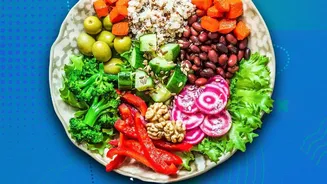
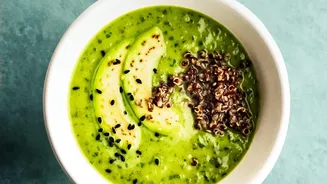
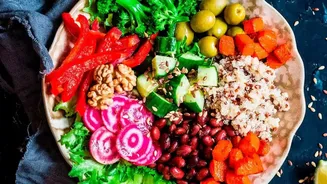
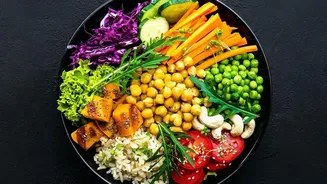
doesn't just influence our perception of taste; it profoundly affects how healthy we believe a food to be. Studies show that when food is presented in an attractive, orderly way, people tend to rate it as healthier, more natural, and of higher quality, even if the ingredients are identical to a messier-looking version.
The Science of Neatness and Nature
One key study from the University of Southern California sheds light on why this happens. Researchers presented participants with images of avocado toast — some arranged in a neat, symmetrical pattern and others in a jumbled pile. Despite knowing the ingredients were the same, participants consistently rated the 'pretty' toast as healthier and more natural. The theory is that our brains associate classical aesthetics — principles like order, symmetry, and balance — with patterns found in nature. Think of a honeycomb, a spiderweb, or the scales on a fish. Because we have an innate bias that 'natural' equals 'healthy', beautifully arranged food borrows this 'health halo'. A food that looks orderly and intentional is perceived as less processed and more pure.
From Plating to Perception
This phenomenon isn't limited to just neatness. A recent study from Japan found that even the placement of sauce can alter health perceptions. Diners viewed a fish dish with sauce served separately on the side as significantly healthier than the same dish with the sauce drizzled over the top. The minimal presentation gave an impression of control and healthfulness. Other research has explored how factors like the colour and shape of the plate itself can influence our appetite and perception of quality. For instance, food presented in the centre of a plate with a classical, symmetrical pattern is often judged as tastier and healthier than food placed off-centre. These small, seemingly insignificant details are powerful tools that chefs and food marketers use to guide our experience.
Beyond the Restaurant: A Digital Dilemma
In the age of social media, food styling has moved from the exclusive domain of high-end restaurants to our everyday feeds. Food and restaurant advertisements, which number in the thousands per year for the average consumer, overwhelmingly use these aesthetic tricks to make products seem more appealing and, subconsciously, healthier. That perfectly structured burger or flawlessly circular pizza isn't just designed to make you hungry; it's crafted to make you feel better about the choice. This 'pretty-equals-healthy' bias can be problematic, leading consumers to believe that a highly styled, but nutritionally poor, food is a better choice than it actually is. This can subtly influence dietary choices and even how much someone is willing to pay for an item.
How to Be a More Mindful Eater
Understanding this psychological quirk is the first step toward becoming a more conscious consumer. When you find yourself drawn to a beautifully presented dish, take a moment to look beyond the aesthetics. The visual appeal creates an expectation, but it doesn't change the nutritional reality. Pay attention to the ingredients, preparation methods, and portion sizes rather than just the symmetrical arrangement or artistic sauce drizzle. Researchers have noted that the link between perceived healthiness and actual nutritional value is often weak. By recognizing that a 'pretty' presentation is often a deliberate marketing choice, you can separate the artistry from the actuality and make choices based on what's genuinely in the food, not just how it looks.