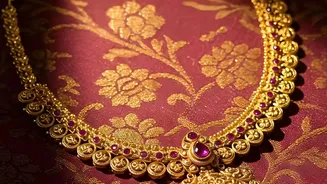







The Familiar Path: Selling Your Jewellery
Selling gold jewellery is a straightforward transaction. You take your ornaments to a jeweller, who assesses their value and pays you in cash. The calculation is based on the current market rate for gold, but it's not as simple as multiplying the weight
by the price. Jewellers first test the purity of the gold, as most Indian jewellery is 22-karat or lower, not 24-karat pure gold. After determining the pure gold content, deductions are made for any embedded stones and traditional "making charges" or wastage, which are not recovered in a sale. The result is immediate liquidity—cash in your hand. However, this path is final. The piece of jewellery, along with its sentimental and artistic value, is gone forever, typically melted down.
The Alternative: A Gold Deposit Programme
A Gold Deposit Programme, such as the government's Gold Monetisation Scheme (GMS), offers a completely different approach. Instead of selling your gold, you deposit it with a designated bank for a fixed period, much like a fixed deposit (FD) for cash. The minimum deposit is typically 10 grams. The bank takes your jewellery or coins, has them melted and assayed to determine the exact weight in pure 995 fineness gold, and then credits that amount to your account. You retain ownership of the gold value and earn interest on it, which is paid annually or at maturity. It’s a method to make an otherwise idle asset generate income.
Form and Value: The Great Equaliser
A common misconception is that a deposit scheme preserves your jewellery's form. It does not. In both selling and depositing, the jewellery is melted down at a Collection and Purity Testing Centre (CPTC) to assess its pure gold content. The sentimental value of a specific design is lost in both scenarios. The key difference is what happens to the value of that raw gold. When you sell, you receive a one-time payment for that value, minus deductions. When you deposit, you convert that value into a financial asset that continues to belong to you and also earns interest.
Financial Returns: Interest vs. Price Appreciation
Selling gives you a lump sum based on that day's gold price. Your financial relationship with that gold ends there. With a Gold Deposit Scheme, you benefit in two ways. Firstly, you earn a fixed interest rate on the gold, typically ranging from 0.50% to 2.50% per annum, paid in rupees. Secondly, you remain the owner of the gold. If the market price of gold appreciates during your deposit tenure, the value of your underlying asset grows. At maturity, depending on the scheme's terms, you can often choose to receive your principal back as physical gold or as the cash equivalent at the prevailing higher rate.
The Tax Advantage: A Major Differentiator
Taxation is where the Gold Monetisation Scheme has a significant edge. When you sell physical gold that you've held for more than 24 months, the profit (capital gain) is subject to tax. However, the interest earned from a GMS deposit is completely exempt from income tax. Furthermore, there is no capital gains tax on the appreciation in the value of the gold when you redeem your deposit. This tax-free treatment of both interest and capital appreciation makes it a much more efficient way to leverage your gold holdings compared to selling, which triggers a taxable event.
Transaction vs. Investment
Ultimately, the choice boils down to your objective. Selling is a simple, one-time transaction designed to meet an immediate need for cash. You are liquidating an asset permanently. A Gold Deposit Programme is an investment decision. You are transforming a non-earning physical asset into a productive financial one that provides regular, tax-free returns while retaining ownership of the gold's value. It is for those who do not need immediate cash but want their idle gold to work for them, preserving its value for the future while also earning an income from it.