


Meet India's New Hopefuls
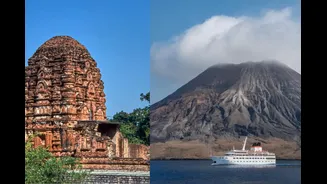
On October 20, 2026, India's Permanent Delegation to UNESCO announced the addition of three new sites to the country's Tentative List. First are two geological wonders from the Andaman and Nicobar Islands: the Karst-mud-volcano Complex of Baratang, known
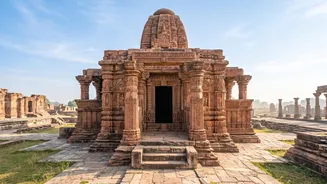
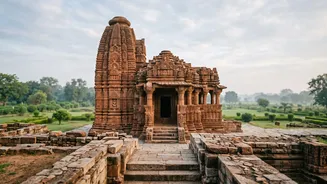
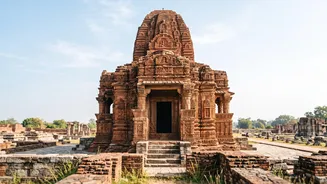
for its limestone caves and active mud volcanoes, and the Andaman Subduction Volcanoes, which include Barren Island, home to India's only confirmed active volcano. The third nominee is the Sirpur Cultural and Archaeological Landscape in Chhattisgarh. This site, once the capital of Dakshina Kosala, boasts a rich history with remains of Hindu, Buddhist, and Jain structures, including one of India's earliest brick temples, the Lakshmana Temple.
What Is The Tentative List?
Think of the Tentative List as a country's official inventory of its most significant cultural and natural heritage sites. Before a country can formally nominate a site to be a World Heritage Site, it must first be included on this list. It's a mandatory prerequisite. The list essentially serves as a forecast, showing the sites a nation intends to consider for nomination over the next five to ten years. A site must be on the Tentative List for at least one year before the formal nomination process can even begin. It’s a way for countries to plan and for UNESCO to see what’s in the pipeline globally.
The Long Road To Inscription
Getting onto the Tentative List is just the opening chapter. The journey to becoming a full-fledged World Heritage Site is a marathon, not a sprint, often taking several years. After being on the list, the country prepares a comprehensive nomination dossier. This file is an exhaustive document with detailed descriptions, maps, and a justification for the site’s 'Outstanding Universal Value'. This dossier is then submitted to the World Heritage Centre, which checks it for completeness before sending it to two independent Advisory Bodies for evaluation: the International Council on Monuments and Sites (ICOMOS) for cultural sites, and the International Union for Conservation of Nature (IUCN) for natural sites. These bodies conduct rigorous evaluations, including site visits, before making their recommendations.
The Final Decision
The final decision rests with the intergovernmental World Heritage Committee, which meets once a year. Based on the expert evaluations, the Committee decides whether to inscribe the site on the prestigious World Heritage List. To be successful, a site must meet at least one of ten specific selection criteria, proving it has 'Outstanding Universal Value'—a significance so exceptional that it transcends national boundaries. The committee can also choose to defer a decision to ask for more information or decide not to inscribe the site at all.
Why The 'World Heritage' Tag Matters
Achieving World Heritage status is far more than just a title. It brings international recognition, which often boosts tourism and brings funds to the site and the local economy. More importantly, it brings access to the World Heritage Fund for preservation efforts and technical expertise for site management. The designation commits the country to protect the site and holds it accountable to the international community for its conservation. For a nation like India, rich in cultural and natural treasures, each nomination is a step towards safeguarding this irreplaceable heritage for future generations.