





A Celestial Event for the Ages
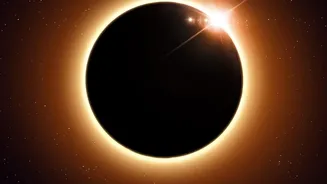
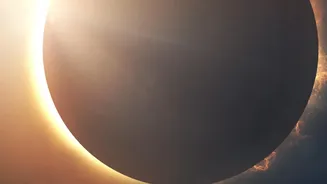
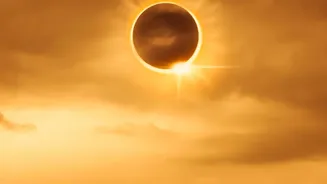
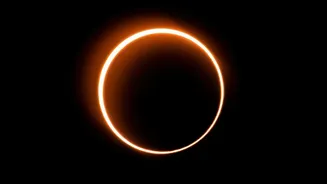
For the first time in over a century, a total solar eclipse will trace a path across mainland Spain, an event eagerly awaited by astronomers and travellers alike. On the evening of August 12, 2026, the moon will pass directly in front of the sun, plunging
a roughly 290-kilometre-wide band of the country into an eerie twilight. This path of totality stretches from the Atlantic coast in the northwest to the Mediterranean, encompassing major cities like Bilbao, Zaragoza, and Valencia. For a few precious minutes, daylight will vanish, temperatures will drop, and the sun's magnificent corona—its ghostly outer atmosphere—will become visible to the naked eye. The spectacle will occur low on the western horizon, promising a dramatic, sunset-adjacent show for those positioned correctly.
The Allure of the Undiscovered
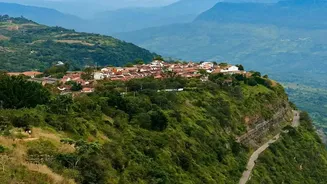
While cities like Zaragoza and Valencia are preparing for an influx of visitors, the true magic of the eclipse might be found in less obvious locations. Enter Avellanosa de Muñó, a small municipality in the province of Burgos, within the autonomous community of Castile and León. With a population of around 100 inhabitants, it represents the antithesis of a bustling tourist hub. This is rural Spain at its most authentic: a landscape of rolling hills, ancient stone, and profound quiet. It is precisely this tranquility that makes it a compelling choice for those who wish to experience the celestial phenomenon without the distraction of large crowds and city lights.
An Astronomer's Advantage
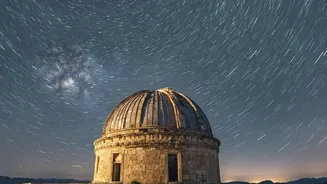
The appeal of Avellanosa de Muñó isn't just its peacefulness; it's also a strategically sound choice for observation. Located in the Castilla y León meseta, the region boasts some of the best clear-sky odds in the entire eclipse path, with historically favourable weather in August. Its elevation, at approximately 877 metres, and its position away from major urban centres grant it enviably dark skies with minimal light pollution. For eclipse watchers, this means a sharper, more brilliant view of the solar corona and the stars that may appear during totality. The open plains surrounding the village provide the unobstructed western view that is critical for this low-horizon eclipse, ensuring nothing blocks the view as the sun disappears.
Beyond the Moment of Totality
Choosing a small village like Avellanosa de Muñó turns an astronomical event into a full cultural immersion. The province of Burgos is a cornerstone of Spanish history, dotted with castles, monasteries, and the famous Burgos Cathedral, a UNESCO World Heritage site. A trip for the eclipse becomes an opportunity to explore the rich gastronomy of Castile and León, renowned for its hearty roasts and robust wines. This region is a growing destination for astrotourism, with areas recognized for their pristine night skies. Visitors can spend their days exploring the historical Arlanza comarca and their nights marvelling at the cosmos, all culminating in the brief, breathtaking moments of the total eclipse.
A Journey of Peace and Wonder
For those seeking to witness the 2026 eclipse, the choice of location will define the experience. The big cities offer convenience and infrastructure, but they cannot replicate the intimate connection to the sky that a place like Avellanosa de Muñó provides. Standing in a quiet field, surrounded by the timeless Spanish landscape as the moon's shadow rushes across the land, offers a different kind of memory. It’s a chance to feel the full scale of the cosmos, not as part of a crowd, but as a solitary observer in a place that has been watching the stars for centuries. It promises an experience that is not just seen, but deeply felt.