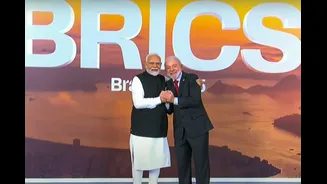




The return of Luiz Inácio Lula da Silva to Brazil's presidency has reinvigorated a crucial relationship for India. As two of the largest democracies in the Global South, their alignment has profound implications for trade and global governance.
A Partnership Rooted in Shared Values
India and
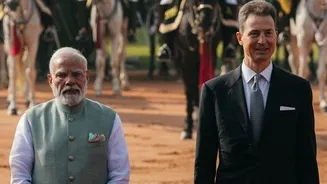
Brazil's relationship, formally elevated to a Strategic Partnership in 2006 during Lula's first tenure, is built on a foundation of common democratic values and a shared vision for inclusive economic growth. This is not just a recent development; diplomatic ties were established back in 1948. The partnership is multifaceted, extending beyond politics to cultural connections, evidenced by the popularity of Indian-themed media in Brazil and the surprising fact that much of Brazil's cattle shares Indian genetic heritage. Prime Minister Narendra Modi and President Lula have consistently referred to each other warmly, with Modi calling Lula a 'dear friend', signaling a strong personal rapport that facilitates diplomatic engagement.
Amplifying the Global South in BRICS and G20
Both leaders see multilateral forums like BRICS and the G20 as platforms to champion the interests of the Global South and advocate for a more equitable world order. Under Lula, Brazil has emphasized a more politically integrated BRICS that challenges the current imbalances in global governance, a sentiment echoed by India. This alignment was visible during India's G20 presidency in 2023 and Brazil's in 2024, where both focused on developmental agendas like inclusive finance, food security, and climate justice. Lula has openly acknowledged that Brazil's G20 priorities borrowed from India's successful term, demonstrating a rare diplomatic relay between two major economies.
An Ambitious Trade Agenda
Economic cooperation is a cornerstone of the renewed partnership. Bilateral trade reached $15.21 billion in 2025, a significant increase from previous years. Not content with this, the two nations have set an ambitious target to nearly double their trade to $30 billion by 2030. Discussions are focused on expanding the existing India-MERCOSUR preferential trade agreement and improving market access for key sectors. India's exports to Brazil include petroleum products, pharmaceuticals, and chemicals, while it imports crude oil, soybean oil, and raw sugar. High-level visits, including a major Brazilian business delegation to India in February 2026, are adding momentum to turn political goodwill into concrete commercial results.
Strategic Cooperation in Defence and Technology
The partnership extends into strategic areas like defence, space, and energy. India launched Brazil's Amazonia-1 satellite, the first Earth observation satellite entirely developed by Brazil, showcasing deep trust in space collaboration. In the energy sector, Brazil is a key destination for Indian investments, particularly in oil and gas. Both nations are also co-founders of the Global Biofuel Alliance, reflecting a shared interest in sustainable energy. More recently, cooperation is expanding to critical minerals, with a pact signed in 2026 to attract investment in exploration and mining to meet India's industrial demands. This strategic alignment also includes cybersecurity and coordinating on tackling global challenges like terrorism.
The IBSA Factor: A Unique Democratic Alliance
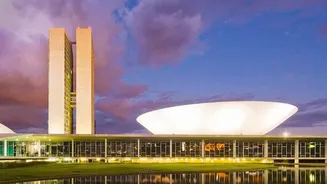
Beyond BRICS, the IBSA Dialogue Forum (India, Brazil, South Africa) offers a unique platform for the three large, multiracial democracies from three different continents. Formalized in 2003 with the Brasilia Declaration, IBSA is fundamentally values-driven, focusing on South–South cooperation, poverty alleviation, and advocating for the reform of global institutions like the UN Security Council. While sometimes overshadowed by the geopolitical weight of BRICS, IBSA remains highly relevant as a forum for like–minded democratic powers to coordinate on global norms and development without being tied to larger alliances. Its revival is seen as a timely complement to other groupings, focusing on developmental and democratic solidarity.