





The Battle Against Air Pressure
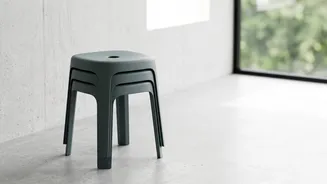
The most cited and scientifically sound reason for the hole is to combat a simple physics problem: air pressure and vacuum. Plastic stools are designed to be stackable to save space. When you place one flat-surfaced stool directly onto another, a pocket
of air gets trapped between them. Trying to pull them apart creates suction, making them stick together stubbornly. That small hole allows air to enter and escape, equalizing the pressure and preventing a vacuum from forming. This makes separating a tall stack of stools effortless, a small but crucial detail for anyone who has ever had to set up for a large gathering.
A Handle in Plain Sight
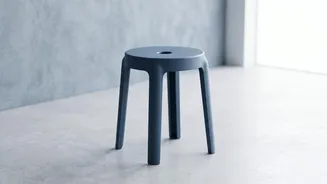
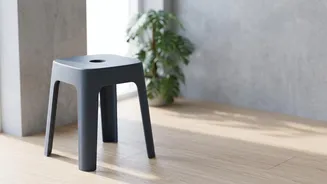
Beyond physics, the hole serves a far more obvious purpose: it’s a handle. Instead of grabbing the stool by its edges, which can be awkward, the hole provides a convenient and balanced grip point right in the center. This makes carrying one or even multiple stools at once significantly easier and more comfortable. Whether you're rearranging furniture at home or moving seating at a community event, this feature turns a potentially clumsy task into a simple lift. It’s a perfect example of ergonomics hidden in plain sight.
Strength, Structure, and Shape
One might assume that removing material would weaken the stool, but the design is more complex. The circular shape of the hole is intentional. Sharp corners or angles in plastic moulding can create points of concentrated stress, making the stool more likely to crack under pressure. A round hole, by contrast, helps distribute the weight and force more evenly across the seat's surface. While the hole itself doesn't magically add strength, its circular design is the most structurally sound way to create an opening without introducing weak points, working in concert with the stool's overall thickness and support ribs.
Manufacturing and Material Sense
In the world of mass production, every gram of material counts. Removing a small circle of plastic from the center of millions of stools results in significant material savings for manufacturers over time. This not only reduces production costs but also makes the final product slightly lighter. Furthermore, the hole can play a role in the injection moulding process itself. It helps ensure the plastic cools evenly and allows for easier removal from the mould, preventing defects and ensuring a consistent, high-quality product.
A Practical Drain
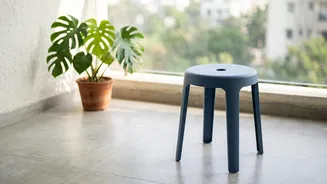
There's also a very practical benefit, especially for stools used outdoors or in bathrooms. The hole acts as a drain. After a rain shower or a cleaning, water doesn't pool on the seat surface; it simply drains away through the middle. This simple feature keeps the stool dry and ready for use, a small detail that enhances its versatility and makes it suitable for a wider range of environments, from a garden to a balcony.