

The GLOF Presumption
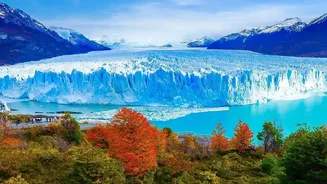
A Glacial Lake Outburst Flood, or GLOF, is a violent, catastrophic event. It happens when a lake formed from glacier melt, held back only by a fragile dam of ice or rock and debris (a moraine), suddenly bursts. These moraine dams can fail due to erosion,
an avalanche, or simply the immense pressure of the growing lake. The result is a sudden, massive release of water and debris that can travel over 100 kilometres, destroying everything in its path. In the Himalayas, where glaciers are rapidly retreating due to climate change, thousands of these lakes have formed, with around 200 considered dangerous. Given this context, when a high-mountain flood occurs, a GLOF is often the first and most logical suspect.
Cracks in the Theory
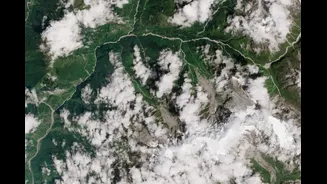
In the case of the recent Nepal disaster, the GLOF theory quickly ran into problems. Detailed satellite imagery of the source region showed no evidence of a major glacial lake having breached. Scientists and agencies like the International Centre for Integrated Mountain Development (ICIMOD) noted that the specific characteristics of the flood didn't align with a classic GLOF. For instance, seismic data recorded a massive event, but its signature was not that of a typical earthquake that might trigger a GLOF. Instead, it showed a long, low, grinding rumble—the unique sound of millions of tonnes of rock and ice moving at high speed. This pointed away from a lake burst and towards a different kind of cataclysm.
A New Culprit: Ice-Rock Avalanches
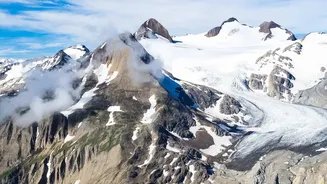
A growing consensus now points to a massive ice and rock avalanche as the primary trigger, a scenario eerily similar to the 2021 Chamoli disaster in India. According to this theory, a huge wedge of a steep, hanging glacier, destabilised by warming temperatures that thawed the permafrost 'glue' holding it to the mountain, broke off. This colossal mass of ice and rock, estimated to be millions of cubic metres, fell from a great height. The kinetic energy from the impact was so immense it registered as a magnitude 5+ seismic event and instantly melted the ice, creating a massive torrent of water and debris that surged down the valley without any pre-existing lake being involved.
Why The Distinction Matters
Distinguishing between a GLOF and a rock-ice avalanche isn't just an academic exercise; it has critical implications for disaster preparedness across the entire Himalayan region, including in India. Early warning systems for GLOFs primarily focus on monitoring known dangerous glacial lakes for changes in water level or dam stability. However, these systems are not designed to predict a sudden, catastrophic failure of a hanging glacier where no significant lake exists. The Chamoli and recent Nepal events show that devastating floods can originate from areas not previously considered to be at high risk for lake outbursts. This new understanding means authorities must expand monitoring to include steep, unstable rock and ice faces, a far more complex and challenging task. Understanding the true cause helps create better hazard maps and safer infrastructure planning in vulnerable mountain regions.