



A Familiar Target
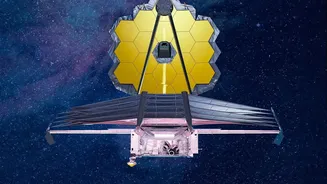
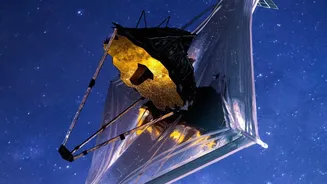
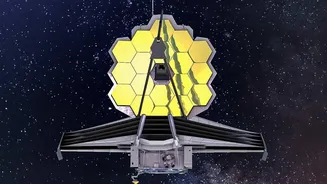
The James Webb Space Telescope (JWST) was pointed towards a star system that astronomers know very well: Beta Pictoris. Located about 63 light-years from Earth, it's a relatively young system, making it a perfect natural laboratory for studying how planets
form and evolve. The star was already known to host two massive planets, called Beta Pictoris b and Beta Pictoris c. In fact, Beta Pictoris b was one of the very first exoplanets ever to be directly photographed. The goal of the recent observation was not to find new planets, but to study the atmosphere of the already-known Beta Pictoris b using Webb's powerful Near-Infrared Spectrograph (NIRSpec). The team was hoping to learn more about the chemical makeup of this well-documented gas giant.
The Unexpected Discovery
As the data from Webb came in, scientists noticed something unusual. The instrument they were using, an Integral Field Unit, doesn't just get a chemical fingerprint; it also captures spatial data, essentially creating a map of the area being studied. While analyzing the light from the system, they detected the distinct chemical signature of a giant planet where they didn't expect one to be. “We weren't looking for a new planet,” confirmed Aidan Gibbs, the lead author of the study published in the Astrophysical Journal Letters. The team had stumbled upon a third planet in the system, which has now been named Beta Pictoris d. It was a 'happy accident' made possible by the incredible sensitivity of the JWST, which can parse out the faint signals of a planet from the overwhelming glare of its host star and a bright surrounding disk of dust.
Meet the New Giant
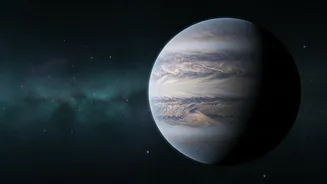
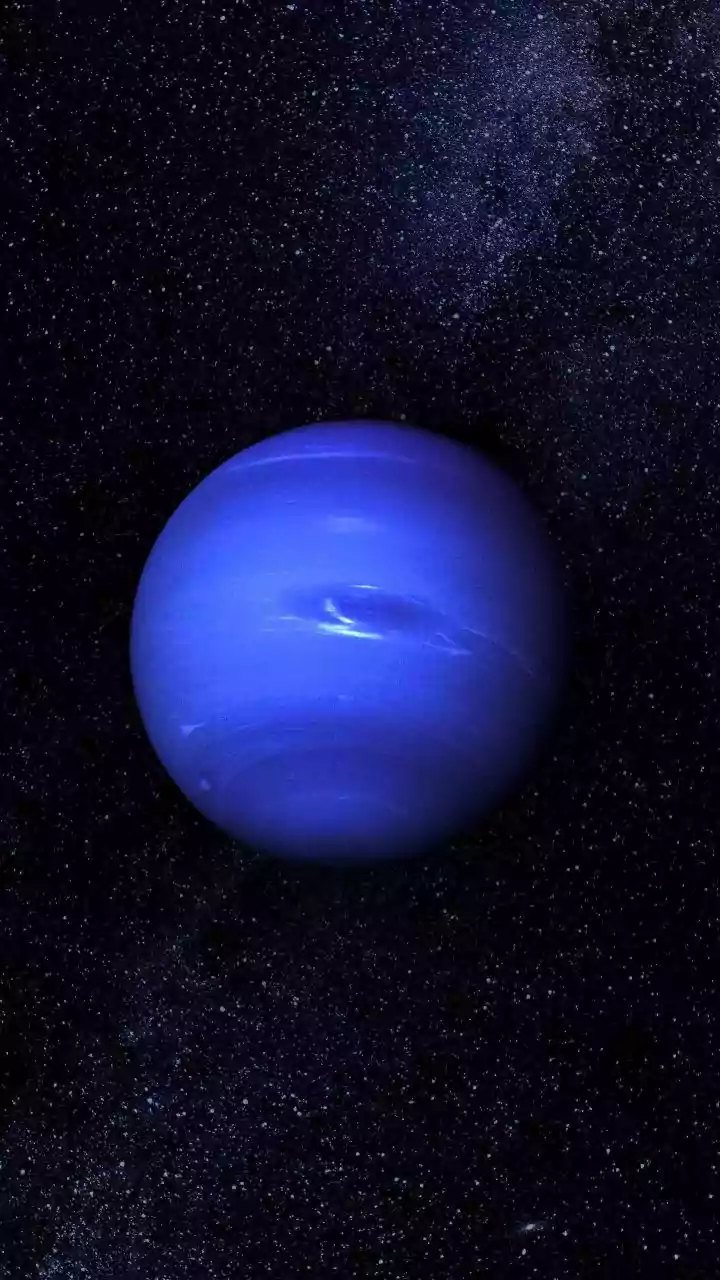
So what do we know about this new world? Beta Pictoris d is a gas giant, estimated to be at least twice the mass of our own solar system's king, Jupiter. This makes it the smallest of the three giant planets discovered in the Beta Pictoris system so far. Astronomers believe it orbits its star at a distance comparable to Neptune's orbit in our own solar system. The planet had remained hidden in plain sight for so long because the Beta Pictoris system is surrounded by an intensely bright debris disk, which scatters starlight and makes it difficult to distinguish faint planets from other structures in the dust. Webb’s advanced instruments, however, were able to effectively cut through this noise and isolate the planet’s unique atmospheric signature, revealing its presence for the first time.
The Power of Serendipity
This discovery is a powerful reminder of how scientific exploration works. While planned observations are crucial, many of the most revolutionary finds in history have been accidental. The JWST is proving to be a master of such serendipitous discoveries. Its ability to capture a huge amount of data with every observation means that scientists can re-examine old targets and find new surprises. The discovery of Beta Pictoris d wasn't made by traditional imaging, where you spot a bright dot of light. Instead, it was found by detecting the unique chemical fingerprint of its atmosphere. This technique could transform the search for planets around other stars, opening up a new way to find worlds that are otherwise hidden. It showcases the telescope not just as a camera, but as a sophisticated cosmic detective.