








The Nolan Standard
Christopher Nolan doesn't just make movies; he crafts experiences. From the mind-bending corridors of Inception to the visceral battlefields of Dunkirk and the stark tension of Oppenheimer, his ambition is to immerse the audience completely. With his latest
film, The Odyssey, he has taken this philosophy to its absolute limit. The movie is the first feature in history to be shot entirely using IMAX 70mm film cameras. This commitment to analogue filmmaking delivers an image of breathtaking size and clarity, but it comes at a cost: extreme exclusivity. Nolan’s purist approach means that the definitive version of his grand spectacle is accessible to only a fraction of the global audience, creating a unique cinematic pilgrimage for devoted fans.
The Magic of 15/70 IMAX Film
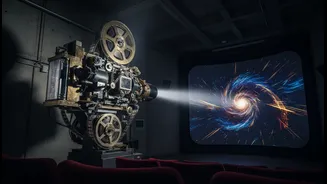
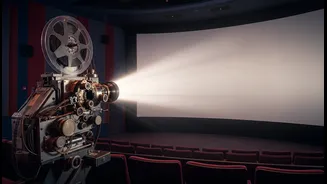
So what makes this format so special? It’s all about the negative. Traditional 35mm film runs vertically through a camera. IMAX 70mm film, however, runs horizontally. Each frame is a massive 15 perforations wide, creating a negative area almost nine times larger than a standard 35mm frame. This huge canvas captures an astonishing amount of detail, with an estimated equivalent resolution of up to 18K. The result on screen is an image with unparalleled sharpness, depth, and colour fidelity. Nolan himself says the goal is to make the screen disappear, filling your peripheral vision and creating a sense of 3D without the need for glasses. When projected on a towering 1.43:1 aspect ratio screen, the audience sees the complete, uncropped image exactly as the director and cinematographer framed it.
Film vs. Digital: What’s the Difference?
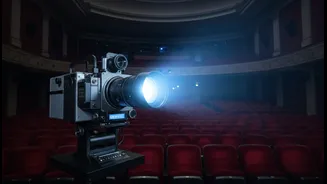
Most theatres today, including many that carry the IMAX brand, use digital projection. These systems are convenient and consistent, but they can’t match the raw information contained in a 70mm film frame. Many digital IMAX theatres use 2K or 4K laser projectors, which are excellent but still a significant step down from the 16K-18K equivalent resolution of film. They also typically project in a wider, more rectangular 1.90:1 aspect ratio. This means that for a film shot for the tall 1.43:1 IMAX frame, audiences in digital venues are seeing a cropped image, with the top and bottom of the picture removed. While Nolan's team ensures the composition holds up in all formats, the full, towering scope of the visuals is lost. This distinction between true film projection and digital IMAX is what the “direct viewing” in the headline refers to—an uncompressed, analogue presentation from the film print itself.
The Rarity of a True IMAX Experience
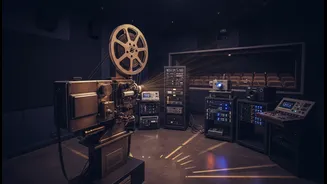
The reason for the scarcity of these 41 locations is twofold: technology and logistics. IMAX hasn't manufactured new 15/70 film projectors in decades, as the industry shifted to digital. According to IMAX CEO Richard Gelfond, many parts needed to build or even repair these complex machines are obsolete and no longer exist. For The Odyssey, IMAX undertook a massive effort to find and refurbish old projectors to increase the number of available venues from the 30 that showed Oppenheimer to the current 41. Beyond the projectors, the physical prints themselves are immense. A full print of an IMAX film can weigh hundreds of pounds and requires highly skilled, specially trained projectionists to handle and thread the massive platters. Theaters also need to have the enormous, multi-story screens capable of displaying the 1.43:1 image, an expensive architectural feature few cinemas can justify.
What This Means for Indian Fans
The unfortunate reality for cinephiles in India, and indeed across most of Asia, Africa, and South America, is that none of these 41 venues are located on their continents. The list of theatres capable of projecting The Odyssey in IMAX 70mm is concentrated in North America (around 34 locations) and Europe, with a single screen in Australia. For Indian audiences, the most accessible high-quality version will be at IMAX with Laser venues, which offer 4K resolution and superior contrast to standard digital screens. While it won't be the full film experience Nolan designed, the director and his team spend months creating the best possible digital masters from the original film, ensuring it still looks spectacular. The exclusivity of the 70mm print turns seeing The Odyssey as intended into an international travel proposition, a testament to the director's uncompromising vision in an age of digital convenience.