




The Unique Nature of Ragi Flour
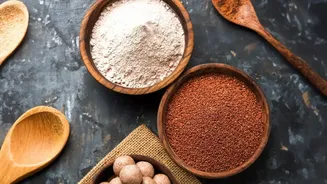
Ragi, also known as finger millet, isn't just a substitute for wheat flour; it behaves very differently. It's naturally gluten-free, which is great for those with sensitivities, but this also means it lacks the protein structure that gives wheat-based
pancakes their familiar chew and elasticity. Ragi is also incredibly absorbent and packed with fibre and calcium, containing significantly more calcium than wheat. This high fibre content means it soaks up more liquid than traditional all-purpose or whole wheat flour. Understanding this is the first step to avoiding a common pitfall: a batter that's far too dense from the start.
The Problem with Thick Batter
When making traditional pancakes, a thick batter can sometimes yield a fluffy result. With ragi, the opposite is true. A thick ragi pancake batter leads to a final product that is heavy, dense, and gummy, rather than light and airy. Because ragi flour lacks gluten, it doesn't create the same network to trap air bubbles. If the batter is too thick, steam and the leavening agents (like baking powder) struggle to lift the pancake during cooking. The result is a flat, heavy disc that can be tough to chew. You're essentially steaming a dense paste instead of frying a light batter, which prevents the pancake from cooking through evenly and achieving that desired fluffiness.
Aim for a Pourable Consistency
The ideal ragi pancake batter should be pourable but not watery. A good benchmark is to aim for a consistency similar to traditional dosa batter. It should flow easily from a ladle into the pan, spreading into a circle with minimal help. If you lift a spoonful of batter, it should run off in a steady stream, thinly coating the back of the spoon. Don't be afraid to add more liquid—whether it's milk, buttermilk, or water—until you reach this state. Many recipes call for letting the batter rest for 5-10 minutes. During this time, the ragi flour will absorb more liquid, so you may need to thin it out again just before cooking.
A Fail-Proof Ragi Pancake Recipe
This simple recipe puts the principle of a thinner batter into practice. Ingredients: 1 cup ragi flour, 1 teaspoon baking powder, a pinch of salt, 1 tablespoon jaggery or sugar (optional), 1 medium-sized ripe banana (mashed), and approximately 1 cup of milk or water (adjust as needed). First, whisk the dry ingredients—ragi flour, baking powder, and salt—in a bowl. In a separate bowl, mix the mashed banana, jaggery/sugar, and about three-quarters of the milk. Combine the wet and dry ingredients, mixing gently until just combined. A few lumps are perfectly fine; overmixing can make pancakes tough. Now, assess the consistency. If it's too thick to pour smoothly, gradually add the remaining milk or water until it reaches that flowing, dosa-batter-like texture.
Tips for Perfect Ragi Pancakes
Beyond the batter, a few extra steps can elevate your pancakes. First, let the batter rest for at least 10 minutes. This hydrates the flour and helps create a more tender pancake. Second, cook on a medium-hot non-stick pan with a little ghee or oil. When you pour the batter, it should spread gently. Wait for bubbles to appear on the surface and for the edges to look set before flipping—this usually takes 2-3 minutes. Flipping only once prevents you from pressing out the air that makes them fluffy. For extra flavour, consider adding a pinch of cardamom powder or vanilla extract to the batter. These pancakes are delicious served with honey, fresh fruit, or a sprinkle of nuts.