
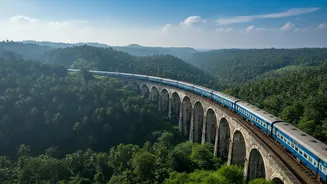
More Than a Ride, a Heritage
The phrase 'toy train' might sound whimsical, but these railways are serious feats of engineering. Three of them—the Darjeeling Himalayan Railway, the Kalka-Shimla Railway, and the Nilgiri Mountain Railway—are collectively recognised as a UNESCO World
Heritage Site. This designation celebrates them as "outstanding examples of bold, ingenious engineering solutions" for crossing rugged, mountainous terrain. Built during the British Raj, these narrow-gauge lines were instrumental in connecting remote hill stations, which served as summer capitals and sanatoriums. Today, they are not just relics; they are fully operational railways that continue to serve local communities and enchant travellers with a pace of life that is delightfully slow and immersive.
Darjeeling Himalayan Railway: The Pioneer
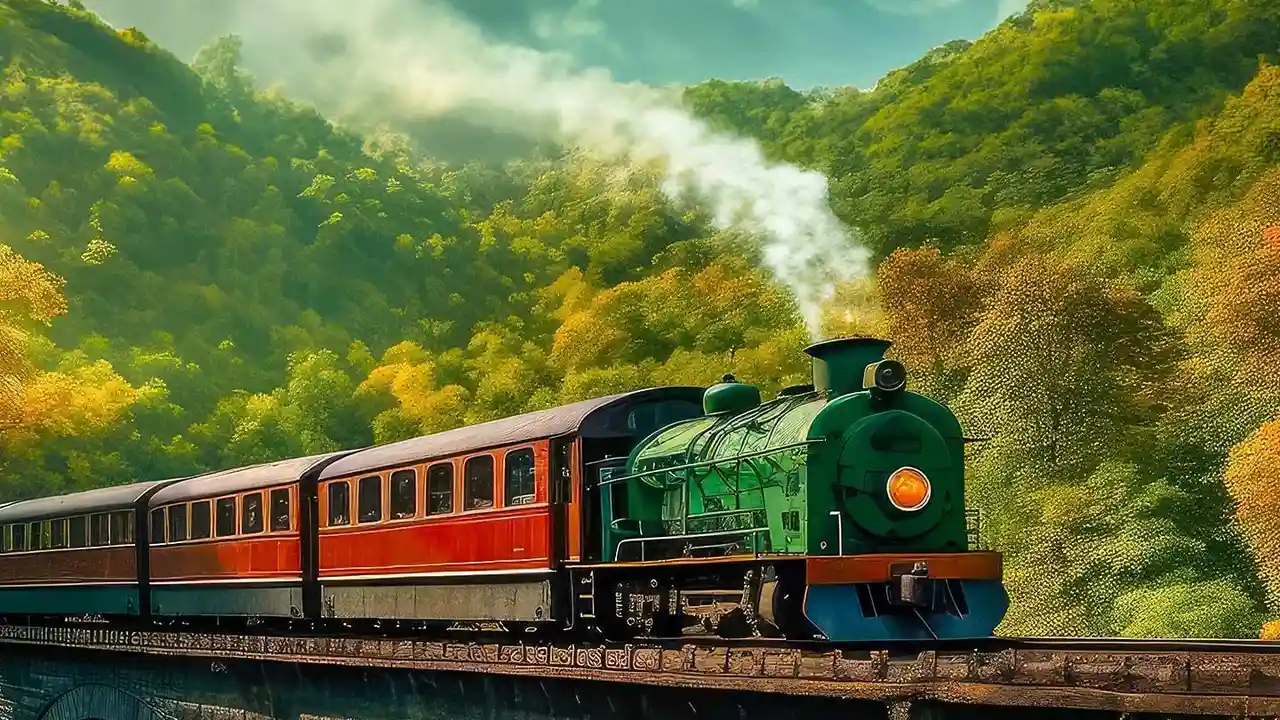
The oldest and most iconic of the lot, the Darjeeling Himalayan Railway (DHR), has been chugging along since 1881. Its 88-kilometre route from New Jalpaiguri to Darjeeling is a masterclass in navigating steep gradients without tunnels. The solution was a series of loops and zig-zags (reverses) that allowed the train to climb thousands of feet. The most famous of these is the Batasia Loop, an elegant spiral near Ghum station—the highest railway station in India—that offers a panoramic view of Darjeeling and the snow-capped Kanchenjunga on clear days. While diesel engines now handle the full route, vintage steam locomotives still operate on shorter tourist 'joyride' sections, offering an authentic, smoke-billowing journey into the past.
Kalka-Shimla Railway: A Feat of Tunnels and Bridges
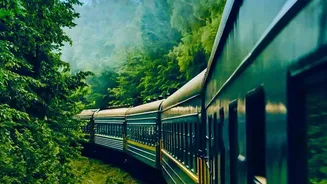
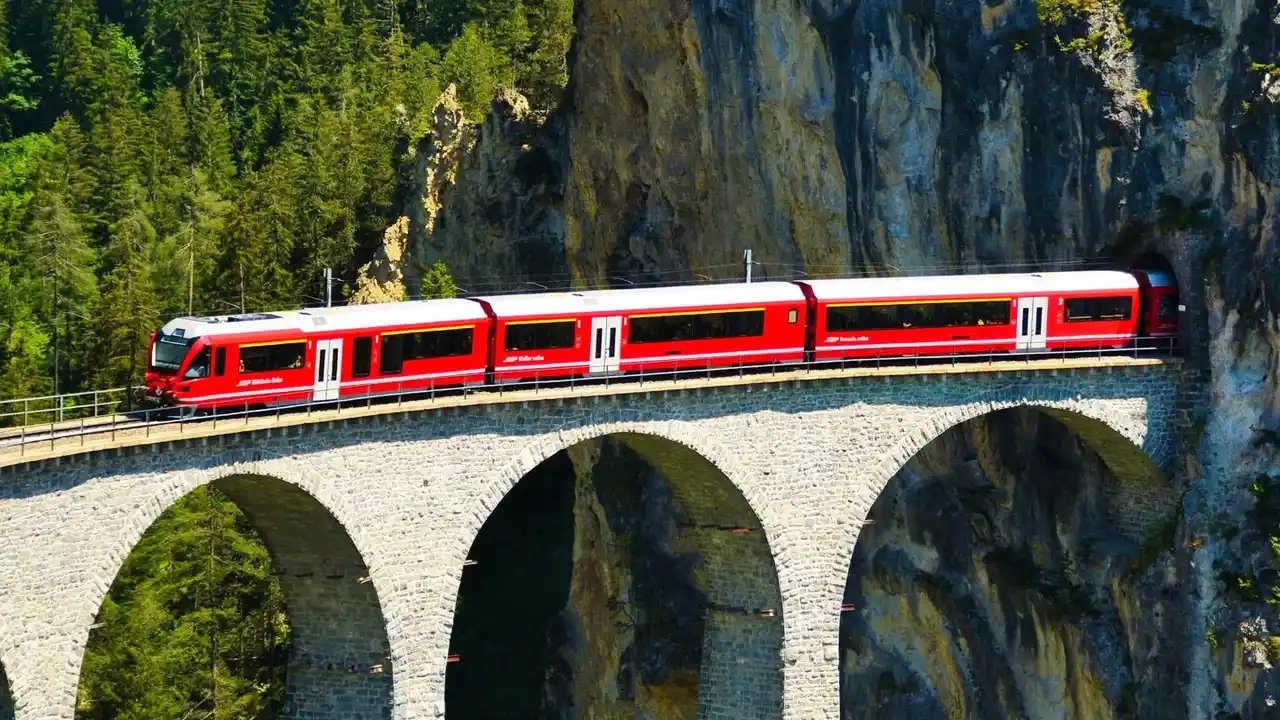
Built to connect the plains with Shimla, the former summer capital of British India, the Kalka-Shimla Railway is another engineering spectacle. Over its 96-kilometre journey, the train passes through 102 tunnels, crosses over 800 bridges, and navigates an astonishing 919 curves. The journey is a five-hour passage through pine forests, misty valleys, and quaint colonial-era stations. Each tunnel and bridge tells a story of the monumental effort required to build this line, which opened in 1903. The Barog Tunnel, the longest on the route at over a kilometre, is particularly famous and is named after the engineer who tragically miscalculated its alignment. This railway isn't just a means of transport; it’s a rolling museum of colonial history and architecture.
Nilgiri Mountain Railway: Conquering the Steepest Slopes
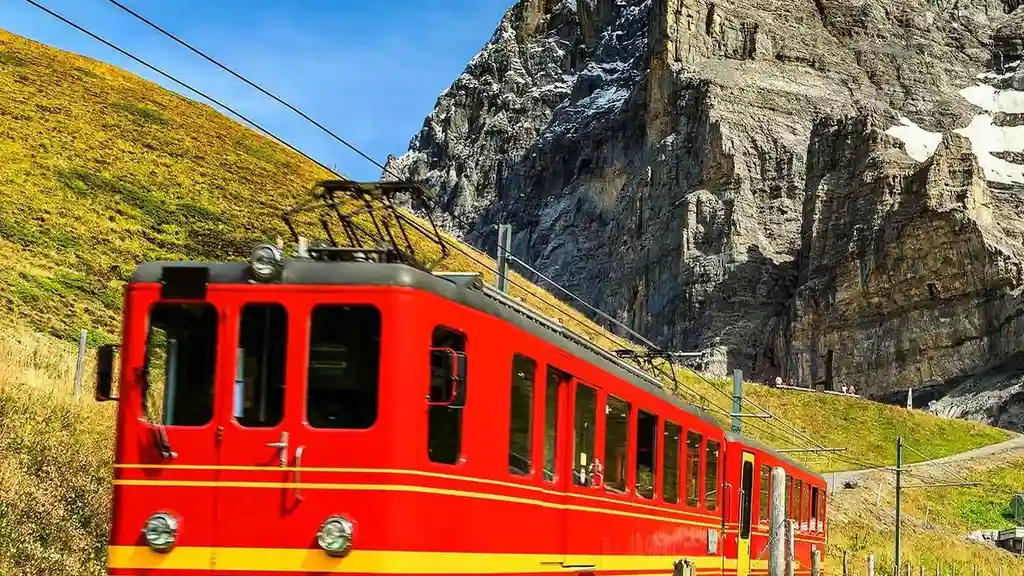
Down south in Tamil Nadu, the Nilgiri Mountain Railway (NMR) tackles the steepest railway gradient in Asia. To achieve this, it uses a unique rack and pinion system, where a cogwheel on the locomotive engages with a toothed rail between the tracks, pushing the train uphill from Mettupalayam to the popular hill station of Ooty. Completed in 1908, this metre-gauge line travels 46 kilometres through lush forests, vibrant tea plantations, 16 tunnels, and across 250 bridges. For a significant portion of its journey, the train is powered by a classic steam engine, making it a multisensory experience of sounds, smells, and stunning vistas of the 'Blue Mountains'.