

The Invisible Highways in the Sky
Every migratory bird follows an ancient, invisible map etched into its DNA. These routes, known as flyways, are vast corridors that connect breeding grounds in the north with wintering areas in the south. India sits at the heart of one of the most significant
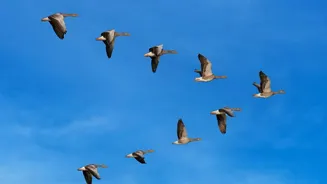
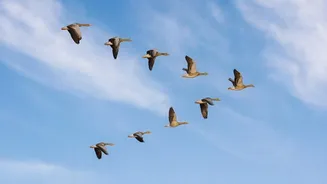
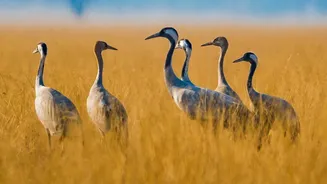
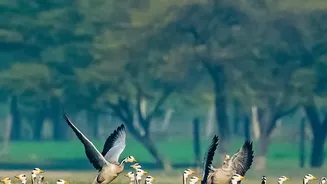
of these: the Central Asian Flyway (CAF). This flyway spans 30 countries, stretching from the freezing tundra of Siberia all the way to the warm shores of the Indian Ocean. For hundreds of species, including the iconic Bar-headed Goose and the endangered Black-necked Crane, this is the path they travel twice a year. It’s not a single, narrow road, but a complex network of routes over land and sea, a superhighway system for birds that is essential for their life cycle.
A Chain of Fragile Refuges
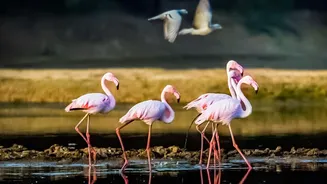
A long-haul flight requires rest stops, and for migratory birds, these are wetlands. India’s extensive network of lakes, marshes, mudflats, and estuaries like Chilika Lake in Odisha and Keoladeo National Park in Rajasthan serve as critical refuelling stations. Here, birds can rest, feed, and gather strength for the next leg of their journey. Think of the flyway as a chain; each wetland is a vital link. If one link breaks—if a wetland is drained, polluted, or built over—the entire chain is weakened. A bird might arrive at a traditional stopover site only to find it gone, a devastating blow that can impact the survival of its entire population. For many species, these stopovers are just as important as their final destination.
The Mounting Threats on the Ground
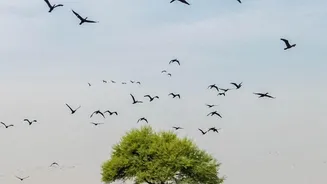
Unfortunately, these vital links are breaking at an alarming rate. India has lost nearly a third of its natural wetlands over the last three decades. The culprits are numerous and familiar: rapid urbanisation, the conversion of wetlands for agriculture, and widespread pollution from pesticides and industrial waste. These activities destroy habitats and poison the food sources birds rely on. Added to this are the newer threats of climate change, which alters water levels and disrupts the delicate timing of migration, and obstacles like power lines and wind turbines that can be fatal for birds in flight. With over 40% of the species along the CAF showing declining populations, the pressure is immense.
India’s Critical Role in a Global Effort
Given its central location, India’s role in protecting the Central Asian Flyway is indispensable. The country is home to wintering grounds for over 370 migratory species and hosts a significant number of Ramsar sites—wetlands designated as internationally important. Recognising this responsibility, India has launched a National Action Plan for the conservation of migratory birds, focusing on habitat protection, monitoring, and mitigating threats. In a major step, the Government of India is also set to host the Coordinating Unit for the newly established Central Asian Flyway initiative under the Convention on Migratory Species (CMS), positioning the nation as a leader in this international conservation effort. This framework aims to coordinate action across all 30 countries in the flyway.
Beyond Borders: A Shared Responsibility
While national efforts are crucial, they are not enough. A bird protected in an Indian sanctuary might face threats from habitat loss in Kazakhstan or illegal hunting in another country along its route. The very nature of migration means that conservation must be a collaborative, transboundary effort. The future of these birds depends on international cooperation, where countries share data, coordinate policies, and work together to protect the entire network of sites the birds depend on. By protecting a wetland in India, we are also helping to preserve a piece of Siberia's natural heritage. The fate of these global travellers connects us all, making their conservation a truly shared responsibility across nations and cultures.