


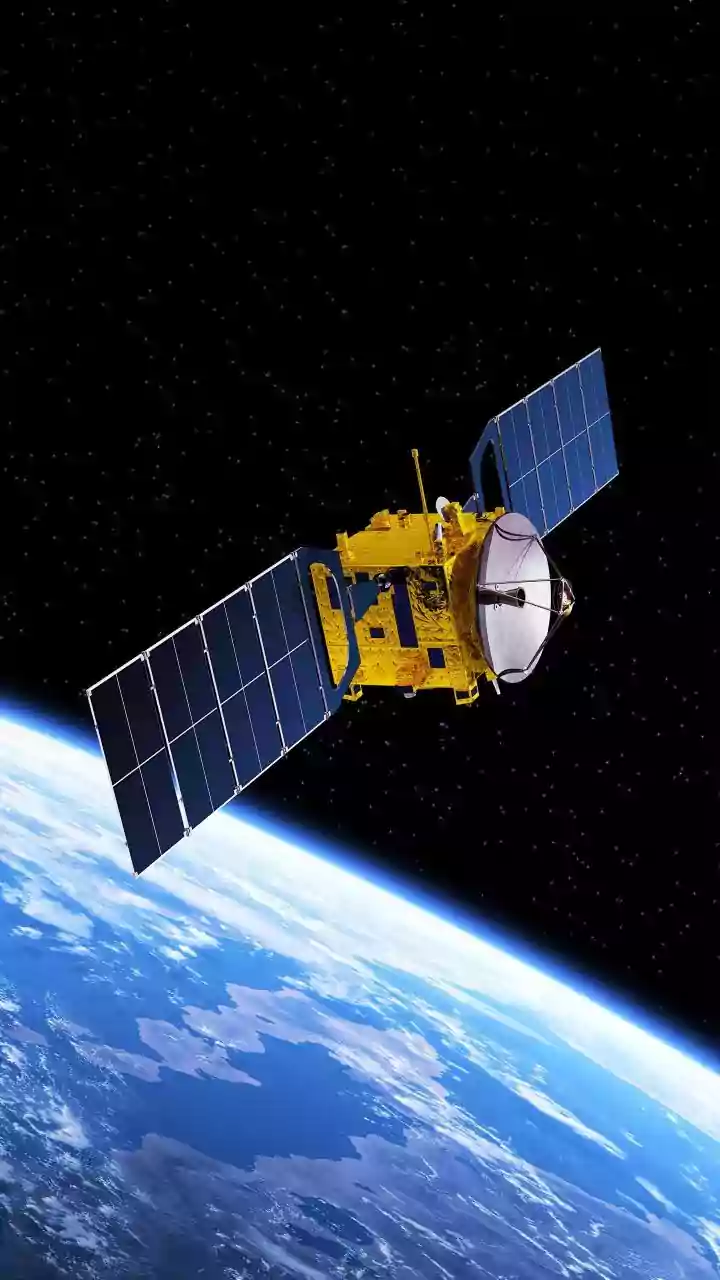



India is taking a giant leap in space technology, backing an ambitious project to create a sovereign, AI-powered satellite network. With new funding from the Technology Development Board, what is this futuristic constellation and how will it work?
The Core of the Mission
The
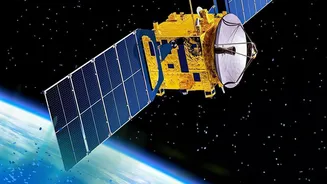
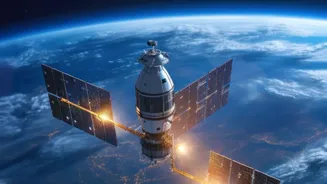
Department of Science and Technology's Technology Development Board (TDB) has signed an agreement to fund a cutting-edge AI-enabled satellite project. The board is providing significant financial support to a Bengaluru-based startup, Astrome Technologies Pvt Ltd, for the development of an indigenous space-based Artificial Intelligence-enabled Electronic Intelligence (AI-ELINT) satellite constellation. TDB has committed ₹64.05 crore to the project, which has a total estimated cost of ₹128.11 crore. This initiative aims to build and deploy a network of small satellites in Low Earth Orbit (LEO) to form an intelligent, interconnected system.
What is an AI-ELINT Satellite Network?
This isn't just about putting more satellites into orbit; it's about making them smarter and more coordinated. The project integrates three key technologies. First is the Electronic Intelligence (ELINT) payload, which is designed to detect and analyse a wide spectrum of electronic signals, such as radar emissions. Second, AI-based ground processing tools will be used to rapidly analyse the vast amounts of data collected by the satellites. Third, the satellites will have inter-satellite communication links, allowing them to 'talk' to each other and function as a cohesive network, rather than as individual units reporting back to Earth. This enables quicker data sharing and more efficient surveillance.
Strategic Importance for National Security
The primary goal of this AI-ELINT constellation is to build a sovereign space-based intelligence system for national security applications. By deploying a constellation of ~50kg microsatellites, the network will provide wider geographical coverage and more frequent revisits of specific areas of interest. This capability allows for persistent surveillance and enhanced monitoring. The ability to detect and analyse electronic signals provides a significant strategic advantage, bolstering India's intelligence-gathering capabilities from space and reducing reliance on foreign systems. The project is a clear move towards technological self-reliance in the critical domain of national defence.
A Boost for Indigenous Deep Technology
This project is a major vote of confidence in India's burgeoning deep-tech and private space ecosystem. The funding is part of the government's Research, Development and Innovation (RDI) Fund, designed to help technology-intensive projects mature from the development phase to operational deployment. For Astrome Technologies, the support will accelerate the journey of its technology from Technology Readiness Level (TRL)-4 (validated in a lab) to TRL-9 (proven in an operational environment). According to TDB Secretary Rajesh Kumar Pathak, such initiatives reflect the potential of India's deep-tech sector to develop sophisticated solutions for the nation's emerging strategic requirements.
The Bigger Picture for India's Space Sector
The funding for Astrome is part of a broader push by the TDB to energise India's private space industry. The board has recently backed several other ambitious startups, including Manastu Space for green propulsion technology and GalaxEye Space for a multisensor satellite. This pattern of investment shows a clear strategy: empower private companies to build critical, next-generation space infrastructure. By fostering domestic innovation in areas like AI, satellite manufacturing, and propulsion, India is not only enhancing its strategic autonomy but also positioning itself as a key player in the global commercial space economy.