







The Devotion of a Queen
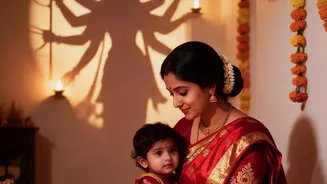
The most popular narrative associated with Karwa Chauth is that of the beautiful Queen Veeravati. She was the only sister to seven loving brothers and was married to a king. For her first Karwa Chauth, she observed the strict, day-long fast at her parents'
home. Having abstained from all food and water since sunrise, she was overcome with hunger and thirst by evening and desperately awaited the moonrise, which marks the end of the fast.
A Deception Born of Love
Seeing their sister's distress, the seven brothers couldn't bear her suffering. In an act of misguided affection, they devised a plan to trick her into breaking her fast early. They created an illusion of the moon, either by placing a mirror in a distant Pipal tree or by lighting a fire behind a mountain, so the glow resembled a rising moon. Trusting her beloved brothers, Veeravati mistook the light for the real moon, performed the rituals, and broke her fast.
Consequences and Penance
The moment Veeravati took her first bite of food, ill news arrived: her husband, the king, was dead or gravely ill. Heartbroken, she rushed towards her husband's kingdom. On the way, she encountered Goddess Parvati, who revealed the truth about her brothers' deception and the consequences of breaking the fast prematurely. The Goddess advised Veeravati that her only recourse was to repeat the Karwa Chauth fast, this time with absolute devotion and adherence to all rituals. Veeravati followed these instructions faithfully, and seeing her unwavering dedication, Yama, the god of death, was forced to restore her husband's life.
From Legend to Living Ritual
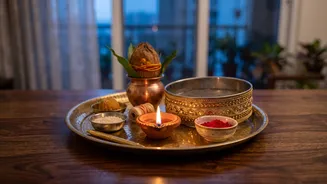
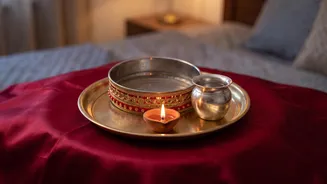
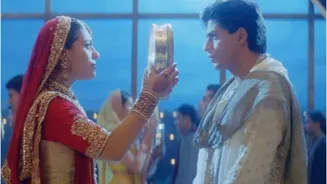
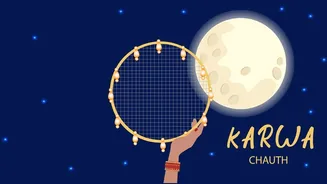
This story is not just a tale; it's the very blueprint for the festival's most iconic rituals. The use of a sieve, or 'channi', is directly linked to Veeravati's experience. Women look at the moon through a sieve to ensure they are not being tricked by a false moon, as the queen was. It symbolises the importance of seeing the truth with clarity and patience before completing the vow. The act of filtering one's gaze, first at the moon and then at one's husband, is meant to weed out any negativity and channel pure, divine blessings into the marriage.
An Enduring Symbol of Love
The legend of Veeravati elevates Karwa Chauth from a simple fast to a powerful symbol of marital devotion, sacrifice, and the ultimate triumph of faith. Her story underscores the core tenets of the festival: the wife's willingness to endure hardship for her husband's well-being and the belief that such devotion holds the power to overcome even death. It is a narrative that reinforces the sanctity of the marital bond and gives profound meaning to the day's observances, which are passed down through generations.