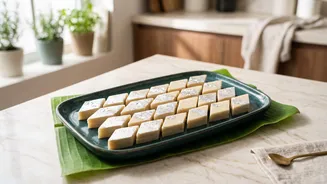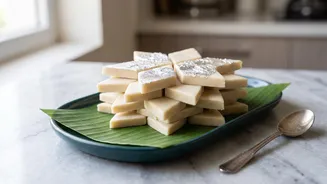






The Three Essential Ingredients
The beauty of Kaju Katli lies in its simplicity. At its core, this beloved sweet requires only three main ingredients: cashews, sugar, and water. For the best results, use high-quality, raw, unsalted cashews that are at room temperature. Avoid using cashews straight
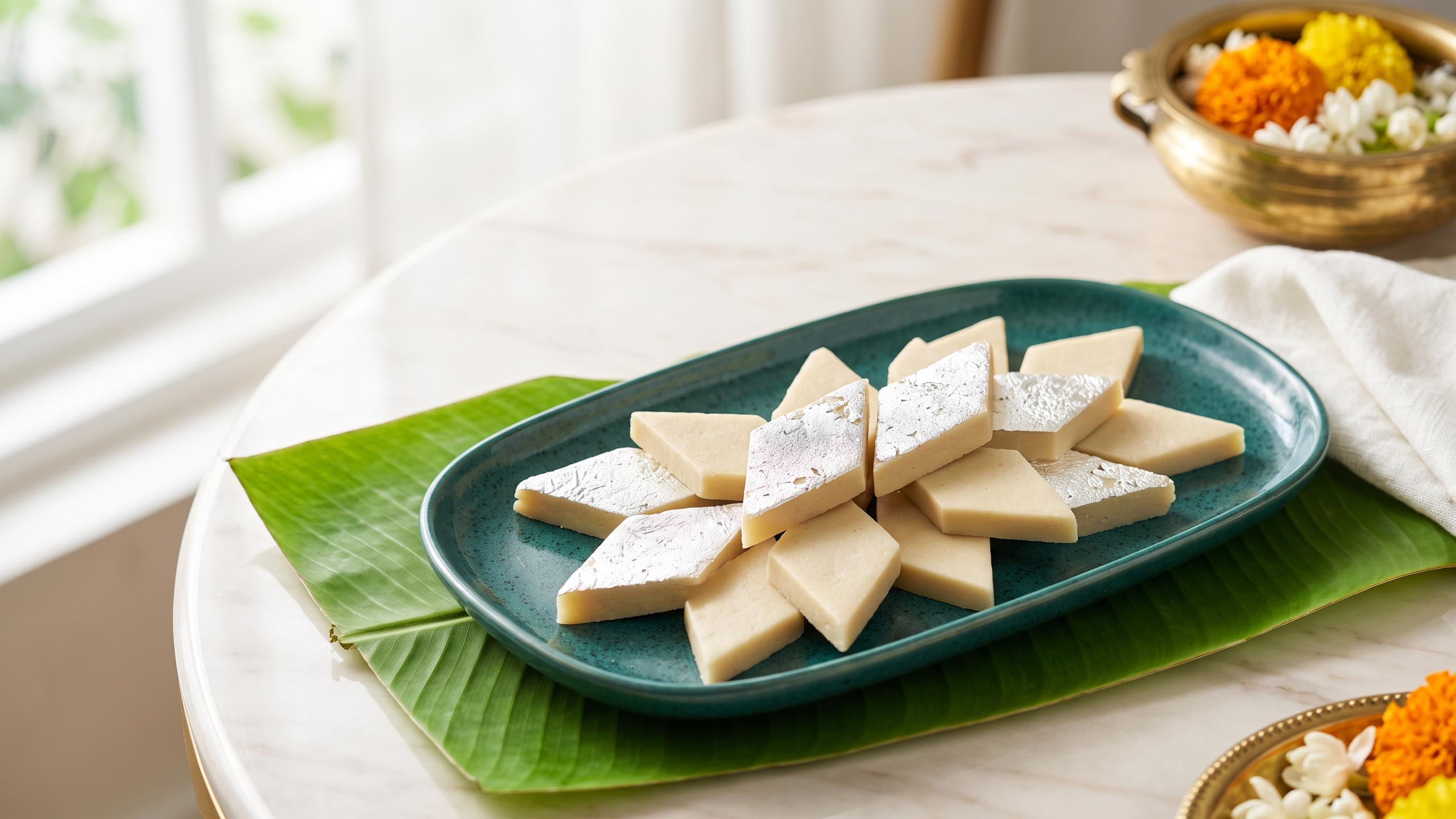
from the refrigerator, as this can affect the grinding process. Some recipes also call for a teaspoon of ghee to add smoothness and shine to the dough, and a pinch of cardamom powder or a drop of rose water for a delicate fragrance. For decoration, many traditional recipes use an edible silver leaf, known as 'vark', but this is purely optional and adds no flavour.
Mastering the Cashew Powder
The texture of your Kaju Katli depends entirely on getting the cashew powder right. The goal is a fine, flour-like powder, not a paste. The biggest mistake is over-grinding the cashews, which causes them to release their natural oils and turn into cashew butter. To prevent this, grind the cashews in short bursts or pulses in a mixer grinder or food processor. If you still have some coarse pieces, you can sift the powder and grind the larger bits again. The cashews should be completely dry before you begin. A fine, dry powder is the foundation for a smooth, homogenous dough.
Getting the Sugar Syrup Right
The next critical stage is the sugar syrup. While many traditional recipes require achieving a 'one-string consistency', a simpler method exists for beginners. Simply dissolve sugar in water in a heavy-bottomed pan over medium heat. Once the sugar is fully dissolved, bring it to a boil. As soon as it boils, reduce the heat to low and add the cashew powder. Stir continuously and vigorously to prevent lumps from forming. The mixture will quickly start to thicken. This method bypasses the tricky step of testing syrup strings, making the process more forgiving.
Cooking and Kneading the Dough
As you stir the cashew powder into the syrup, the mixture will begin to pull away from the sides of the pan and form a soft, dough-like mass. This usually takes about 8 to 10 minutes on low heat. To check if it's done, take a tiny piece, let it cool for a moment, and try to roll it into a ball between your fingers. If it’s not sticky, it's ready. Transfer the hot dough onto a sheet of parchment paper or a greased plate. Be careful, as it will be very hot. Let it cool just enough so you can handle it, then knead it gently for about a minute until it’s smooth and pliable. This kneading step is vital for a melt-in-the-mouth texture. If the dough feels too dry, you can add a few drops of milk; if it's too sticky, add a little milk powder.
The Art of Shaping and Slicing
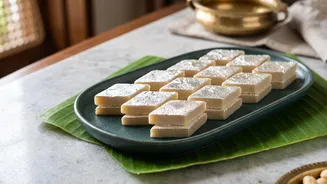
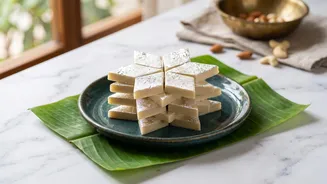
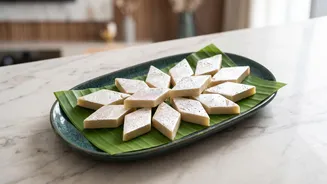
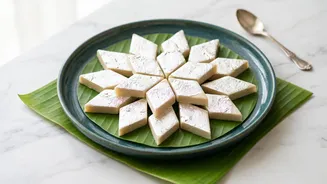
Now for the defining step. Place the warm cashew dough on a sheet of parchment paper and place another sheet on top. This prevents sticking and ensures a smooth finish. Using a rolling pin, gently roll out the dough to an even thickness of about 3 to 5 millimetres (around 1/4 inch). Rolling it too thin will make it fragile, while too thick affects the classic texture. Once rolled, let the cashew slab cool and set for about 15-20 minutes at room temperature. Don't cut it while it's still warm, as the pieces will not hold their shape. When it has firmed up, use a sharp knife or a pizza cutter to make the signature diamond cuts. First, slice the slab diagonally in one direction, then slice it diagonally in the opposite direction. A ruler can be used for perfectly straight lines. Gently separate the pieces and your homemade Kaju Katli is complete.