






Our Crowded Cosmic Backyard
For decades, we’ve been launching satellites, rockets, and probes into space. But what goes up doesn't always come down cleanly. Left behind is a growing junkyard of debris: defunct satellites, spent rocket stages, and millions of tiny fragments from
past collisions and break-ups. As of 2026, space surveillance networks are tracking over 31,000 objects larger than 10 cm. But that's just the tip of the iceberg. Models estimate there are over a million objects between 1 and 10 cm, and hundreds of millions of smaller particles. At orbital velocities, even a paint fleck can cause catastrophic damage to a functioning satellite, the International Space Station, or future crewed missions. This escalating threat puts our global infrastructure at risk, from GPS and weather forecasting to internet communications.
The Looming Threat of Kessler Syndrome
The ultimate fear among space experts is a scenario known as the Kessler Syndrome. Proposed by NASA scientist Donald J. Kessler in 1978, it describes a tipping point where the density of debris in orbit becomes so high that collisions create a cascading chain reaction. Each collision generates more fragments, which in turn increase the likelihood of more collisions, creating a self-sustaining feedback loop. This could eventually render entire orbits unusable for generations, effectively trapping us on Earth. Events like the 2009 collision between a defunct Russian satellite and an operational Iridium communications satellite, which created thousands of new debris pieces, show that this isn't just a theory; it's a demonstrated risk.
Enter the Orbital Cleanup Crew
This growing crisis has spurred a new commercial industry: Active Debris Removal (ADR). A wave of innovative companies and space agencies are developing technologies to capture and deorbit this dangerous junk. Companies like the Japanese firm Astroscale and the Swiss startup ClearSpace are leading the charge. Astroscale has already conducted successful demonstration missions, including rendezvousing with and inspecting a piece of debris in 2024. ClearSpace is preparing a mission for the European Space Agency (ESA) to remove an old satellite. They are joined by established aerospace giants like Northrop Grumman and a host of other startups, each proposing different methods for the cleanup task.
Harpoons, Nets, and Lasers
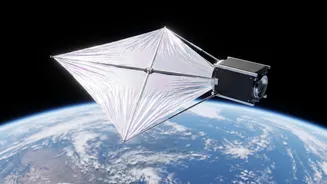
How do you catch an object tumbling through space at immense speeds? The technology being developed sounds like something out of science fiction. Methods include firing harpoons, casting giant nets, using robotic arms for capture, and attaching drag sails to pull debris back into the atmosphere to burn up. Astroscale demonstrated magnetic capture, while NASA has developed concepts for a vehicle that can snare targets. Another promising, though still experimental, technology involves using ground-based lasers to gently nudge debris into a lower orbit where it will eventually disintegrate. While zero pieces of debris have been fully removed from orbit to date, the first capture missions are now being built, moving the industry from theory to reality.
The Billion-Dollar Question: Who Pays?
The forecast of a $9.57 billion market by 2035 hinges on two critical factors: regulation and demand. Currently, international space law is murky. Under the 1967 Outer Space Treaty, a launched object and its components remain the property of the launching state forever, even if it's just a dead piece of junk. This means one country can't simply remove another's debris without permission, creating a complex legal maze. However, new national regulations are creating momentum. The US Federal Communications Commission (FCC), for instance, now requires satellites to be deorbited within five years of their mission's end, a significant tightening from the old 25-year guideline. As more nations adopt stricter rules, satellite operators will be forced to have an end-of-life plan, creating a built-in market for removal services.
Commercial Demand and a Sustainable Future
Beyond regulation, pure commercial interest is a powerful driver. Satellite operators, especially those launching vast constellations, have a vested interest in keeping their orbital paths clear to protect their multi-billion dollar investments from potential collisions. The cost of a single removal mission, though high at an estimated $100 million to $500 million, can be far less than losing an operational satellite. This is creating a customer base among commercial operators, who currently represent the largest end-user segment for debris removal services. As the space economy grows, ensuring orbital sustainability is no longer an afterthought but a strategic and financial necessity for the long-term viability of space activities.