







From Blueprint to Reality
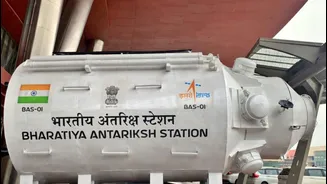
The Indian Space Research Organisation (ISRO) has officially moved from the drawing board to the design phase for its most ambitious project yet. The government informed Parliament that the Baseline Design Review for the first module, BAS-01, has been
completed. This milestone triggered the release of 31 technical documents that lay out the foundational engineering and systems for the station. Think of these as the master blueprints. An expert committee has already reviewed and approved these plans, giving the green light for ISRO to begin designing the specific subsystems—the nuts and bolts that will make the station function. This is a critical step that transforms the BAS from a concept into a tangible project with a clear technical path forward.
Inside the Bharatiya Antariksha Station
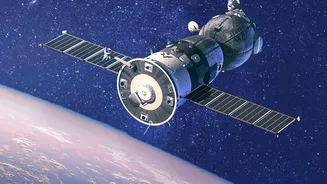
So, what will India's address in low-Earth orbit look like? The Bharatiya Antariksh Station is planned as a modular, 52-tonne orbital outpost. It will be assembled piece by piece at an altitude of about 400 kilometres. The full station will consist of five modules: a base module, a core docking module, a science research module, a laboratory, and a common working area. Once fully operational, it is expected to house three to four astronauts for long-duration missions lasting from three to six months. The initial phase focuses on BAS-01, the first module that will serve as the station's cornerstone, housing essential crew quarters and life support systems.
A Phased Timeline to Orbit
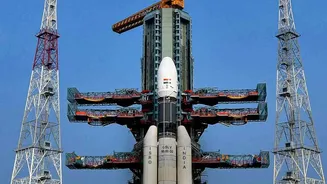
Building a space station is a marathon, not a sprint. ISRO has laid out a deliberate, two-phase timeline. The first major goal is to launch the initial module, BAS-01, by 2028. This module will be launched using India's heavy-lift LVM3 rocket and will initially support robotic operations before it is ready for crew. Following this, additional modules will be launched over the subsequent years. The target for the complete, five-module station to be fully operational is 2035. This phased approach, which received cabinet approval in October 2024, allows ISRO to build upon the technologies developed for the Gaganyaan human spaceflight programme, ensuring each step is tested and proven before the next.
Building on Gaganyaan's Foundation
The Bharatiya Antariksh Station does not exist in isolation; it is the logical next step after the Gaganyaan programme. The immense effort to develop human-rated launch vehicles (HLVM3), crew escape systems, and orbital modules for Gaganyaan provides the technological backbone for the space station. Furthermore, ISRO is actively working to indigenise critical technologies. While components like flight suits and crew seats were initially sourced from external partners for Gaganyaan, the government has approved their indigenous development for the space station project. This push for self-reliance extends to complex systems like spacecraft docking technology and even in-space refuelling mechanisms, both of which have seen successful demonstrations.
A New Hub for Indian Science
The ultimate purpose of the BAS is to serve as a world-class laboratory in space. It will provide a permanent platform for Indian scientists to conduct long-duration experiments in microgravity—a unique environment that cannot be replicated on Earth. Research areas will span biotechnology, materials science, human physiology, pharmaceuticals, and more. Having a dedicated station will allow Indian researchers to master the technologies required for future deep-space missions, including potential journeys to the Moon and beyond. It represents a monumental leap in India's scientific capabilities, enabling discoveries that could have profound benefits back on Earth and cementing India's status as a major spacefaring nation.