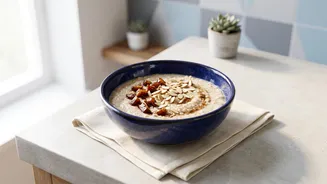








Meet Amaranth, the Ancient Superfood
Known in India as 'rajgira' or 'ramdana', amaranth has been a staple for thousands of years, revered by ancient civilizations like the Aztecs. While technically a seed, it's prepared and eaten like a grain, which is why it's often called a pseudo-cereal.
In India, rajgira is famously consumed during fasting periods, often in the form of 'laddoos' or 'chikki'. However, its versatility extends far beyond festive treats. With a mild, nutty, and slightly earthy flavour, it serves as a wonderful base for a warm breakfast porridge, offering a welcome change in texture and taste from the usual oatmeal. Its growing popularity is well-deserved, as this tiny seed packs a mighty nutritional punch.
A Superior Nutritional Profile
One of the biggest reasons to make the switch to amaranth is its exceptional nutritional content. It stands out as one of the few plant-based foods that is a complete protein, meaning it contains all nine essential amino acids, including lysine, which is often lacking in other grains like wheat. This makes it an invaluable protein source, especially for vegetarians and vegans. A single cup of cooked amaranth provides about 9 grams of protein. Beyond protein, it is also rich in fibre, which aids digestion and promotes a feeling of fullness. Furthermore, it is loaded with essential minerals, containing significantly more iron, calcium, and magnesium compared to many other grains. Its high mineral content supports everything from bone health to energy production.
Amaranth vs. Oats: Why Make the Change?
While oats are a healthy choice known for their soluble fibre, amaranth offers a few distinct advantages. Firstly, amaranth is naturally gluten-free, making it an excellent and safe option for individuals with celiac disease or gluten sensitivity. Oats, on the other hand, are often at risk of cross-contamination with gluten during processing. In terms of nutrition, amaranth generally boasts a higher protein content and a more robust profile of minerals like iron and calcium. For those looking to diversify their nutrient intake and move beyond the same breakfast, amaranth provides not just a different taste and texture but a unique combination of health benefits that can help you feel energised and satisfied throughout the morning.
How to Craft the Perfect Amaranth Bowl
Creating your own warm amaranth-date bowl is simple. The key is the cooking ratio and technique. For a creamy porridge, use a ratio of about 1 cup of amaranth to 3 cups of liquid (water, milk, or a plant-based milk work well). Combine the amaranth and liquid in a saucepan and bring it to a boil. Then, reduce the heat, cover, and let it simmer for about 20-25 minutes, stirring occasionally to prevent sticking. The porridge is ready when it's creamy and the grains are tender. For natural sweetness, stir in a few chopped dates during the last few minutes of cooking. The dates will soften and infuse the bowl with a lovely caramel-like flavour. A pinch of cinnamon or cardamom will add a warm, aromatic spice that complements the dates perfectly.
Toppings and Variations
The beauty of a porridge bowl lies in its customisation. Once your creamy amaranth-date base is ready, the possibilities are endless. For extra crunch and healthy fats, add a sprinkle of toasted almonds, walnuts, or pumpkin seeds. A spoonful of yogurt can add a tangy creaminess, while fresh fruits like sliced banana, pomegranate seeds, or berries provide a burst of freshness and vitamins. For a richer flavour, a small dollop of ghee or a drizzle of honey can be added just before serving. You can also experiment by puffing the amaranth in a hot pan for a few seconds and using it as a crunchy topping over yogurt for a quicker breakfast option.